ART WIKI32,963 on view
MapCollectionArtistsMuseumsExhibitionsJournal
Sign in

ART WIKI

Where the masterpiece hangs, and when they let you in.

Collections: Art Institute of Chicago, Getty Villa, Harvard Art Museums, Hirshhorn Museum and Sculpture Garden, J. Paul Getty Museum, Minneapolis Institute of Art, Musée du Louvre, National Gallery of Art, National Museum of Asian Art, National Portrait Gallery (Smithsonian), Pushkin State Museum of Fine Arts, Rijksmuseum, Smithsonian American Art Museum, SMK — National Gallery of Denmark, State Hermitage Museum, State Russian Museum, The Cleveland Museum of Art, The Metropolitan Museum of Art, The Museum of Modern Art, Tretyakov Gallery, Victoria and Albert Museum, Whitney Museum of American Art, State Catalogue of the Museum Fund of Russia (274 museums), Europeana (19 museums), Wikidata (6 museums), Paris Musées (12 museums), and Joconde, the French Ministry of Culture's museum database (495 museums). Images belong to their rights holders.

Sections

  • Map
  • Search
  • Collection
  • Masterpieces
  • On view now
  • Artists

More

  • Museums & galleries
  • Exhibitions
  • Journal
  • Where the data comes from
  • Privacy & cookies
HomeMapBrowse
  1. Collection/
  2. National Gallery of Art/
  3. Allan Kaprow's party 1
Allan Kaprow's party 1, Robert Frank, 1957

Allan Kaprow's party 1

1957 · Photograph

Particulars

1957 · aged 33
19242019
Accession number
1994.37.1020

Meanwhile, in the life of Robert Frank

The whole life
  1. 1955

    Seven photographs in “The Family of Man”

    Edward Steichen includes seven of his photographs, many more than most other contributors, in the world-touring MoMA exhibition The Family of Man, which will be seen by 9 million visitors; they include a woman kissing her swaddled baby, a bowed old woman in Peru, a rheumy-eyed miner in Wales, and six laughing women in the window of the White Tower Hamburger Stand in New York City.

  2. 1955–1957

    Across America on a Guggenheim Fellowship

    Inspired by Jakob Tuggener’s Fabrik, Bill Brandt’s The English at Home and Walker Evans’s American Photographs, and on the recommendation of Evans, Alexey Brodovitch, Alexander Liberman, Edward Steichen and Meyer Schapiro, he secures a Guggenheim Fellowship in 1955 to travel across the United States and photograph all strata of its society, from Detroit and Dearborn to Savannah, Miami Beach and St. Petersburg, New Orleans, Houston, Los Angeles, Reno, Salt Lake City, Butte and Chicago. Over two years of road trips, part of them with his family, he takes 28,000 shots, of which he selects 83 for The Americans.

  3. 1955–1957

    Jailed in Arkansas

    In a small Arkansas town he is taken to the police station and put in jail: it comes out that he is Jewish because of a letter from the Guggenheim Foundation, and the sheriff says they will have to find somebody who speaks Yiddish. Frank later recalled that it was scary and nobody knew where he was; elsewhere in the South a sheriff told him he had “an hour to leave town”, and these incidents may have contributed to the dark view of America found in his work.

  4. 1957

    Meets Jack Kerouac

More by Robert Frank

All works

Neighbors at National Gallery of Art

Museum page

On the same theme · Holidays/festivals/parties

All works on the theme

Shortly after returning to New York he meets the Beat writer Jack Kerouac, by Frank’s account at a New York party where poets and Beatniks were, though by another account Joyce Johnson, Kerouac’s lover at the time, introduced them, and shows him the photographs from his travels. Kerouac immediately says he can write something about these pictures and eventually contributes the introduction to the U.S. edition of The Americans; Frank also becomes a lifelong friend of Allen Ginsberg and one of the main visual artists to document the Beat subculture.

  • 1958

    “Les Américains” is published in Paris

    Because his images depart from contemporary photographic standards, Frank has difficulty at first in securing an American publisher, and the book is first published in Paris by Robert Delpire in the Encyclopédie Essentielle series, with texts by Simone de Beauvoir, Erskine Caldwell, William Faulkner, Henry Miller and John Steinbeck positioned opposite the photographs.

  • 1959

    “The Americans” in the U.S.: harsh criticism

    The book is finally published in the United States by Grove Press, without the texts but with Kerouac’s introduction, and initially receives substantial criticism: Popular Photography derides the images as meaningless blur, grain, muddy exposures, drunken horizons and general sloppiness. Sales are poor at first too, but the popular Kerouac’s introduction helps it reach a larger audience, and over time The Americans becomes a seminal work in American photography and art history, the work with which Frank is most clearly identified.

  • Robert Frank, portraitRobert FrankAmerican, 1924–2019

    May one see it?

    Not receiving at present

    National Gallery of Art

    Washington, D.C., United States

    It belongs to the collection, but is not on display at present.

    Checked
    3 days ago
    In this state since
    Aug 19, 2026
    Source
    The museum
    On the mapMuseum page

    What it shows

    Holidays/festivals/parties

    In the catalog

    PhotographsPost-war art20th centuryAmerican

    Sources

    • National Gallery of Art
    • Image: National Gallery of Art — © the artist or rights holder
    Fourth of July—Jay, New York, Robert Frank, 1954

    Fourth of July—Jay, New York

    1954 · National Gallery of Art

    Parade—Hoboken, New Jersey, Robert Frank, 1955, printed 1977

    Parade—Hoboken, New Jersey

    1955, printed 1977 · National Gallery of Art

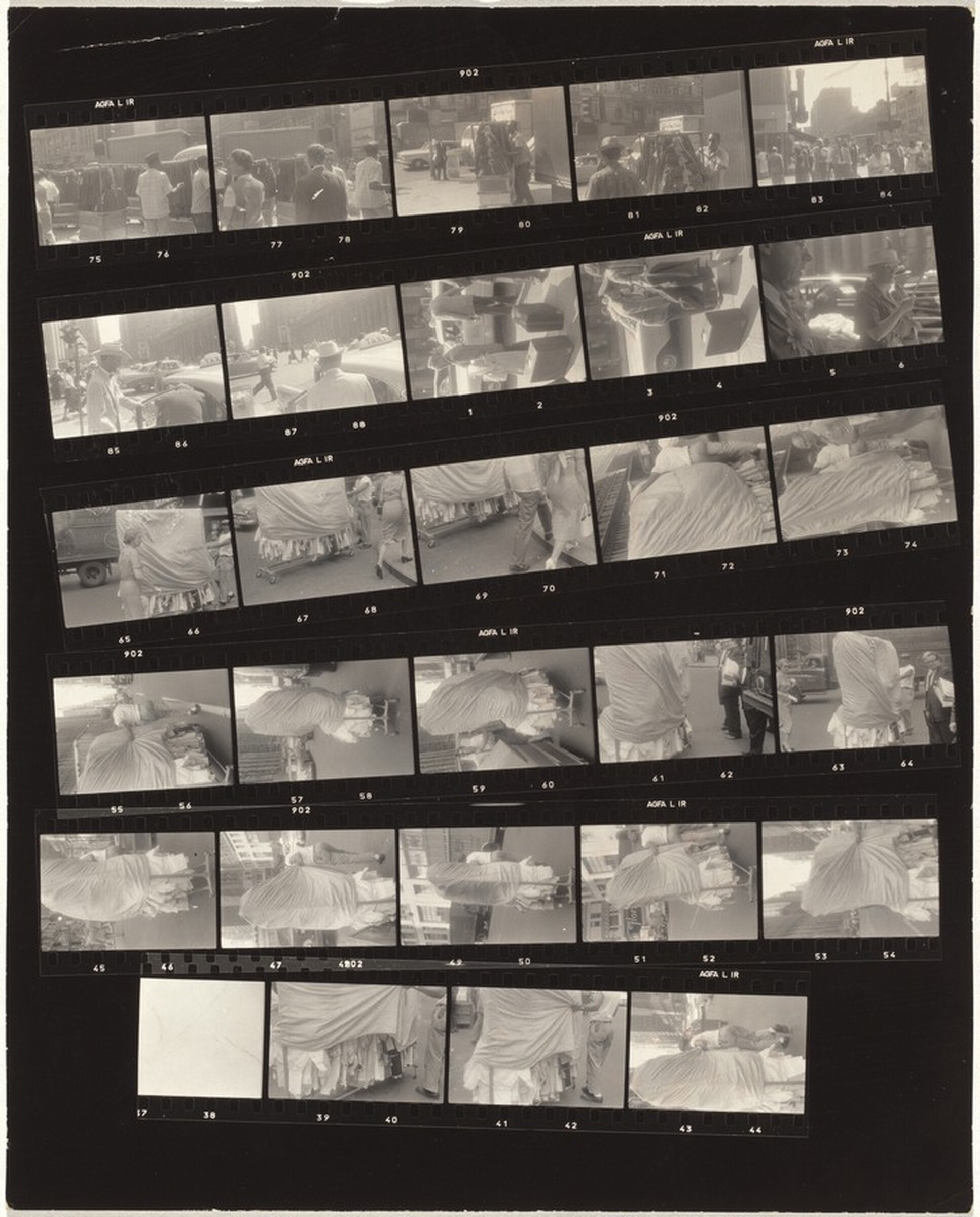
    Construction--New York City no number, Robert Frank, 1950s

    Construction--New York City no number

    1950s · Not on view · National Gallery of Art

    Alfred Leslie--Painters no number, Robert Frank, 1950s

    Alfred Leslie--Painters no number

    1950s · Not on view · National Gallery of Art

    New York City no number, Robert Frank, late 1950s

    New York City no number

    late 1950s · Not on view · National Gallery of Art

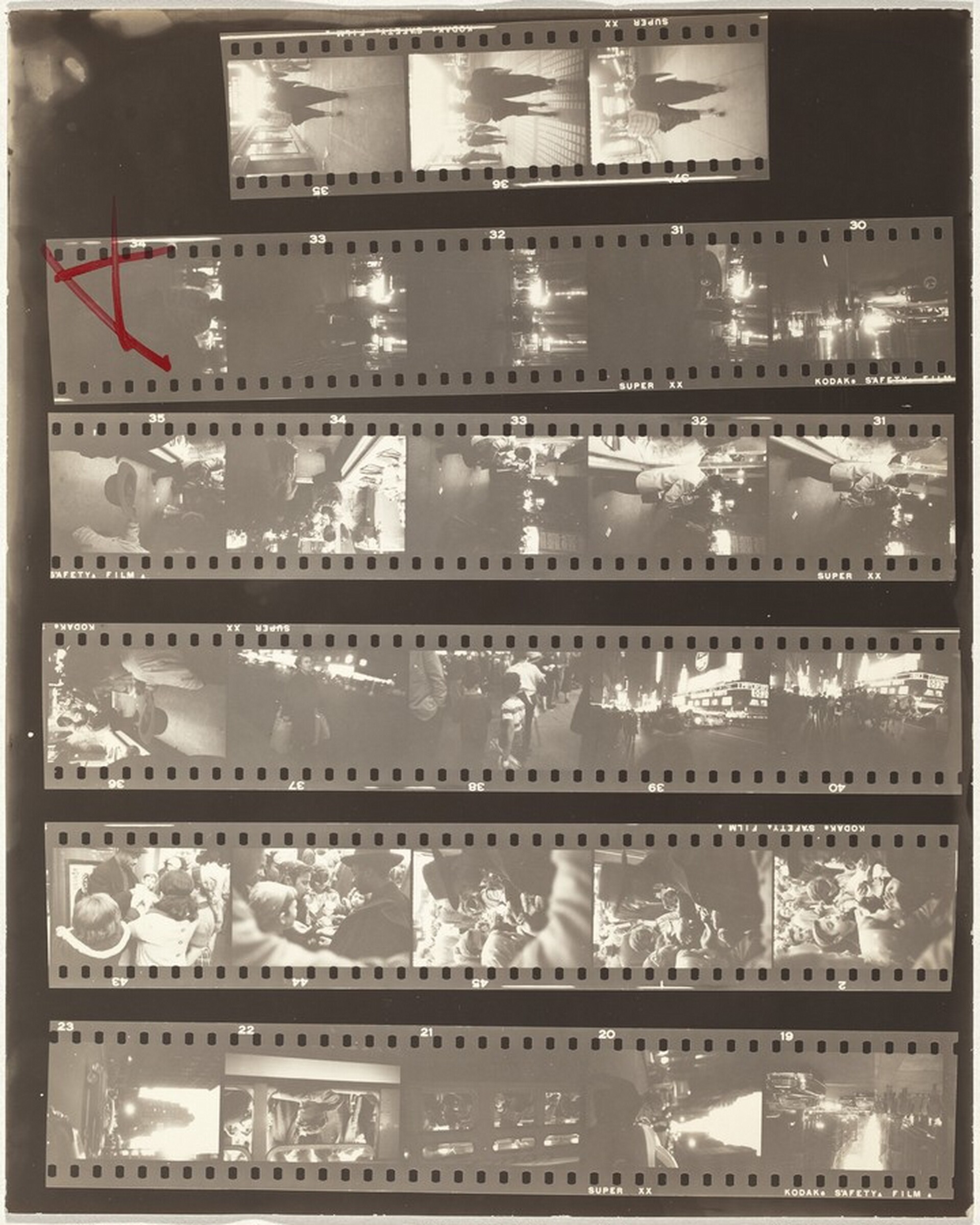
    7th Avenue--New York City 1, Robert Frank, early 1950s

    7th Avenue--New York City 1

    early 1950s · Not on view · National Gallery of Art

    Revival no number, Robert Frank, mid-late 1950s

    Revival no number

    mid-late 1950s · Not on view · National Gallery of Art

    Revival no number, Robert Frank, mid-late 1950s

    Revival no number

    mid-late 1950s · Not on view · National Gallery of Art

    Ginevra de' Benci [obverse], Leonardo da Vinci, c. 1474/1478

    Leonardo da Vinci

    Ginevra de' Benci [obverse], c. 1474/1478

    Wreath of Laurel, Palm, and Juniper with a Scroll inscribed Virtutem Forma Decorat [reverse], Leonardo da Vinci, c. 1474/1478

    Leonardo da Vinci

    Wreath of Laurel, Palm, and Juniper with a Scroll inscribed Virtutem Forma Decorat [reverse], c. 1474/1478

    Green Wheat Fields, Auvers, Vincent van Gogh, 1890

    Vincent van Gogh

    Green Wheat Fields, Auvers, 1890

    Girl in White, Vincent van Gogh, 1890

    Vincent van Gogh

    Girl in White, 1890

    Roses, Vincent van Gogh, 1890

    Vincent van Gogh

    Roses, 1890

    Self-Portrait, Vincent van Gogh, 1889

    Vincent van Gogh

    Self-Portrait, 1889

    Farmhouse in Provence, Vincent van Gogh, 1888

    Vincent van Gogh

    Farmhouse in Provence, 1888

    La Mousmé, Vincent van Gogh, 1888

    Vincent van Gogh

    La Mousmé, 1888

    Purim, Marc Chagall, 1917

    Marc Chagall

    Purim, 1917

    Not on view · National Gallery of Art

    Masked Ball at the Opera, Edouard Manet, 1873

    Édouard Manet

    Masked Ball at the Opera, 1873

    National Gallery of Art

    The Doge Entertains Foreign Ambassadors at a Banquet, Giovanni Battista Brustolon after Canaletto, 1763/1766

    Canaletto

    The Doge Entertains Foreign Ambassadors at a Banquet, 1763/1766

    Not on view · National Gallery of Art

    The Newly Elected Doge Presented to the People in San Marco, Giovanni Battista Brustolon after Canaletto, 1763/1766

    Canaletto

    The Newly Elected Doge Presented to the People in San Marco, 1763/1766

    Not on view · National Gallery of Art

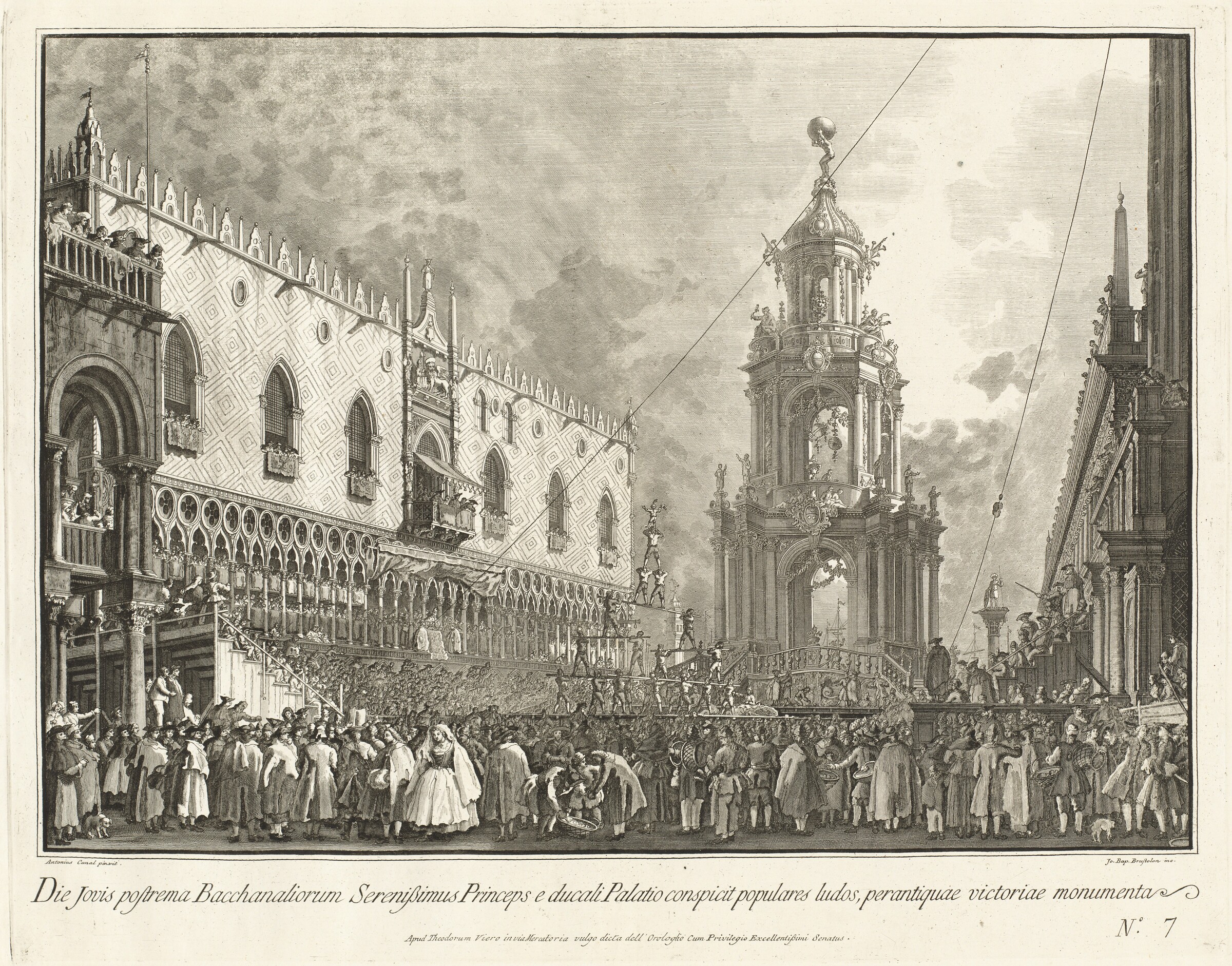
    The Doge Attends the Giovedi Grasso Festival in the Piazzetta, Giovanni Battista Brustolon after Canaletto, 1763/1766

    Canaletto

    The Doge Attends the Giovedi Grasso Festival in the Piazzetta, 1763/1766

    Not on view · National Gallery of Art

    The Doge in the Bucintoro Departing for the Porto di Lido on Ascension Day, Giovanni Battista Brustolon after Canaletto, 1763/1766

    Canaletto

    The Doge in the Bucintoro Departing for the Porto di Lido on Ascension Day, 1763/1766

    Not on view · National Gallery of Art

    The Doge Carried around the Piazza San Marco, Giovanni Battista Brustolon after Canaletto, 1763/1766

    Canaletto

    The Doge Carried around the Piazza San Marco, 1763/1766

    Not on view · National Gallery of Art

    Annual Visit of the Doge to Santa Maria della Salute, Giovanni Battista Brustolon after Canaletto, 1763/1766

    Canaletto

    Annual Visit of the Doge to Santa Maria della Salute, 1763/1766

    Not on view · National Gallery of Art