 Robert RauschenbergAmerican, 1925–2008
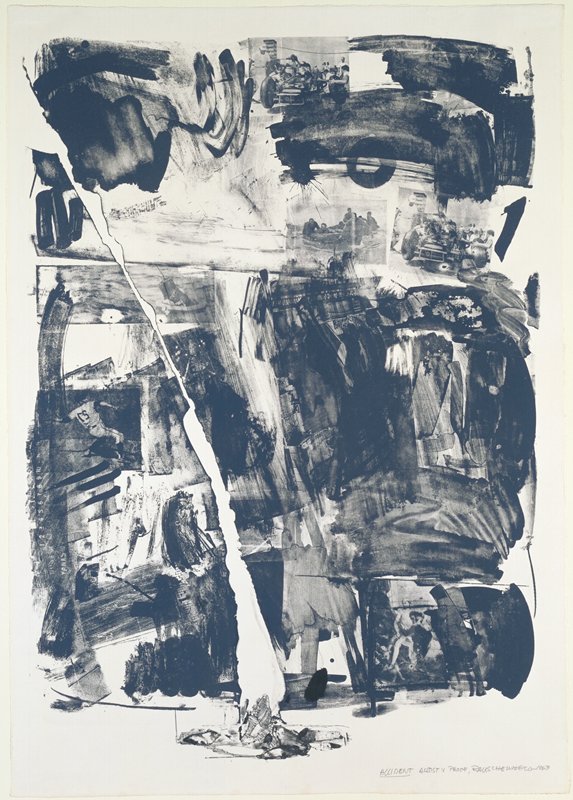
Accident
May one see it?
Not receiving at present

Minneapolis Institute of Art
Minneapolis, United States
It belongs to the collection, but is not on display at present.
- Checked
- 2 days ago
- In this state since
- Sep 25, 2026
- Source
- The museum's own collection data
About the work
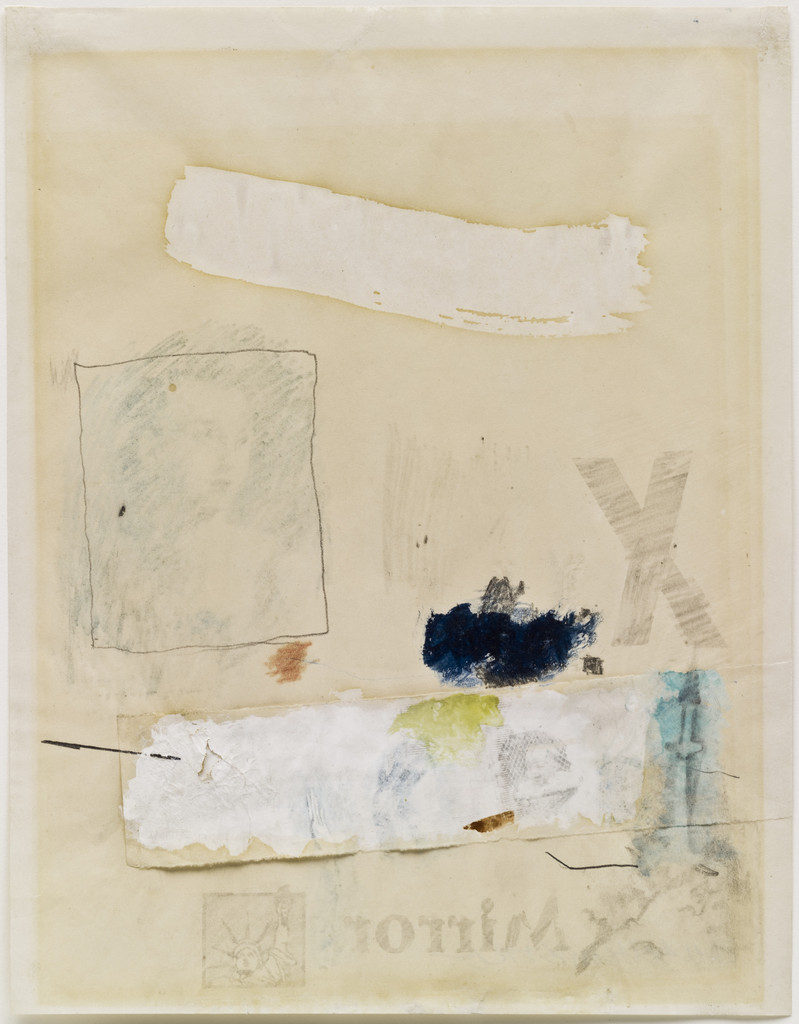
Robert Rauschenberg's penchant for experimentation and the role of chance was never more apparent than in this editioned lithograph of 1963 that became one of his best known prints. Aptly titled Accident, this rare lithograph was the result of a studio mishap in which the limestone printing matrix was broken during the proofing process. Capitalizing on what he saw as an opportunity, he printed the lithograph from the pieces of broken stone, incorporating gestural brushstrokes and appropriated photographic images into a semi-abstract assemblage. In keeping with his usual working method, Rauschenberg allowed for serendipity and unexpected meanings to emerge, creating an intriguing intersection of content and process.
Minneapolis Institute of Art
Particulars
- Accession number
- P.71.1
In the catalog
Sources
- Minneapolis Institute of Art: the museum's own open data · fetched 6 days ago
- Image: Minneapolis Institute of Art — Robert Rauschenberg, Accident, 1963 © Robert Rauschenberg Foundation
Meanwhile, in the life of Robert Rauschenberg
The whole life1954–1961
Lives with the artist Jasper Johns
From 1954 to 1961 Rauschenberg lived with his partner, the artist Jasper Johns. They constantly exchanged ideas and took part in each other's work, but never made objects under joint authorship.
1962
Takes up silkscreen after visiting Warhol's studio
By 1962 Rauschenberg's paintings took in not only found objects but found images: after a visit to Andy Warhol's studio he began transferring photographs to canvas by silkscreen, a technique of commercial printing. The silkscreen paintings of 1962–1964 led critics to identify him with Pop art.
1963
First retrospective, at the Jewish Museum
Rauschenberg's first career retrospective was organised by the Jewish Museum in New York.
May 1963
Choreographs his first performance, “Pelican”
In the early 1960s Rauschenberg was involved in the radical dance-theatre experiments at Judson Memorial Church in Greenwich Village, and in May 1963 he choreographed his first performance, “Pelican”, for the Judson Dance Theater. His close friends from Cunningham's circle — Carolyn Brown, Viola Farber and Steve Paxton — danced in his pieces.
1964
Grand Prize at the Venice Biennale
At the 32nd Venice Biennale Rauschenberg won the International Grand Prize in Painting, one of the first Americans to do so (James Whistler and Mark Tobey had won painting prizes in 1895 and 1958). The prize has been called the official recognition of Pop art.
28 June 1964 – 6 October 1964
Exhibition: Documenta III