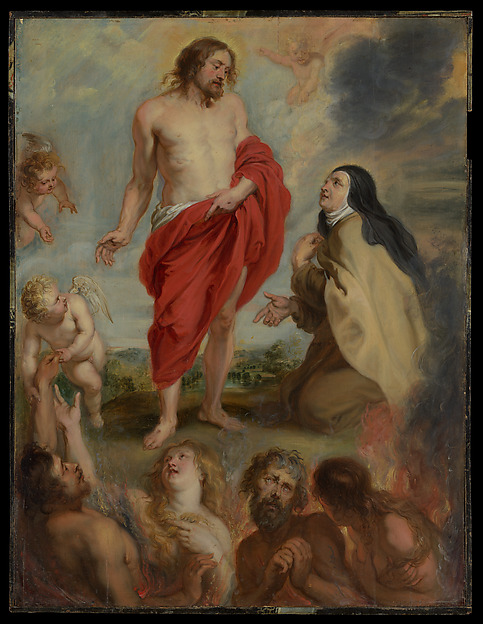
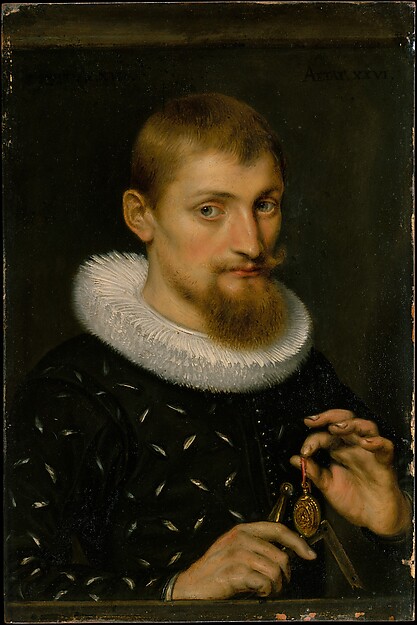
Peter Paul RubensFlemish, 1577–1640
A Lion Hunt
May one see it?
Unknown

London, United Kingdom
The owner is known; whether it is on view today is not.
- In this state since
- Source
- The museum
Particulars
- Accession number
- NG853.1
In the catalog
Sources
- Wikidata
- Image: The National Gallery — Peter Paul Rubens · Public domain · Wikimedia Commons
Meanwhile, in the life of Peter Paul Rubens
The whole lifeJuly 1600 – 5 May 1608 · Workplace
Mantua
1606–1608
Commission for the High Altar of the Chiesa Nuova
With the assistance of Cardinal Jacopo Serra, Rubens received his most important commission to date — the high altar of the fashionable new Roman church of Santa Maria in Vallicella (Chiesa Nuova); the first version had to be replaced by a second on three slate panels.
28 October 1608
Departure from Italy Forever
Having finished the commission for the Oratorians, Rubens left Rome without permission on 28 October 1608, hurrying to his ailing mother; despite promises to return to Mantua, he never went back to Italy.
3 October 1609
Married: Isabella Brant
9 January 1610
Court Painter to the Archducal Couple
After being presented at court in August 1609, Rubens received his patent as court painter to Archduke Albert and the Infanta Isabella; at the same time he secured the right to remain working in Antwerp rather than Brussels, and to be paid a fee for each painting.
1621
Marie de' Medici's Commission for the Luxembourg Palace Cycles
The Queen Mother of France, Marie de' Medici, commissioned from Rubens two large allegorical cycles for the Luxembourg Palace — one on her own life and one on the life of the late Henry IV; the second series was never completed.