Théodore GéricaultFrankreich, 1791–1824
Three Lovers
Darf man es sehen?
Ja, es empfängt Besucher
Öffentlich ausgestellt.
- Geprüft
- Unverändert seit
- Quelle
- Das Museum
Über das Gemälde
Théodore Géricault's only known erotic painting, this small oil sketch depicts two lovers locked in a passionate embrace while their languid companion calmly watches from the left. The woman's nudity and relaxed pose evoke the classical tradition of representing repose after lovemaking, a tradition that is also evoked by the way her voluptuous figure complements the statue of Venus above. Encoiled in her lover's arms and with her legs provocatively exposed, the woman in white is an active participant in the amorous act rather than a passive object. With a modern directness, Géricault captured the intensity and energy of human sexuality in a manner very different from the idealizing conventions of his age. Géricault 's expressive handling of line and paint accords with the passionate energy of the subject matter. Despite the small size and sketchy nature of this painting, Géricault made it as an independent work of art, intended for close private viewing.
J. Paul Getty Museum
Angaben
- Inventarnummer
- 95.PA.72
Im Katalog
Quellen
- J. Paul Getty Museum
- Bild: J. Paul Getty Museum — Open Content
Derweil im Leben von Théodore Géricault
Das ganze Leben1815
The Hundred Days: Louis XVIII's escort and flight to Normandy
During the Hundred Days Géricault was in the escort of the fleeing Louis XVIII and then, disguised as a peasant, made his way to Normandy, where he probably stayed until the middle of the summer of 1815.
autumn 1817
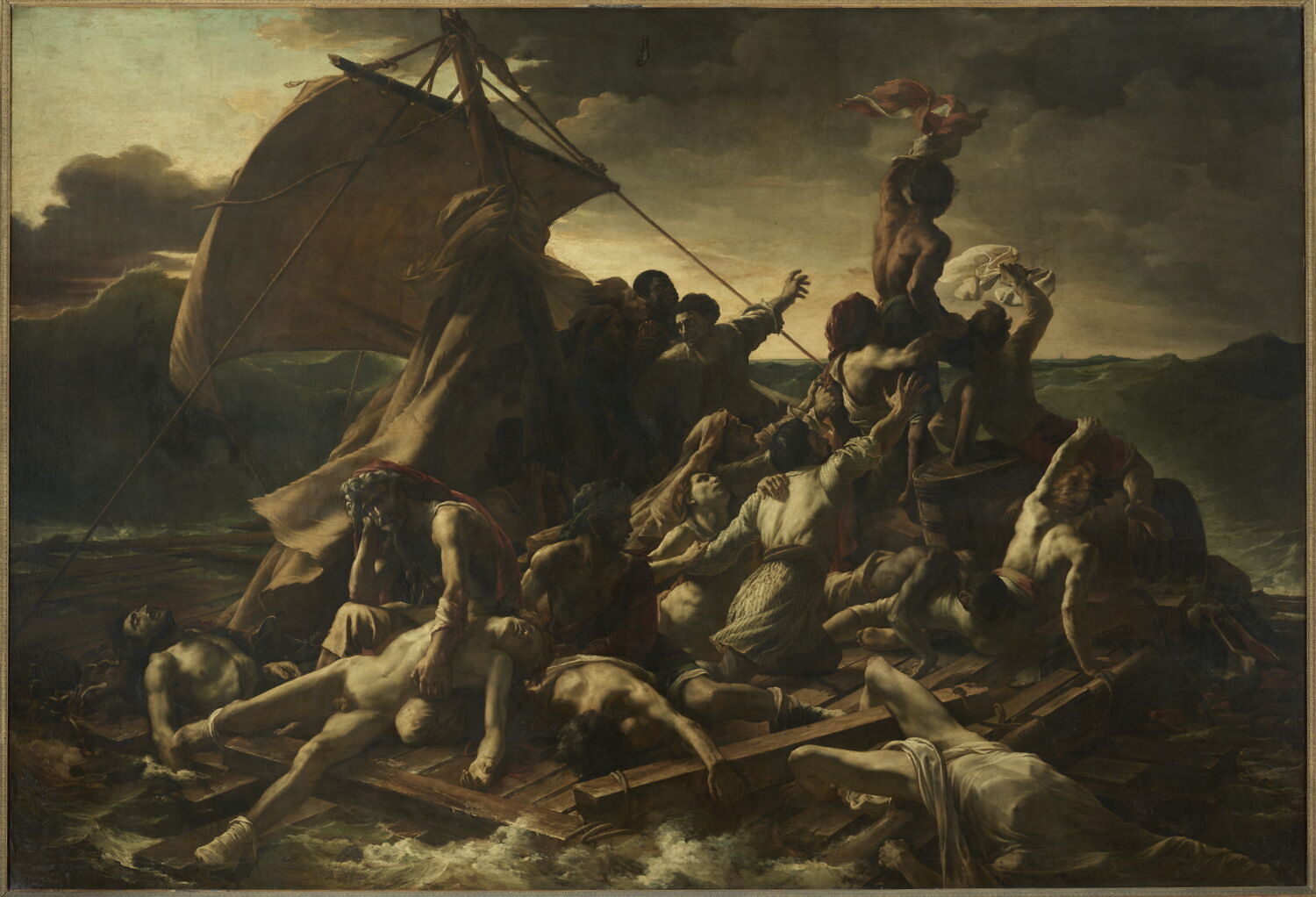
The book on the wreck of the Méduse reaches Géricault
In the autumn of 1817 the book “The Wreck of the Frigate Medusa” appeared, in which the eyewitnesses, the geographer-engineer Alexandre Corréard and the physician Henri Savigny, described the thirteen-day drift of the raft after the ship ran aground off the coast of Mauritania. The book reached Géricault, who saw in it the subject for the large painting he had long dreamed of.
1817–1818
Investigating the disaster: survivors, a model raft, morgues
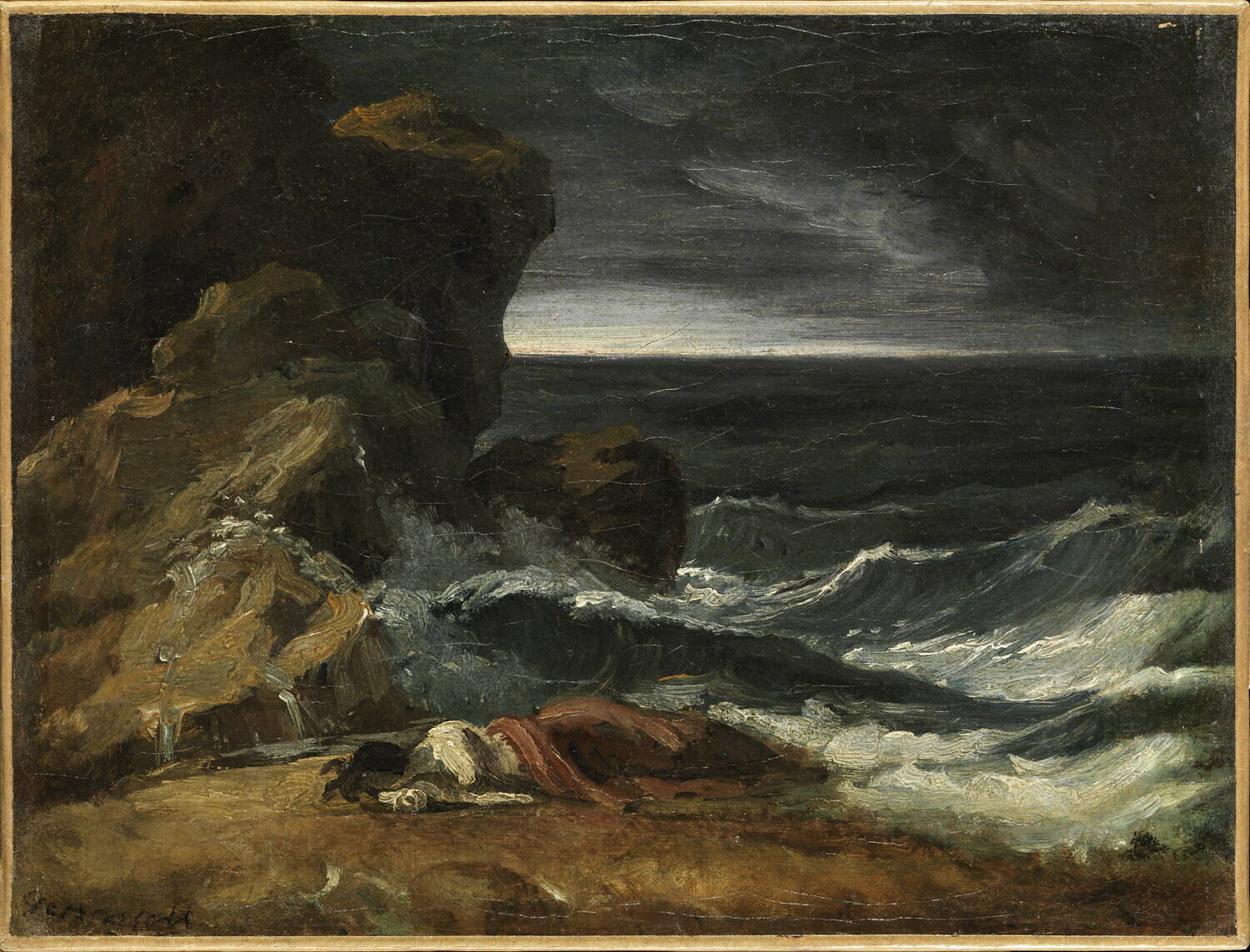
Géricault re-created the event by studying the available materials and meeting witnesses: he got to know Corréard and Savigny, a carpenter from the Méduse made a scale model of the raft for him, and the artist modelled wax figures himself. He visited hospital morgues, drawing dead heads, emaciated bodies and severed limbs, and the preparation ended with a trip to Le Havre, where he painted studies of sea and sky.
1819
“The Raft of the Medusa” sparks a political controversy at the Salon
When first exhibited at the Paris Salon of 1819, “The Raft of the Medusa” ignited political controversy: it indicted a corrupt establishment, in which the captain had left the crew and passengers to die, but also dramatized the eternal struggle of man against nature.
12 June – 30 December 1820
London: 50,000 visitors and 20,000 francs
The entrepreneur Bullock exhibited “The Raft of the Medusa” in London from 12 June to 30 December 1820; about 50,000 people saw it, critics called it a masterpiece, and its author was compared to Michelangelo and Caravaggio. Géricault was entitled to a third of the ticket receipts and received 20,000 francs.
1821–1824
Illness and falls from horses after his return from England
After returning to Paris from England Géricault was often ill, and his condition was made worse by several falls during horseback rides.