 Antonio CanovaItalien, 1757–1822
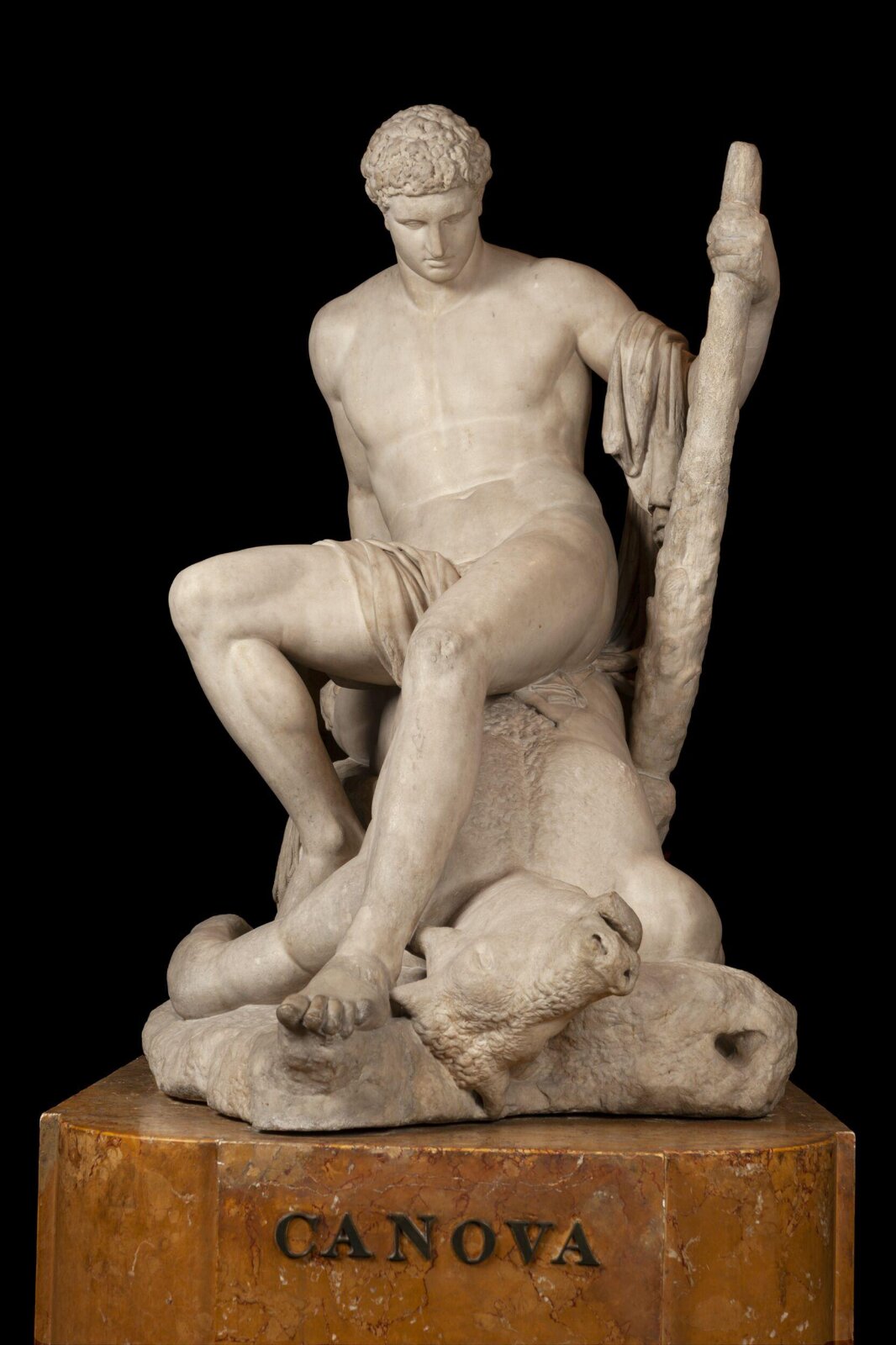
Theseus and the Minotaur
Kann ich es sehen?
Ja, derzeit ausgestellt
Wo ist „Theseus and the Minotaur“ heute? Victoria and Albert Museum, Sculpture, Room 22, The Dorothy and Michael Hintze Galleries, London. Ja, derzeit ausgestellt. Geprüft 25. September 2026.

London, Vereinigtes Königreich
SaalSculpture, Room 22, The Dorothy and Michael Hintze Galleries
Geschlossen· öffnet um 10:00
Öffentlich ausgestellt.
- Geprüft
- Unverändert seit
- Quelle
- Das Museum
Über die Skulptur
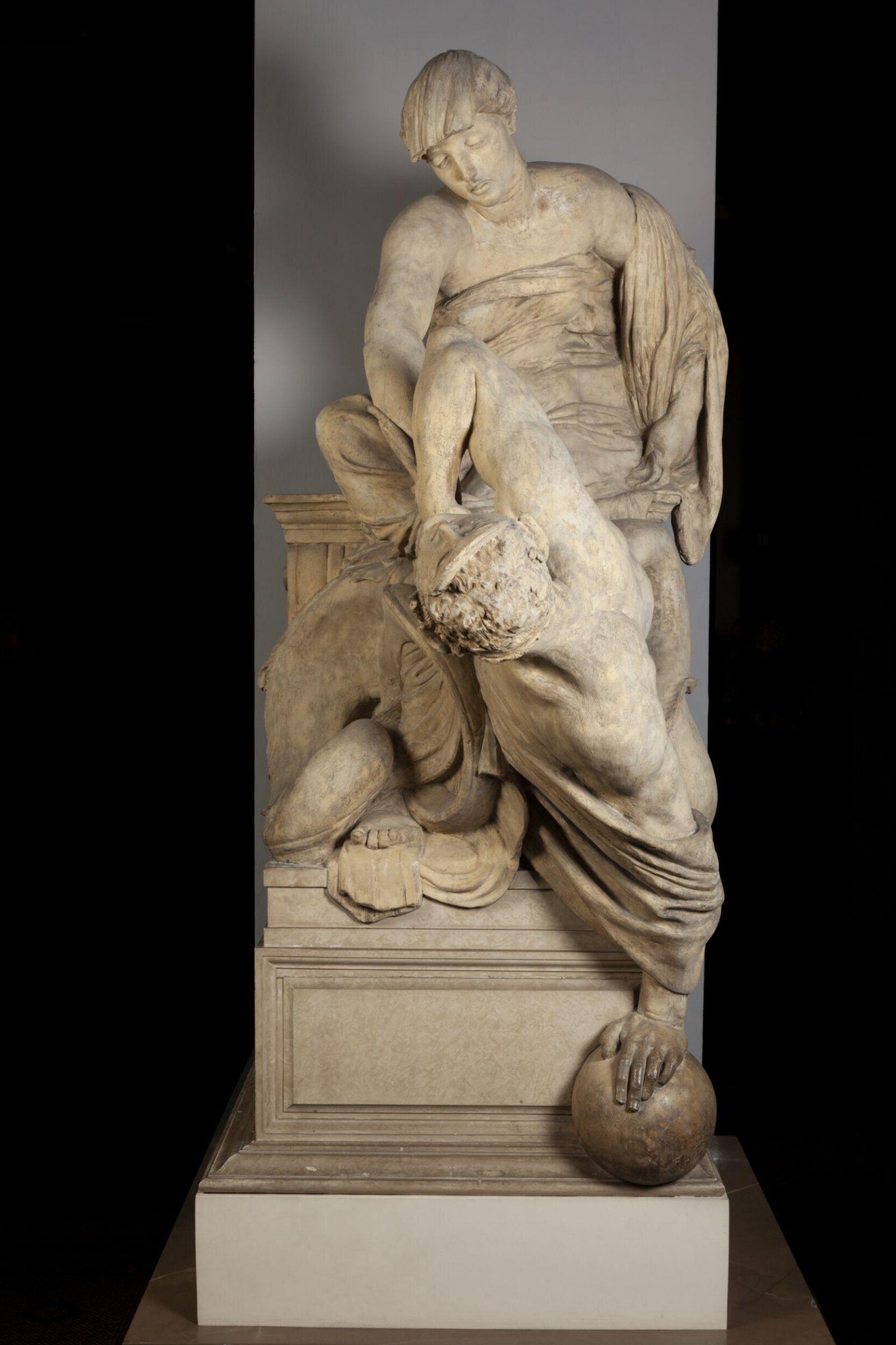
The legendary Greek hero Theseus sits astride the minotaur whom he has just killed. Coils of thread used by Theseus to retrace his steps from the minotaur's lair can be seen by the minotaur's left leg. This was one of Canova's earliest completed works after he left Venice to settle in Rome in 1780. The massive block of marble from which this group was carved was given to Canova by his patron Girolamo Zulian, who was Venetian ambassador in Rome in 1781. Zulian gave Canova the choice of subject for the work, and he decided on one of the stories from Ovid's Metamorphoses.
Mehr lesen
The Scottish painter, archaeologist and dealer, Gavin Hamilton (1723-1798), who was a friend of Canova, advised that he should portray Theseus and the Minotaur after their struggle. He considered that Canova would gain more favour and critical acclaim if he were to create a static group rather than a violent one. The sculpture did indeed receive widespread acclaim, and helped establish Canova's reputation as the leading European sculptor of his day. By the time Canova finished the work in 1782, his patron Zulian had moved to Constantinople, and he therefore allowed Canova to keep it. Canova sold it to an Austrian nobleman and collector, Count Johann Josef Graf von Fries (1765-1788), and it was transported to Vienna. Later it was acquired by the 3rd Marquis of Londonderry and was installed in Londonderry House, probably during the 1820s. The contents of the house were sold in the 1960s prior to its demolition, when the Museum acquired the sculpture.
Victoria and Albert Museum
Angaben
- Inventarnummer
- A.5&A-1962
Was es zeigt
Im Katalog
Quellen
- Victoria and Albert Museum
- Bild: Victoria and Albert Museum — © Victoria and Albert Museum, London
Im Leben von Antonio Canova
Das ganze Leben1775–1800
Zeigt seine Statuen bei Kerzenlicht
Im letzten Viertel des XVIII. Jahrhunderts kam es in Mode, Galerien nachts bei Fackelschein zu besichtigen, und Canova griff diese Mode auf: Er zeigte seine Werke in der Werkstatt bei Kerzenlicht und gab den Statuen ebenfalls bei Kerzenlicht mit besonderen Werkzeugen den letzten Schliff, wobei er die Übergänge zwischen den Teilen des nackten Körpers milderte. Anschließend rieb er den Marmor mit Bimsstein ab, mitunter wochen- und monatelang, bei Bedarf auch mit Tripel und Blei.
1779–1780
Umzug von Venedig nach Rom
Mit dem Wunsch, in Rom, der „Hauptstadt der Kunst“, zu leben und zu arbeiten, verließ Canova Venedig im Oktober 1779 und erreichte in Begleitung des Architekten Giannantonio Selva nach Aufenthalten in Bologna und Florenz Rom am 4. November 1779 oder, nach anderen Angaben, am 28. Dezember 1780. Er studierte die Antikensammlungen und zeichnete nach Werken Michelangelos, doch seine ersten römischen Arbeiten wurden kühl aufgenommen.
22 January – 28 February 1780
Neapel: Sanmartinos „Verhüllter Christus“
Vom 22. Januar bis zum 28. Februar 1780 war er in Neapel bei Contarina Barbarigo zu Gast; er besichtigte die Sammlung Farnese und die Cappella Sansevero, wo er Giuseppe Sanmartinos „Verhüllten Christus“ so sehr bewunderte, dass er ihn zu kaufen versuchte, und sich auch für die verschleierten Figuren des Venezianers Antonio Corradini begeisterte.



![Blue Club [working proof 8], Richard Diebenkorn, 1981](https://api.nga.gov/iiif/ca004a41-d32e-4561-9425-2045d02033f4/full/!2400,2400/0/default.jpg)
![Blue Club [working proof 7], Richard Diebenkorn, 1981](https://api.nga.gov/iiif/f21849ef-d631-4ceb-b579-d8c665572d01/full/!2400,2400/0/default.jpg)