 Albrecht DürerDeutschland, 1471–1528
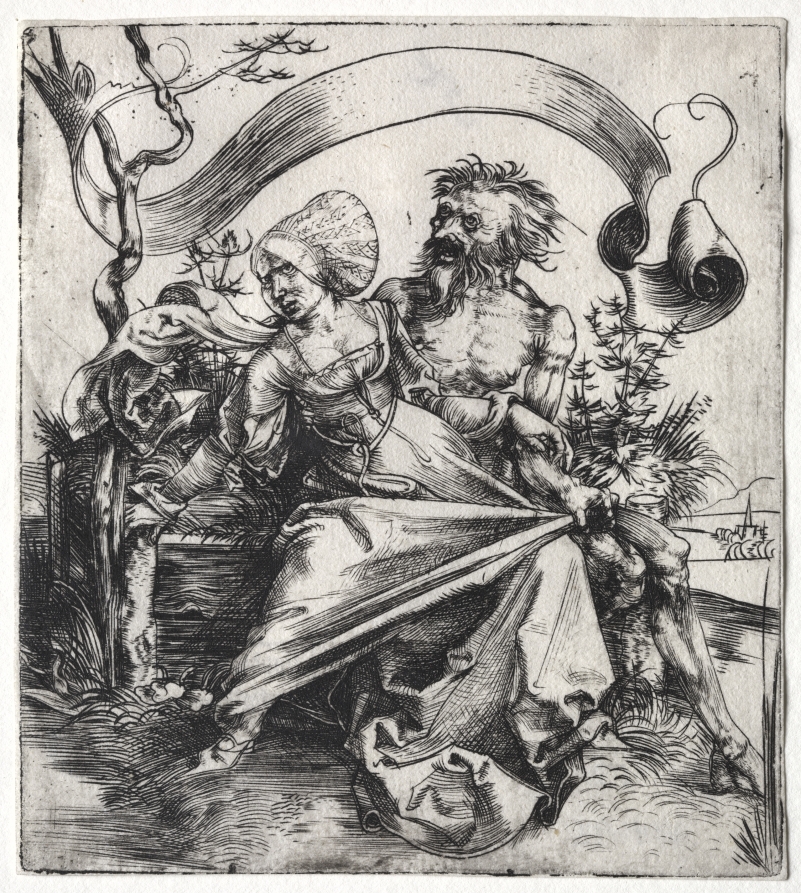
The Ravisher
Darf man es sehen?
Empfängt derzeit nicht

Cleveland, Vereinigte Staaten
Es gehört zur Sammlung, ist derzeit aber nicht ausgestellt.
- Geprüft
- Unverändert seit
- Quelle
- Das Museum
Über das Werk
The Ravisher portrays a chaotic struggle between a woman and Death, personified here as a wild-eyed corpse-like man. Having mistaken Death as her lover, she attempts to flee, but is thwarted by his firm grip. Images that feature Death often communicated moralizing messages about the dangers of sin and the fleeting nature of life. Had Dürer thought it necessary, he would have included an inscription in the scroll above. However, this could have been redundant since the horror of the scene clearly indicates that Death was exacting payment for the woman’s life of sin.
Cleveland Museum of Art
Angaben
- Inventarnummer
- 1968.36
Was es zeigt
Im Katalog
Kommen und Gehen
Derzeit nicht ausgestellt
Cleveland Museum of Art · 29. Sept. 2026 — jetzt · Geprüft
War nicht ausgestellt
National Gallery of Art · 29. Sept. 2026 — 29. Sept. 2026 · Geprüft
War nicht ausgestellt
Cleveland Museum of Art · 28. Sept. 2026 — 29. Sept. 2026 · Geprüft
War nicht ausgestellt
National Gallery of Art · 28. Sept. 2026 — 28. Sept. 2026 · Geprüft
War nicht ausgestellt
Cleveland Museum of Art · 27. Sept. 2026 — 28. Sept. 2026 · Geprüft
War nicht ausgestellt
National Gallery of Art · 26. Sept. 2026 — 27. Sept. 2026 · Geprüft
War nicht ausgestellt
Cleveland Museum of Art · 26. Sept. 2026 — 26. Sept. 2026 · Geprüft
War nicht ausgestellt
National Gallery of Art · 25. Sept. 2026 — 26. Sept. 2026 · Geprüft
War nicht ausgestellt
Cleveland Museum of Art · 19. Aug. 2026 — 25. Sept. 2026 · Geprüft
Quellen
- Cleveland Museum of Art
- Bild: Cleveland Museum of Art — Museum open access
Derweil im Leben von Albrecht Dürer
Das ganze Lebenc. 1492 – 1494
Basel: woodcuts for the printers
In Basel, a centre of printing, Dürer stayed with Georg Schongauer. A woodblock for the title page of the Letters of St Jerome (1492), signed with his name on the back, led to the works of the “Master of the Bergmann Press” being attributed to him; he may also have worked on the woodcuts for Sebastian Brant's Ship of Fools.
1494
Marries Agnes Frey
Soon after returning to Nuremberg the 23-year-old Dürer married Agnes Frey, daughter of a prominent brass worker and amateur harpist; the match had been arranged in his absence, and marriage was required to open a workshop of his own. They had no children, and his letters suggest the marriage was not a happy one.
7. Juli 1494
Married: Agnes Dürer
1494–1495
First journey to Italy
Within three months of the wedding Dürer left alone for Italy, perhaps fleeing an outbreak of plague in Nuremberg. Crossing the Alps he made watercolour landscapes; in Venice he studied its art and judged Giovanni Bellini the best of its painters; Mantegna and Pollaiuolo left their mark on him.
1495
Opens his own workshop
Dürer opened his own workshop in Nuremberg, where over the next ten years he created much of his printmaking. His godfather, the publisher Anton Koberger, helped issue the first series; the city's crafts were governed by the Council rather than guilds, leaving him free to try new techniques and sell his own impressions.
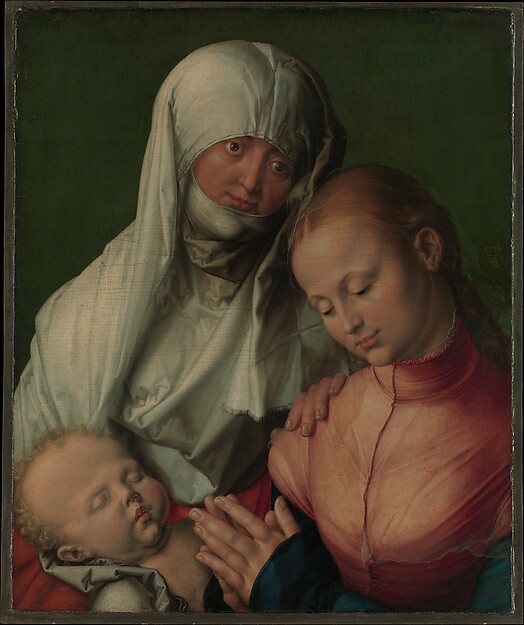
![Madonna and Child [obverse], Albrecht Dürer, c. 1496/1499](https://api.nga.gov/iiif/878db7e6-10ae-4cae-ba5d-6d6f5c413ae8/full/!2400,2400/0/default.jpg)
![Lot and His Daughters [reverse], Albrecht Dürer, c. 1496/1499](https://api.nga.gov/iiif/7565a449-f82a-414b-9bda-c93f55a51b4d/full/!2400,2400/0/default.jpg)