
 John Everett MillaisVereinigtes Königreich, 1829–1896
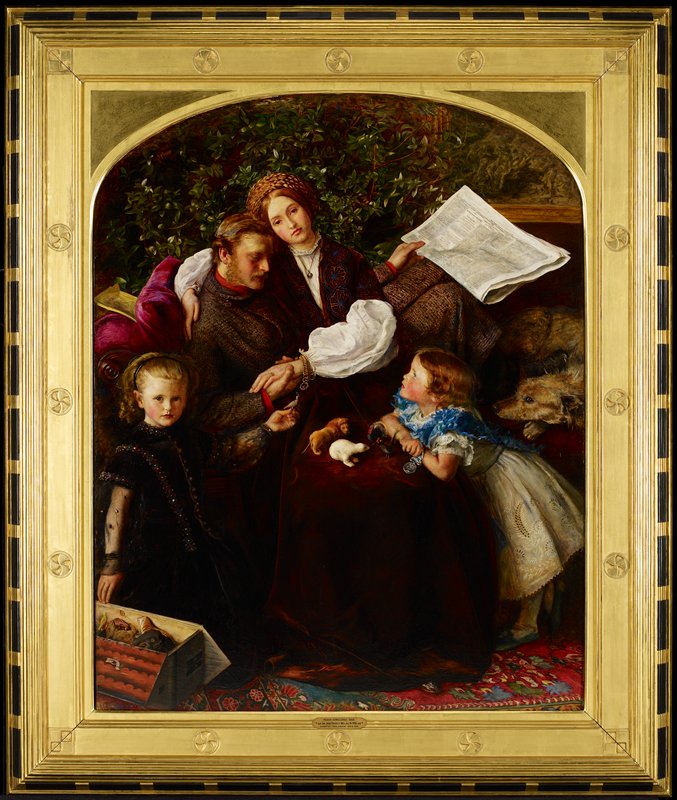
The Order of Release
Kann ich es sehen?
Unbekannt
Wo ist „The Order of Release“ heute? Sammlung: National Gallery, London. Unbekannt.

London, Vereinigtes Königreich
Der Besitzer ist bekannt; ob das Werk derzeit ausgestellt ist, nicht.
- Unverändert seit
- Quelle
- Das Museum
Über das Gemälde
The Order of Release, 1746 is an 1852–53 painting by John Everett Millais exhibited in 1853. It is notable for marking the beginnings of Millais's move away from the highly medievalist Pre-Raphaelitism of his early years. Effie Gray, who later left her husband John Ruskin for Millais, modelled for the female figure.
Angaben
- Inventarnummer
- NG1657
Im Katalog
Quellen
- Wikidata
- Bild: National Gallery — John Everett Millais · Public domain · Wikimedia Commons
Im Leben von John Everett Millais
Das ganze Leben1850
The scandal over “Christ in the House of His Parents”
Christ in the House of His Parents (1850) was judged excessively realistic, showing a working-class Holy Family in a messy carpentry workshop, and The Times called it outrageous. Millais was undaunted: the critic John Ruskin saw his outstanding talent at once and backed him, and his works were always accepted for the Academy’s exhibitions, however radical.
1853
Elected an associate member of the Royal Academy
In 1853 Millais was elected an associate member of the Royal Academy of Arts.
summer 1853
A summer at Glenfinlas: falling in love with Effie Ruskin
In the summer of 1853 John Ruskin and his wife Effie invited Millais to spend the summer with them at Glenfinlas, where Millais and Effie fell in love. Effie modelled for his The Order of Release; her marriage to Ruskin, which had lasted several years, was annulled after her parents realised something was wrong and she filed for annulment, and Millais and Effie then married.
3. Juli 1855
Married: Effie Gray
1855–1857
After his marriage he changes manner: faster and dearer
Marriage changed Millais: to support his growing family he began to paint more quickly and in greater quantity and to sell his pictures dearly, moving away from Pre-Raphaelite principles. Effie became a powerful promoter of his work, and together they secured commissions and widened their circle; he gained great popularity and a fortune (up to £30,000 a year), while William Morris and other critics accused him of selling out.
1857
Ruskin calls “Sir Isumbras” a catastrophe
Ruskin called Sir Isumbras (1857), in which Millais had departed sharply from Pre-Raphaelite technique, not even a failure but a catastrophe.



![Study of a Pottery Jug [recto], John Everett Millais, c. 1842](https://api.nga.gov/iiif/bd3617b6-ebda-468c-9b54-142851ab029e/full/!2400,2400/0/default.jpg)


