 Gustave MoreauFrankreich, 1826–1898
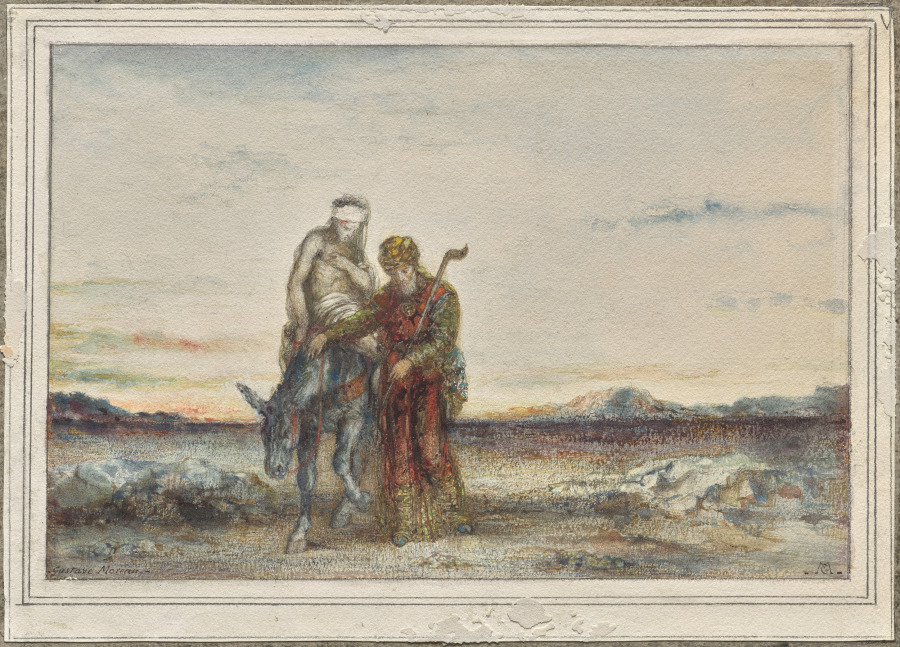
The Good Samaritan
Darf man es sehen?
Empfängt derzeit nicht

Cleveland, Vereinigte Staaten
Es gehört zur Sammlung, ist derzeit aber nicht ausgestellt.
- Geprüft
- Unverändert seit
- Quelle
- Das Museum
Über das Werk
Gustave Moreau was distinctive within Symbolism—a movement focused on imagination and interiority—for the fact that he realized relatively traditional subjects often drawn from mythology and religion. Here, Moreau depicts a scene from the Good Samaritan, a story from the Bible’s New Testament about a wounded traveler who is helped by a passerby, despite the ideological and religious differences between the two. Moreau presents the narrative’s most poignant moment, showing the Samaritan giving up his own horse to help his fellow man. The artist used dense, jewellike layers of watercolor to give the scene an emotional and otherworldly tone.
Cleveland Museum of Art
Angaben
- Inventarnummer
- 2024.32
Im Katalog
Quellen
- Cleveland Museum of Art
- Bild: Cleveland Museum of Art — Museum open access
Derweil im Leben von Gustave Moreau
Das ganze Leben1859–1888 · Wirkungsort
Paris
1864
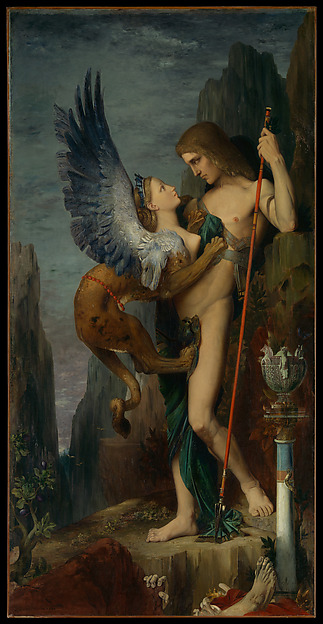
A Salon medal for “Oedipus and the Sphinx”
“Oedipus and the Sphinx”, one of Moreau’s first Symbolist paintings, won a medal at the Paris Salon of 1864 and established his reputation. One commentator likened it to a pastiche of Mantegna created by a German student who relaxes from his painting by reading Schopenhauer.
1868
Chairman of the Prix de Rome jury
In 1868 Moreau became chairman of the jury of the Prix de Rome competition, in which he himself had once failed.
1869
The Salon of 1869: “Prometheus” and severe criticism
“Prometheus” received a medal at the Salon of 1869, but criticism in the press was severe, and Moreau did not submit paintings to the Salon again until 1876.
1870–1875
Years without exhibiting: renewing his art
Disturbed by criticism that his work had become formulaic, Moreau stopped exhibiting for a few years and concentrated on renewing his art.