ART WIKI33.040 ausgestellt
KarteSammlungKünstlerMuseenAusstellungenJournal
Anmelden

ART WIKI

Wo das Meisterwerk hängt und wann man vorgelassen wird.

Sammlungen: Art Institute of Chicago, Cleveland Museum of Art, Eremitage, Getty Villa, Harvard Art Museums, Hirshhorn Museum and Sculpture Garden, J. Paul Getty Museum, Louvre, Metropolitan Museum of Art, Minneapolis Institute of Art, Museum of Modern Art, National Gallery of Art, National Museum of Asian Art, National Portrait Gallery, Puschkin-Museum, Rijksmuseum Amsterdam, Russisches Museum, Smithsonian American Art Museum, Statens Museum for Kunst, Tretjakow-Galerie, Victoria and Albert Museum, Whitney Museum of American Art, Staatskatalog des Museumsfonds Russlands (274 Museen), Europeana (19 Museen), Wikidata (6 Museen), Paris Musées (12 Museen) und Joconde, die Museumsdatenbank des französischen Kulturministeriums (495 Museen). Die Bilder gehören ihren Rechteinhabern.

Rubriken

  • Karte
  • Suche
  • Sammlung
  • Meisterwerke
  • Jetzt ausgestellt
  • Künstler

Mehr

  • Museen & Galerien
  • Ausstellungen
  • Journal
  • Woher die Daten stammen
  • Datenschutz & Cookies
StartseiteKarteKatalog
  1. Sammlung/
  2. National Gallery/
  3. The Ghost of a Flea
The Ghost of a Flea, William Blake, 1810s
William Blake, PorträtWilliam BlakeVereinigtes Königreich, 1757–1827

The Ghost of a Flea

1810s · Painting · 16.2 × 21.4 cm

Darf man es sehen?

Unbekannt

National Gallery

London, Vereinigtes Königreich

Der Besitzer ist bekannt; ob das Werk derzeit ausgestellt ist, nicht.

Unverändert seit
29. Sept. 2026
Quelle
Das Museum
Auf der KarteMuseumsseite

Über das Gemälde

The Ghost of a Flea is a miniature painting by the English poet, painter and printmaker William Blake, held in the Tate Gallery, London. Measuring only 8.42 by 6.3 inches (21.4 by 16.0 centimetres), it is executed in a tempera mixture with gold, on a mahogany-type tropical hardwood panel. It was completed between 1819 and 1820, as part of a series depicting "Visionary Heads" commissioned by the watercolourist and astrologist John Varley (1778–1842). Fantastic, spiritual art was popular in Britain from around 1770 to 1830, and during this time Blake often worked on unearthly, supernatural panels to amuse and amaze his friends.

Weiterlesen

At 21.4 cm × 16.2 cm the work is a greatly reduced miniature portrait. Blake generally worked on a small scale; most of his illuminated pages, engravings and many of his paintings are only inches high. Although Ghost of a Flea is one of Blake's smallest works, it is monumental in its imagination. Its tiny scale achieves drama in contrasting the muscular bulk and apparent power of the creature against its incarnation in the panel as an insect.

Wikipedia · CC BY-SA

Angaben

1810s
17571827
Inventarnummer
NG5889

Im Katalog

GemäldeBritische MalereiKlassizismusRomantik19. Jahrhundert

Quellen

  • Wikidata
  • Bild: National Gallery — William Blake · Public domain · Wikimedia Commons

Derweil im Leben von William Blake

Das ganze Leben
  1. 1780–1808

    Exhibits six times at the Royal Academy

    Despite his antagonism towards Reynolds, Blake submitted works to the Royal Academy on six occasions between 1780 and 1808.

  2. Oktober 1803 – 1820 · Wohnort

    South Molton Street

  3. 1809

    An exhibition in his brother's shop: nothing sold

    Blake set up an independent exhibition in his brother's haberdashery shop at 27 Broad Street in Soho to market his version of “The Canterbury Pilgrims” along with other works. It was very poorly attended, sold none of the temperas or watercolours, and its only review, in The Examiner, was hostile.

  4. 1818

    Meets John Linnell

    In 1818 George Cumberland's son introduced Blake to a young artist named John Linnell; through him Blake later met Samuel Palmer and received the commission for the Dante illustrations.

  5. after 1818

    The Shoreham Ancients: meeting Samuel Palmer

    Through Linnell Blake met Samuel Palmer, who belonged to a group of artists who called themselves the Shoreham Ancients; the group shared Blake's rejection of modern trends and his belief in a spiritual and artistic New Age.

  6. 1820 · Wohnort

    Fountain Court

Mehr von William Blake

Alle Werke
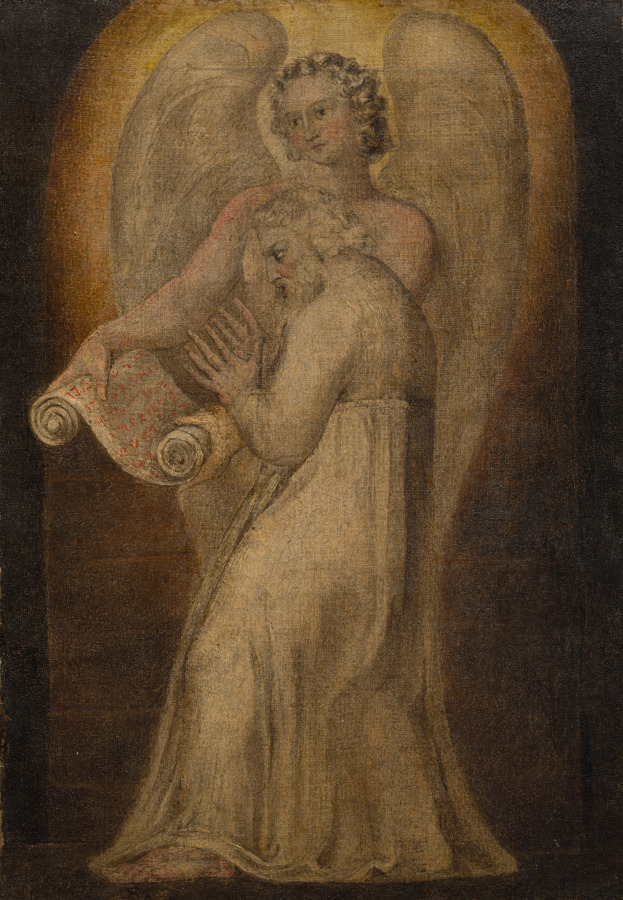
St. Matthew, William Blake, 1799

St. Matthew

1799 · Cleveland Museum of Art

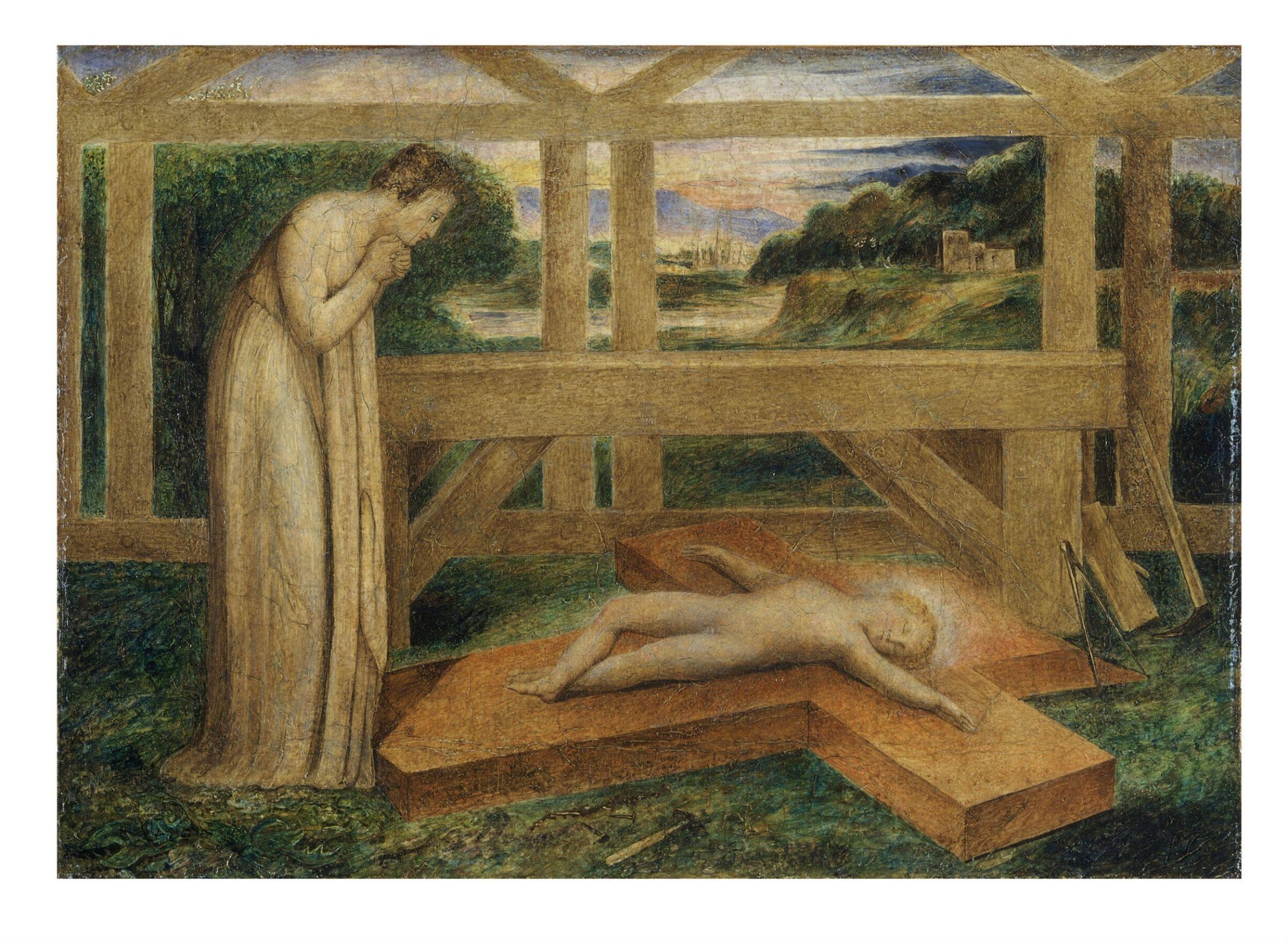
The Christ Child Asleep on the Cross, William Blake, 1799-1800

The Christ Child Asleep on the Cross

1799-1800 · Victoria and Albert Museum

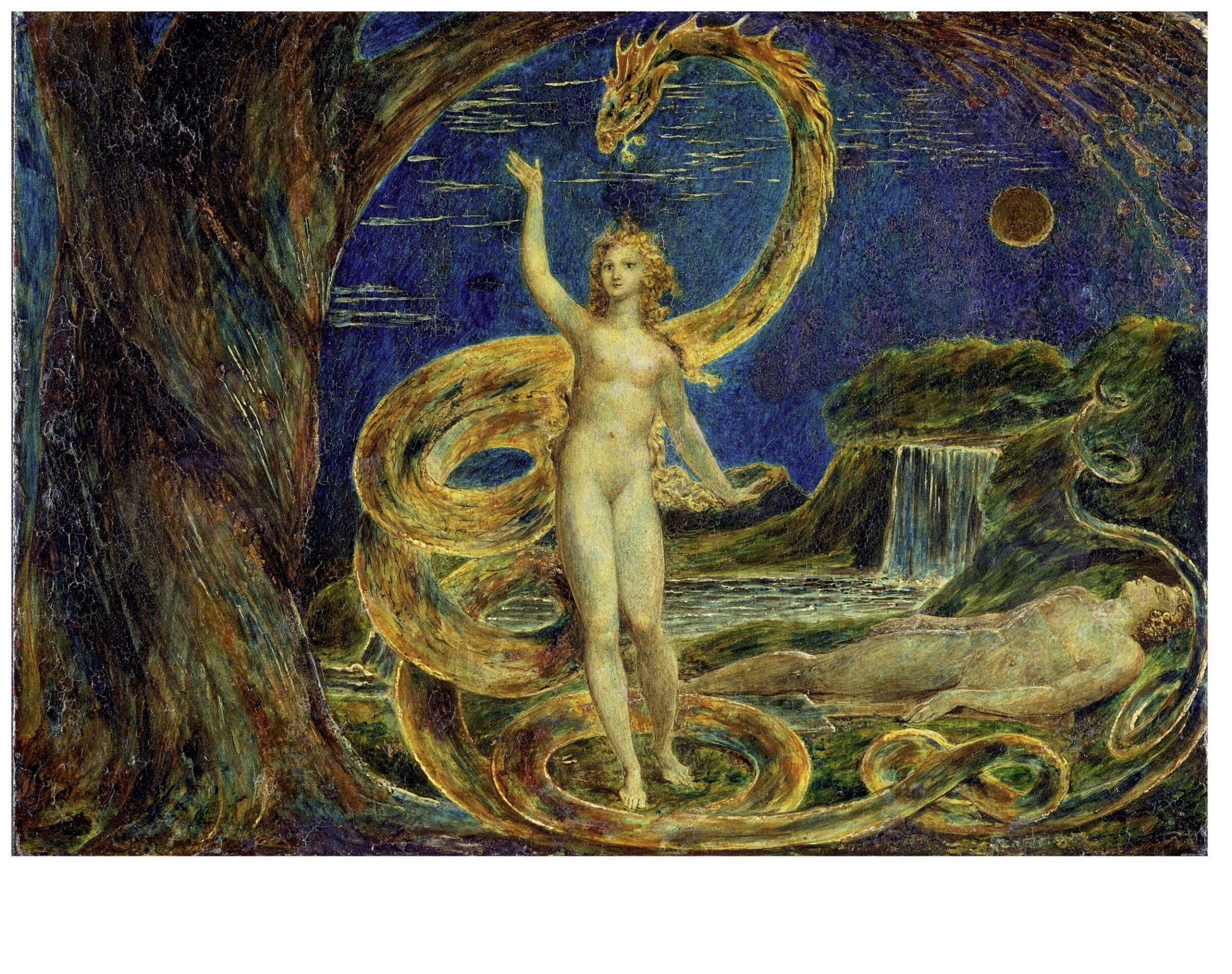
Eve Tempted by the Serpent, William Blake, 1799-1800

Eve Tempted by the Serpent

1799-1800 · Victoria and Albert Museum

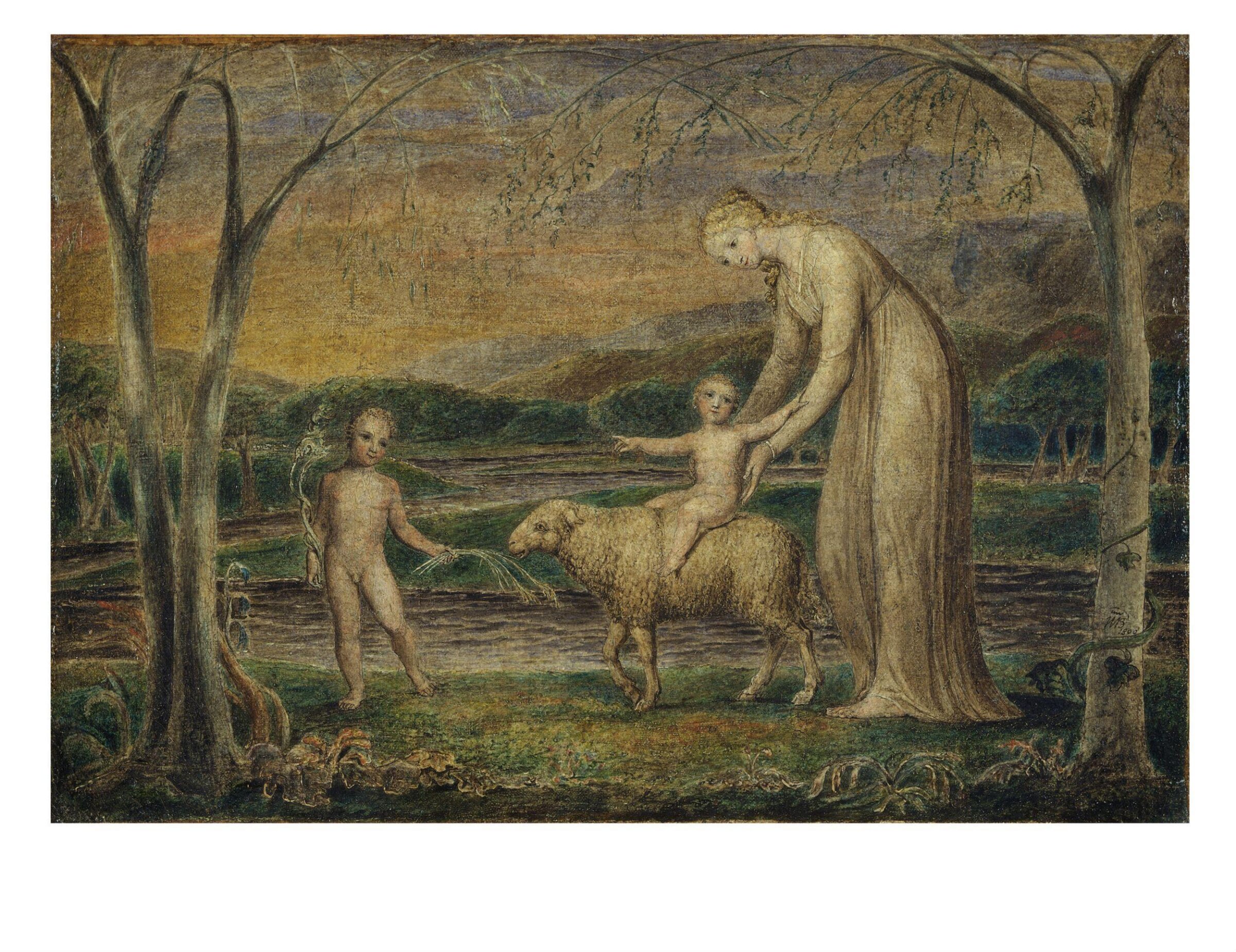
Our Lady with the Infant Jesus Riding on a Lamb with St John, William Blake, 1800

Our Lady with the Infant Jesus Riding on a Lamb with St John

1800 · Victoria and Albert Museum

War, William Blake, 1805

War

1805 · Harvard Art Museums

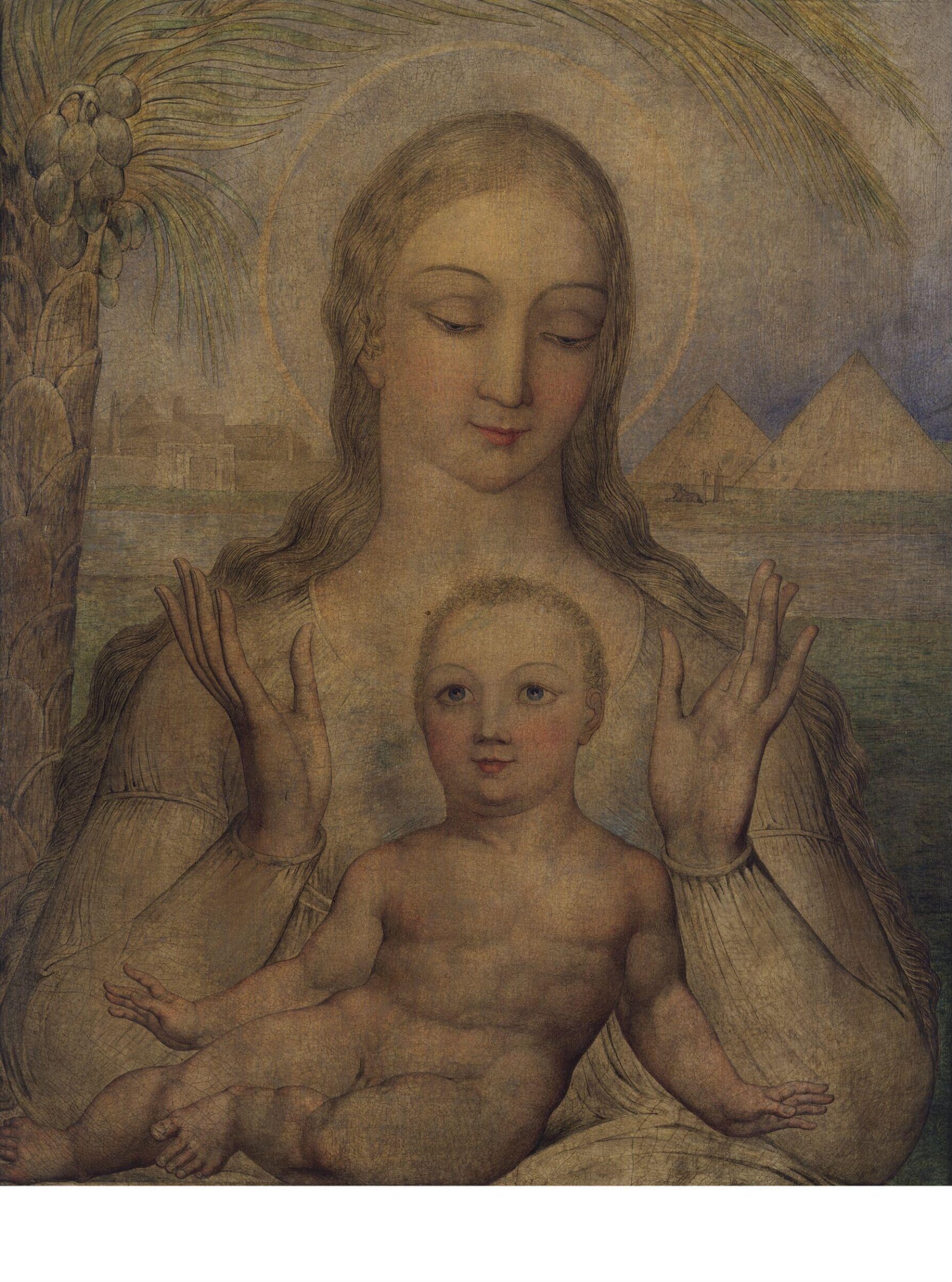
The Virgin and Child in Egypt, William Blake, 1810

The Virgin and Child in Egypt

1810 · Victoria and Albert Museum

Christ Blessing, William Blake, c. 1810

Christ Blessing

c. 1810 · Harvard Art Museums

The Circle of the Corrupt Officials; the Devils Tormenting Ciampolo, William Blake, 1827, printed 1968

The Circle of the Corrupt Officials; the Devils Tormenting Ciampolo

1827, printed 1968 · Nicht ausgestellt · National Gallery of Art

Aus der Sammlung: National Gallery

Museumsseite
Virgin of the Rocks, Leonardo da Vinci, 1490s

Leonardo da Vinci

Virgin of the Rocks, 1490s

Long Grass with Butterflies, Vincent van Gogh, 1890

Vincent van Gogh

Long Grass with Butterflies, 1890

Farms near Auvers, Vincent van Gogh, 1890

Vincent van Gogh

Strohgedeckte Häuser vor einem Hügel, 1890

A Wheatfield, with Cypresses, Vincent van Gogh, 1889

Vincent van Gogh

A Wheatfield, with Cypresses, 1889

Head of a Peasant Woman, Vincent van Gogh, 1885

Vincent van Gogh

Head of a Peasant Woman, 1885

The Entombment, Michelangelo, c. 1500s

Michelangelo

Die Grablegung Christi, c. 1500s

Manchester Madonna, Michelangelo, c. 1494

Michelangelo

Madonna Manchester, c. 1494

Irises, Claude Monet, 1910s

Claude Monet

Irises, 1910s