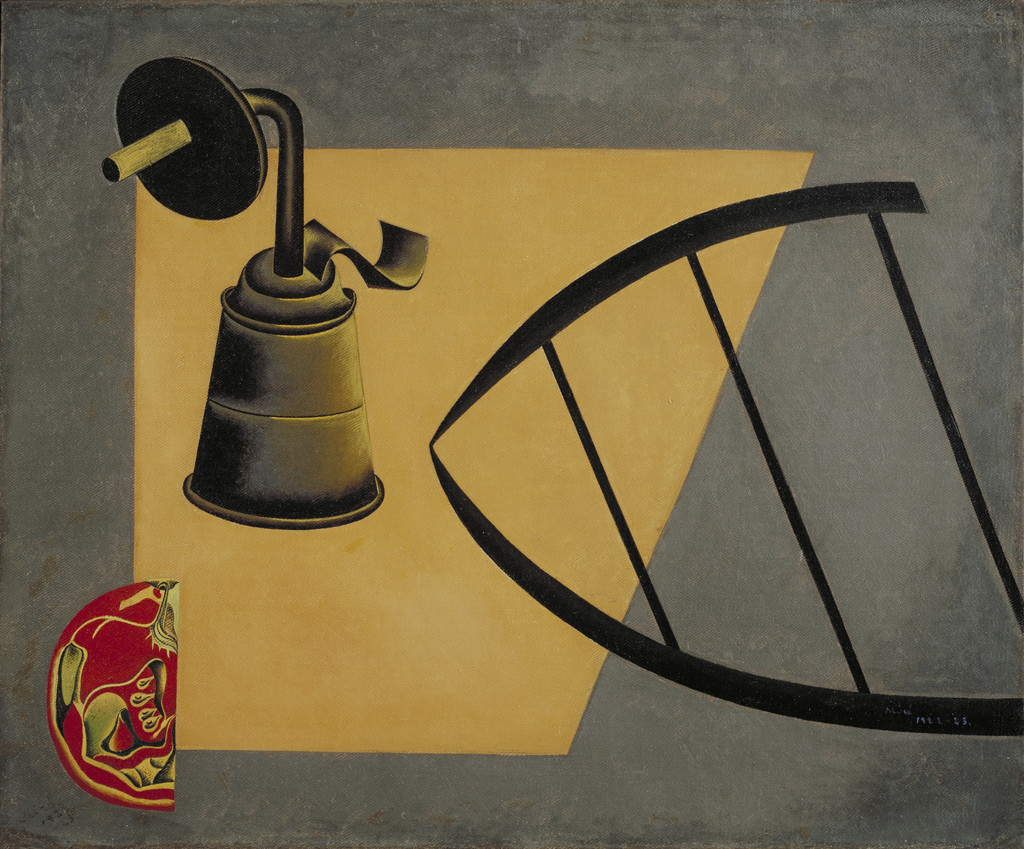
 Joan MiróSpanien, 1893–1983
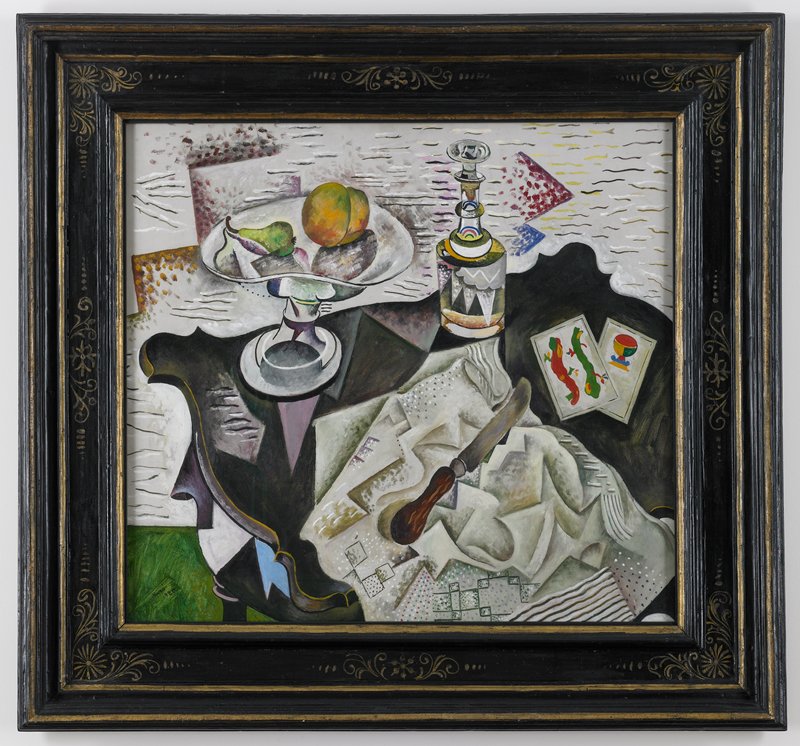
Still Life II
Darf man es sehen?
Empfängt derzeit nicht

Museum of Modern Art
New York City, Vereinigte Staaten
Es gehört zur Sammlung, ist derzeit aber nicht ausgestellt.
- Geprüft
- Quelle
- Sammlungsdaten des Museums selbst
Über das Gemälde
Die Karbidlampe Still Life II ist ein Gemälde aus dem Frühwerk von Joan Miró, das er 1922/23 in Katalonien malte. Das in Mont-roig del Camp und Paris entstandene Bild gilt als Werk des Übergangs, in der Miró hin zur endgültigen Abkehr von der Wirklichkeitsdarstellung gelangte.
Angaben
- Inventarnummer
- 12.1939
Im Katalog
Quellen
- Museum of Modern Art: die offenen Daten des Museums · abgerufen vor 15 Tagen
- Bild: Museum of Modern Art — © the artist or rights holder
Derweil im Leben von Joan Miró
Das ganze Leben1920
Moves to Paris
Inspired by Fauve and Cubist exhibitions, Miró was drawn to the artistic community gathering in Montparnasse and moved to Paris, though he continued to spend his summers in Catalonia.
1920
Meets Picasso
In Paris Miró met Picasso and other artists.
1921
His first solo show in Paris
Josep Dalmau arranged Miró's first Parisian solo exhibition at the Galerie la Licorne.
1924
Joins the Surrealist circle
Miró joined the Surrealist circle, whose dream-like automatism suited his symbolic and poetic art, but chose not to become an official member so as to experiment freely; Breton called him “the most Surrealist of us all”.
1925
Friendship with Robert Desnos
Miró became friends with the poet Robert Desnos; they soon planned a livre d'artiste together, but the Spanish Civil War and World War II put the plans on hold. Desnos died in 1945, shortly after his release from the concentration camps.
second half of the 1920s
A language of signs and ideograms
In “Person Throwing a Stone at a Bird” and “Dog Barking at the Moon” (both 1926) a set of recurrent ideograms took shape: symbols of space — horizon, waves, heavenly bodies — and “mediating symbols” — birds, a ladder to the sky, an eye, an ear, a figure with giant feet.