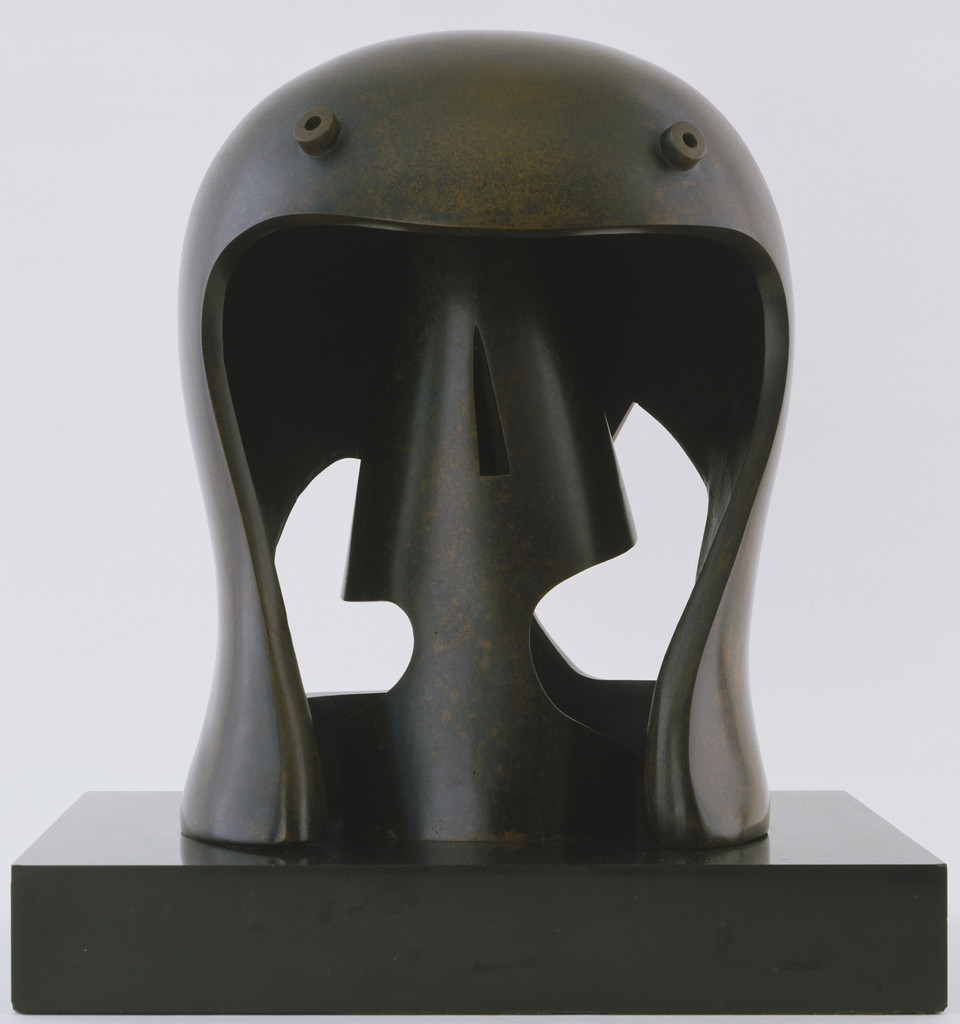
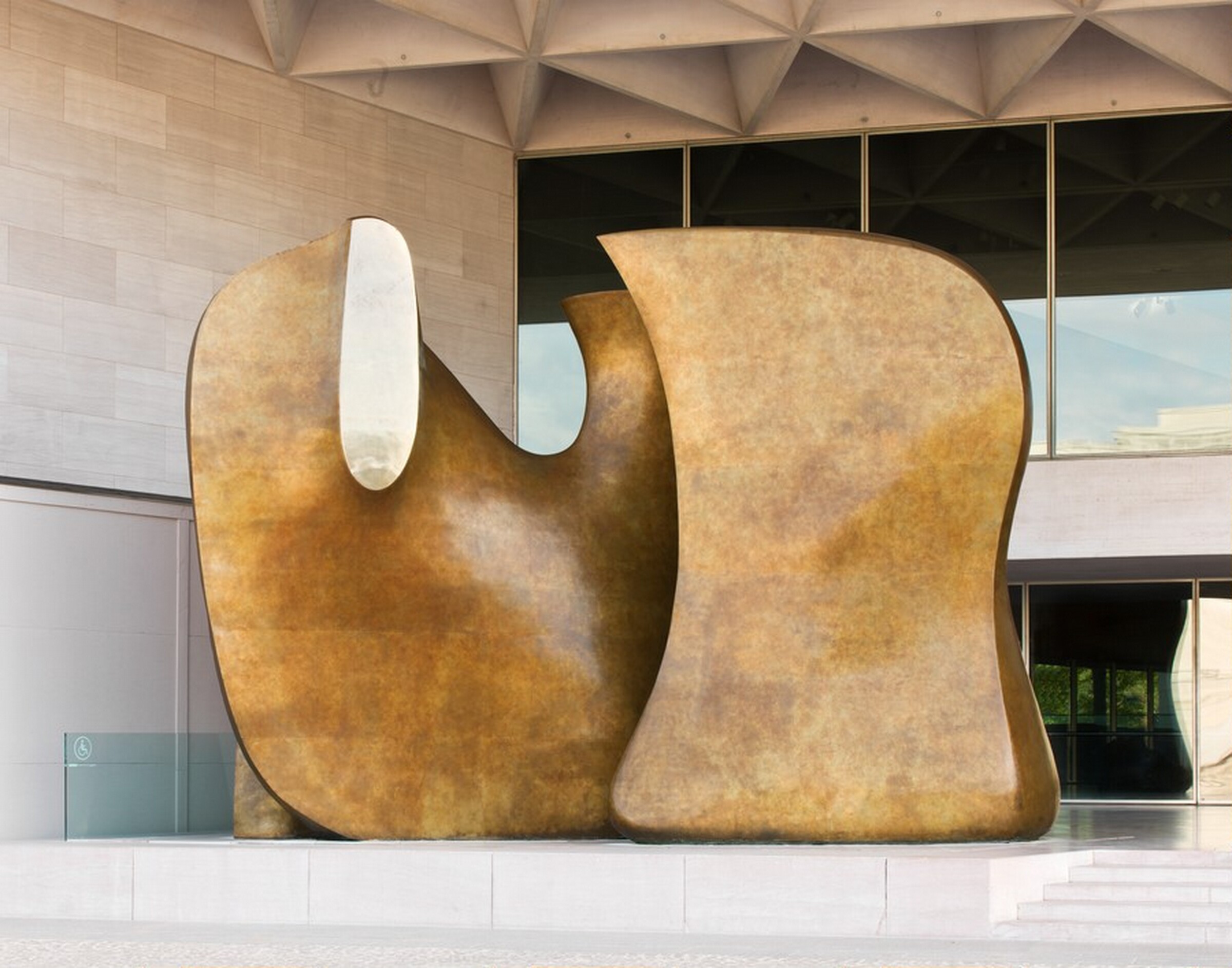
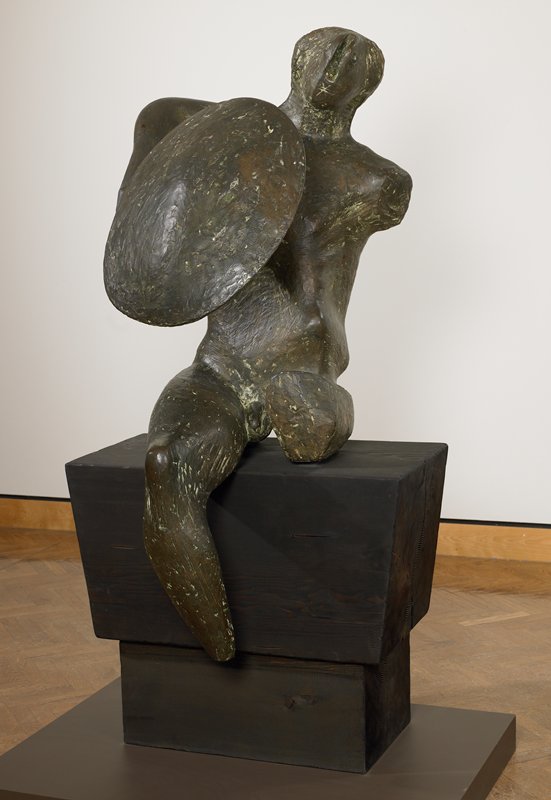
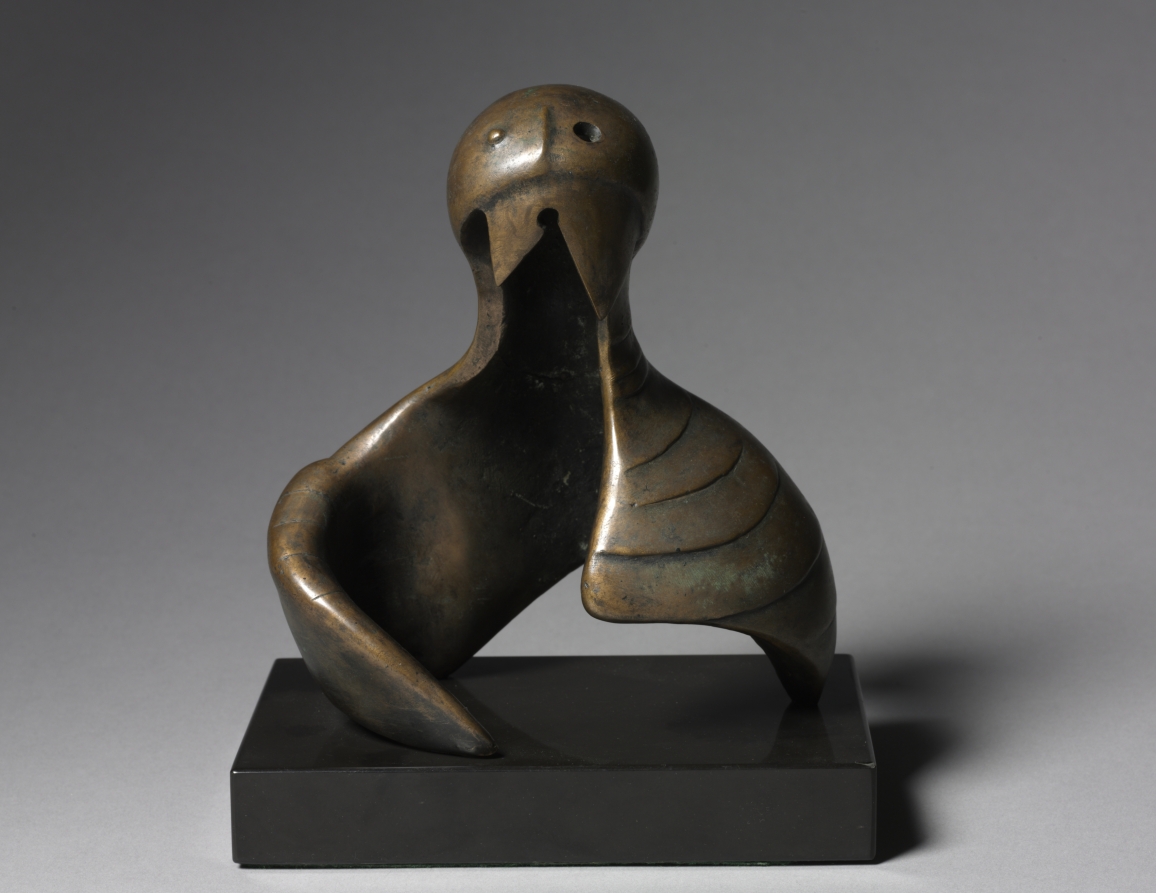
Henry MooreEngland, 1898–1986
Sculpture and Red Rocks
Darf man es sehen?
Empfängt derzeit nicht

New York City, Vereinigte Staaten
Es gehört zur Sammlung, ist derzeit aber nicht ausgestellt.
- Geprüft
- Quelle
- Das Museum
Angaben
- Inventarnummer
- 9.1949
Im Katalog
Quellen
- Museum of Modern Art
- Bild: Museum of Modern Art — © the artist or rights holder
Derweil im Leben von Henry Moore
Das ganze Leben1929–1940
A studio in Hampstead, “a nest of gentle artists”
Soon after the wedding the couple moved to a studio at 11a Parkhill Road in Hampstead, joining a colony of avant-garde artists: Hepworth and her husband Ben Nicholson lived around the corner, along with Naum Gabo, Roland Penrose, Cecil Stephenson and the critic Herbert Read, who called the area “a nest of gentle artists”.
1940–1986
A bomb in Hampstead: the move to Hoglands
In September 1940 bomb shrapnel hit the Moores’ Hampstead home and they left London for Hoglands, a farmhouse in the hamlet of Perry Green near Much Hadham in Hertfordshire. It remained Moore’s home and workshop for the rest of his life; though he grew wealthy he never felt the need to move to larger premises.
1941
The miners of Wheldale
In August 1941 the War Artists’ Advisory Committee commissioned Moore to draw miners working underground at the Wheldale Colliery in Yorkshire, where his father had worked. He drew the shelterers passively awaiting the all-clear, while the miners aggressively worked the coal-faces.
1944
The death of Moore’s mother
Moore’s mother, Mary (née Baker), died in 1944; two years later his daughter was named after her.