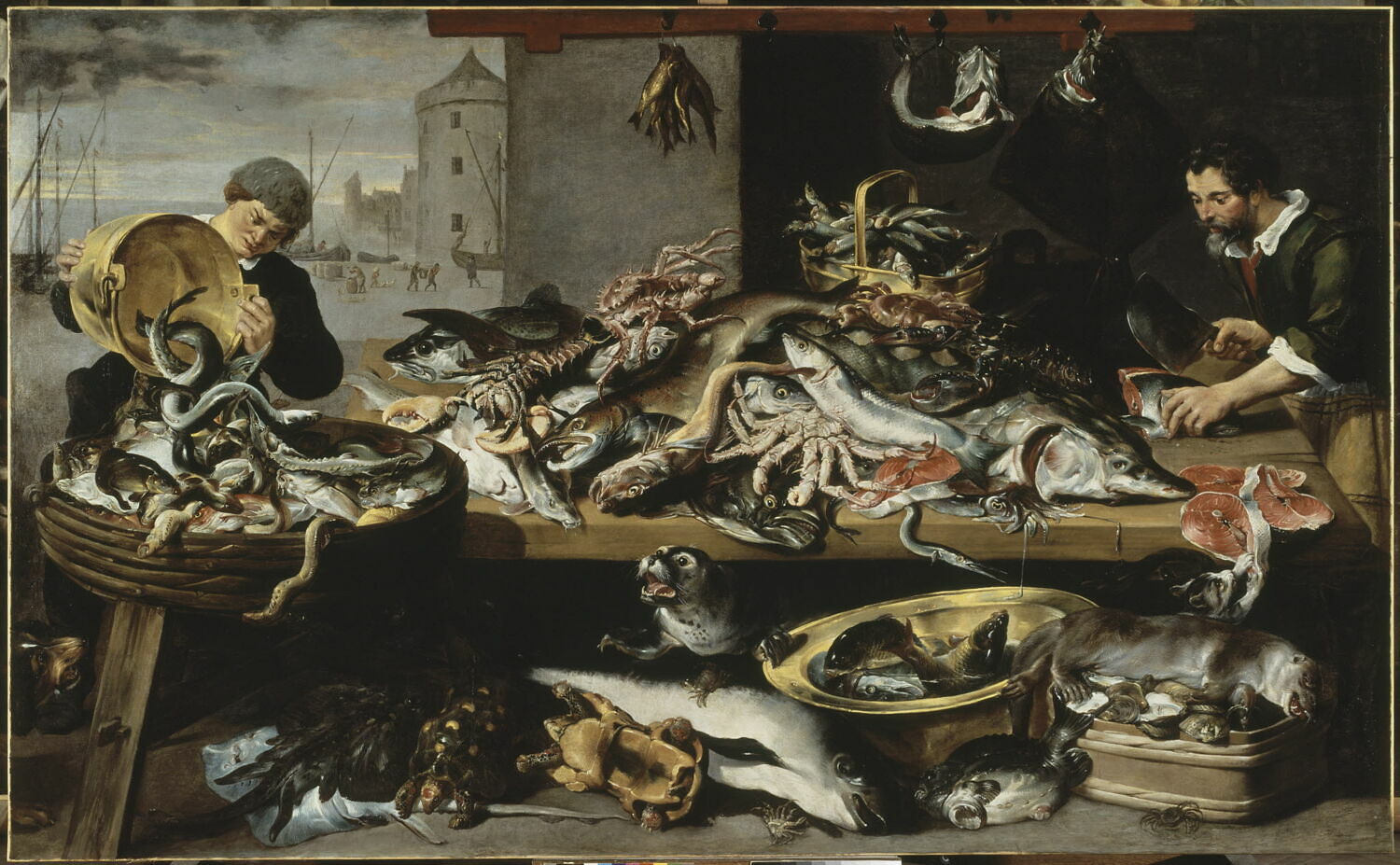
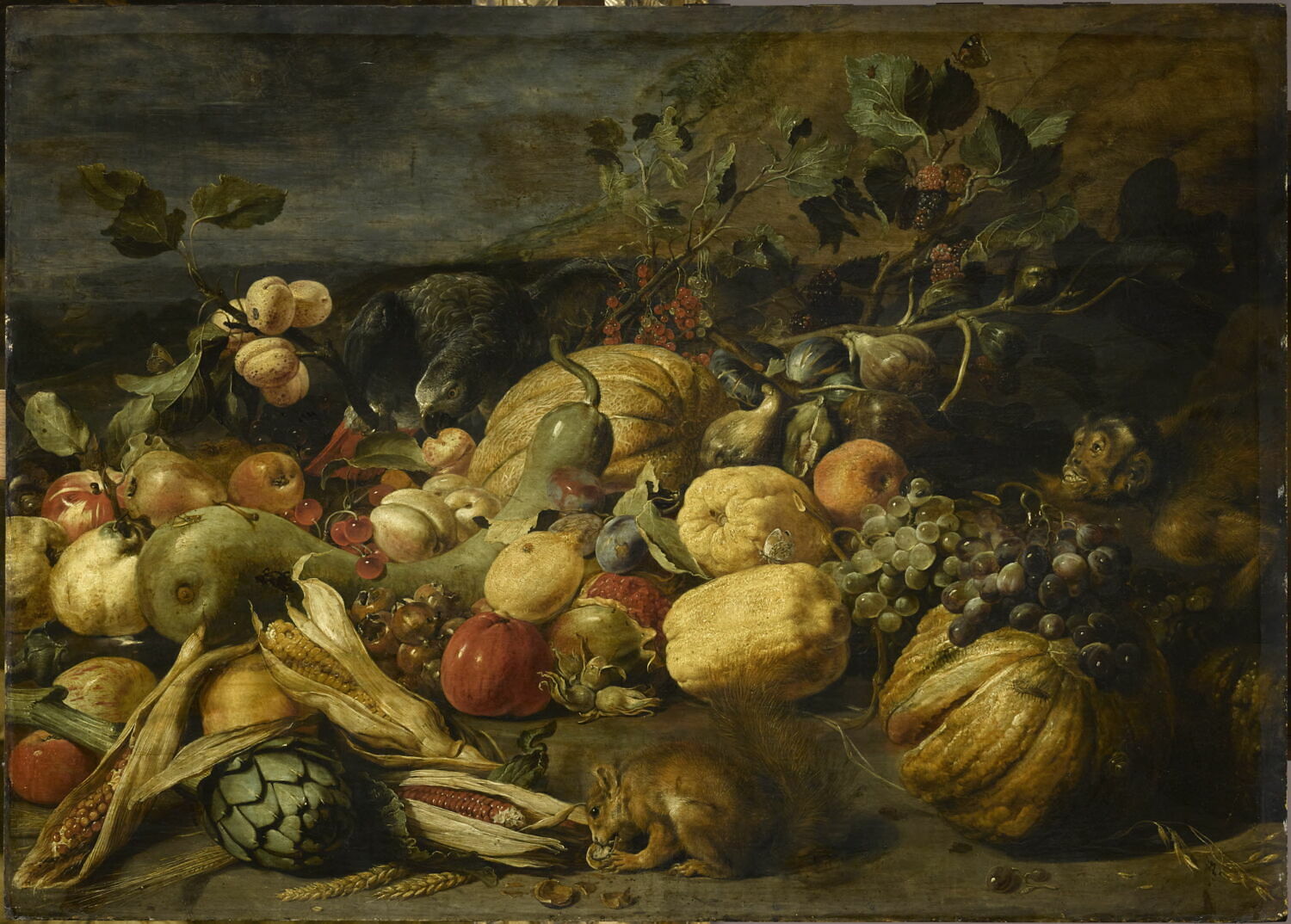
Snyders, FransFlandern, 1579–1657
Bird's Concert
Darf man es sehen?
Ja, es empfängt Besucher

Sankt Petersburg, Russland
Öffentlich ausgestellt.
- Geprüft
- Unverändert seit
- Quelle
- Das Museum
Über das Gemälde
In den Worten des Museums — auf Russisch
На картине представлено красочное многообразие птиц, окруживших филина, сидящего на ветке с раскрытой музыкальной партитурой. Эта тема, заимствованная из басни Эзопа «Сова и птица», под влиянием Снейдерса нашла широкое распространение во фламандском искусстве XVII в. В Средние века басню рассматривали как религиозную аллегорию, однако Снейдерс здесь далек от подобной интерпретации и использует сюжет как предлог к тому, чтобы продемонстрировать невероятное богатство пернатой фауны. На картине представлены как птицы, населяющие европейские леса, поля и водные просторы, так и более декоративные экземпляры, разводившиеся в Европе, как, например, павлин, голубь «дутыш», амазонский попугай и красный ара. Судя по формату произведения, оно предназначалось для десюдепорта – декоративной панели, расположенной над дверным проемом. Существует множество версий и копий этой картины.
Eremitage
Angaben
- Inventarnummer
- ГЭ-607
Im Katalog
Quellen
- Eremitage
- Bild: Eremitage — Museum open access
Derweil im Leben von Snyders, Frans
Das ganze Leben1609–1657 · Wirkungsort
Antwerp
1610–1640
A close collaboration with Rubens
From the 1610s Snyders works with Rubens, who admires his ability to render the textures of fur and skin and often has him paint animals, fruit and still life in his own pictures; the collaboration is particularly close between 1610 and 1640. At first Rubens himself sketches the whole composition in oils and marks the place for Snyders’s contribution (“The Recognition of Philopoemen”, regarded as the first Baroque still life with figures), while in “Prometheus Bound” it is the reverse: Snyders makes the sketch, leaving space for Rubens’s figure. Contemporaries had difficulty telling their hands apart in joint works, and after Rubens’s death Snyders was one of the appraisers of the inventory of his collection.
1628
Becomes dean of the Guild of St Luke
In 1628 Snyders becomes dean of the Antwerp Guild of St Luke, which he had joined as a master in 1602.
1629
Jan Fyt joins as pupil, later assistant
From 1629 Jan Fyt studies with Snyders and then serves as his assistant. The master’s pupils are believed also to include Nicasius Bernaerts, Peter van Boucle (no written confirmation of his apprenticeship in Antwerp exists), Juriaen Jacobsze, Jan Roos and Paul de Vos.
1641–1642
A trip to the Dutch Republic
In 1641 and 1642 Snyders travels with other artists to the Dutch Republic.