Snyders, FransFlandern, 1579–1657
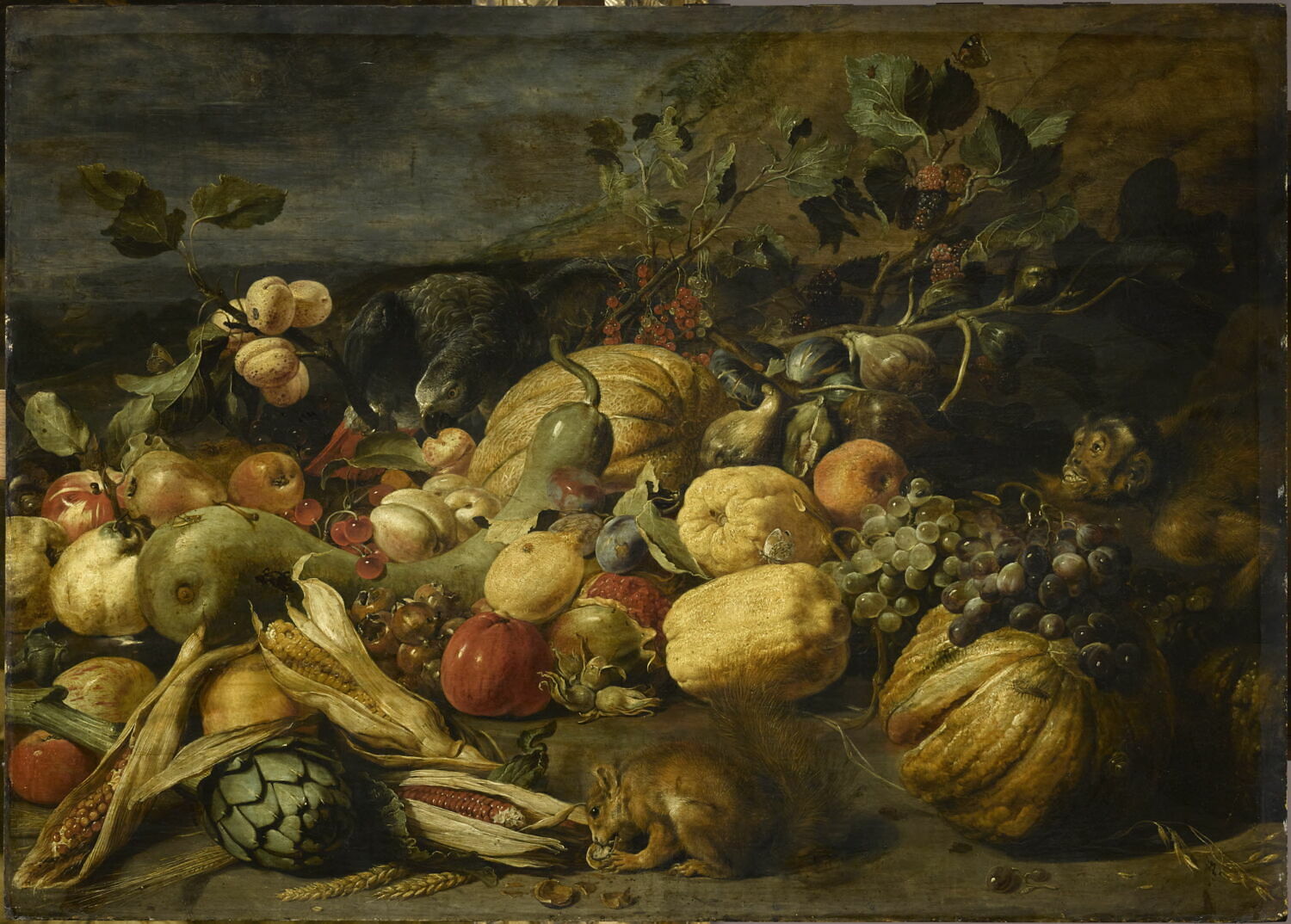
The Fruit Shop
Kann ich es sehen?
Ja, derzeit ausgestellt
Wo ist „The Fruit Shop“ heute? Eremitage, Saal 245, Sankt Petersburg. Ja, derzeit ausgestellt. Geprüft 29. August 2026.

Sankt Petersburg, Russland
Geschlossen· öffnet um 12:00
Öffentlich ausgestellt.
- Geprüft
- Unverändert seit
- Quelle
- Das Museum
Über das Gemälde
In den Worten des Museums — auf Russisch
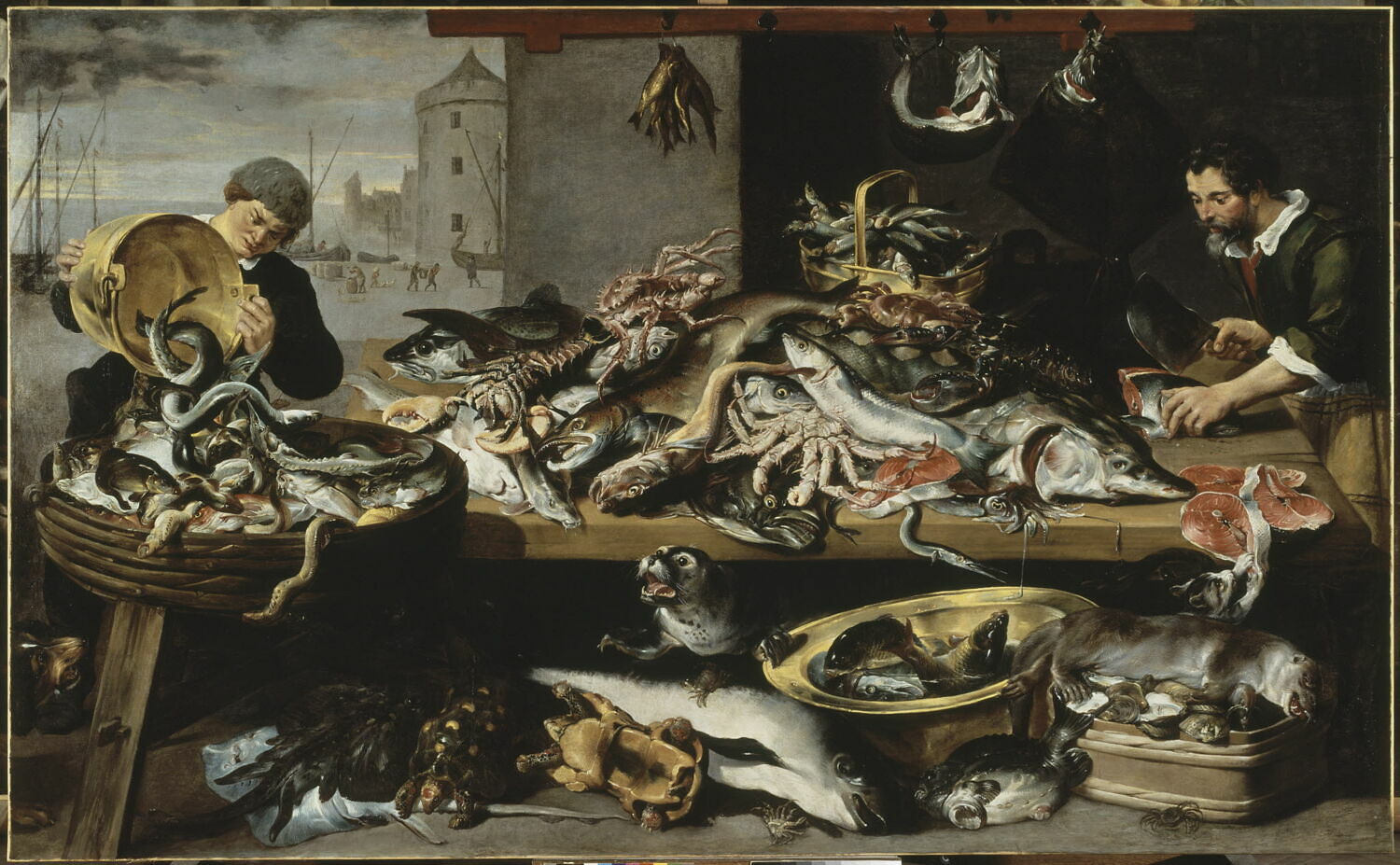
Жизнелюбие фламандцев и присущая им широта натуры воплотились в монументальных полотнах серии «Лавки» кисти Франса Снейдерса. Он был создателем совершенно особого типа натюрморта. Кажется, всё богатство даров природы собрано в его композициях, впечатляющих своим чисто барочным размахом, динамизмом и яркой красочностью. Тут и разнообразные плоды, и битая дичь, и всевозможная морская живность. Несмотря на то, что эти лавки – плод авторской фантазии, Снейдерс демонстрирует в них исключительное знание натуры, с неподражаемым мастерством передавая цвет и фактуру фруктов и овощей, заботясь при этом и о создании определенного декоративного эффекта, ведь эти полотна предназначались для украшения парадных апартаментов. Серия создана мастером в 1618-1621 гг. по заказу королевского сборщика налогов Жака ван Офема для его нового особняка в Брюсселе.
Mehr lesen
По замыслу автора, картины могли служить аллегориями четырех природных стихий: Земли, Воды, Воздуха и Огня (Солнца) и «Пяти чувств». Картина «Фруктовая лавка» очевидно символизирует Солнце, ведь именно с ним связано созревание фруктов и великолепного урожая. Не случайно «Фруктовая лавка» - самая яркая в серии, а все цвета в ней объединены общим золотистым тоном.
Eremitage
Angaben
- Inventarnummer
- ГЭ-596
Im Katalog
Quellen
- Eremitage
- Bild: Eremitage — Museum open access
Im Leben von Snyders, Frans
Das ganze Leben1609–1657 · Wirkungsort
Antwerp
1610–1640
A close collaboration with Rubens
From the 1610s Snyders works with Rubens, who admires his ability to render the textures of fur and skin and often has him paint animals, fruit and still life in his own pictures; the collaboration is particularly close between 1610 and 1640. At first Rubens himself sketches the whole composition in oils and marks the place for Snyders’s contribution (“The Recognition of Philopoemen”, regarded as the first Baroque still life with figures), while in “Prometheus Bound” it is the reverse: Snyders makes the sketch, leaving space for Rubens’s figure. Contemporaries had difficulty telling their hands apart in joint works, and after Rubens’s death Snyders was one of the appraisers of the inventory of his collection.
1628
Becomes dean of the Guild of St Luke
In 1628 Snyders becomes dean of the Antwerp Guild of St Luke, which he had joined as a master in 1602.
1629
Jan Fyt joins as pupil, later assistant
From 1629 Jan Fyt studies with Snyders and then serves as his assistant. The master’s pupils are believed also to include Nicasius Bernaerts, Peter van Boucle (no written confirmation of his apprenticeship in Antwerp exists), Juriaen Jacobsze, Jan Roos and Paul de Vos.