Paul GauguinFrankreich, 1848–1903
Sunflowers
Darf man es sehen?
Ja, derzeit ausgestellt
Wo ist „Sunflowers“ heute? Eremitage, Saal 412, Sankt Petersburg. Ja, derzeit ausgestellt. Geprüft 29. August 2026.

Sankt Petersburg, Russland
Öffentlich ausgestellt.
- Geprüft
- Unverändert seit
- Quelle
- Das Museum
Über das Gemälde
In den Worten des Museums — auf Russisch
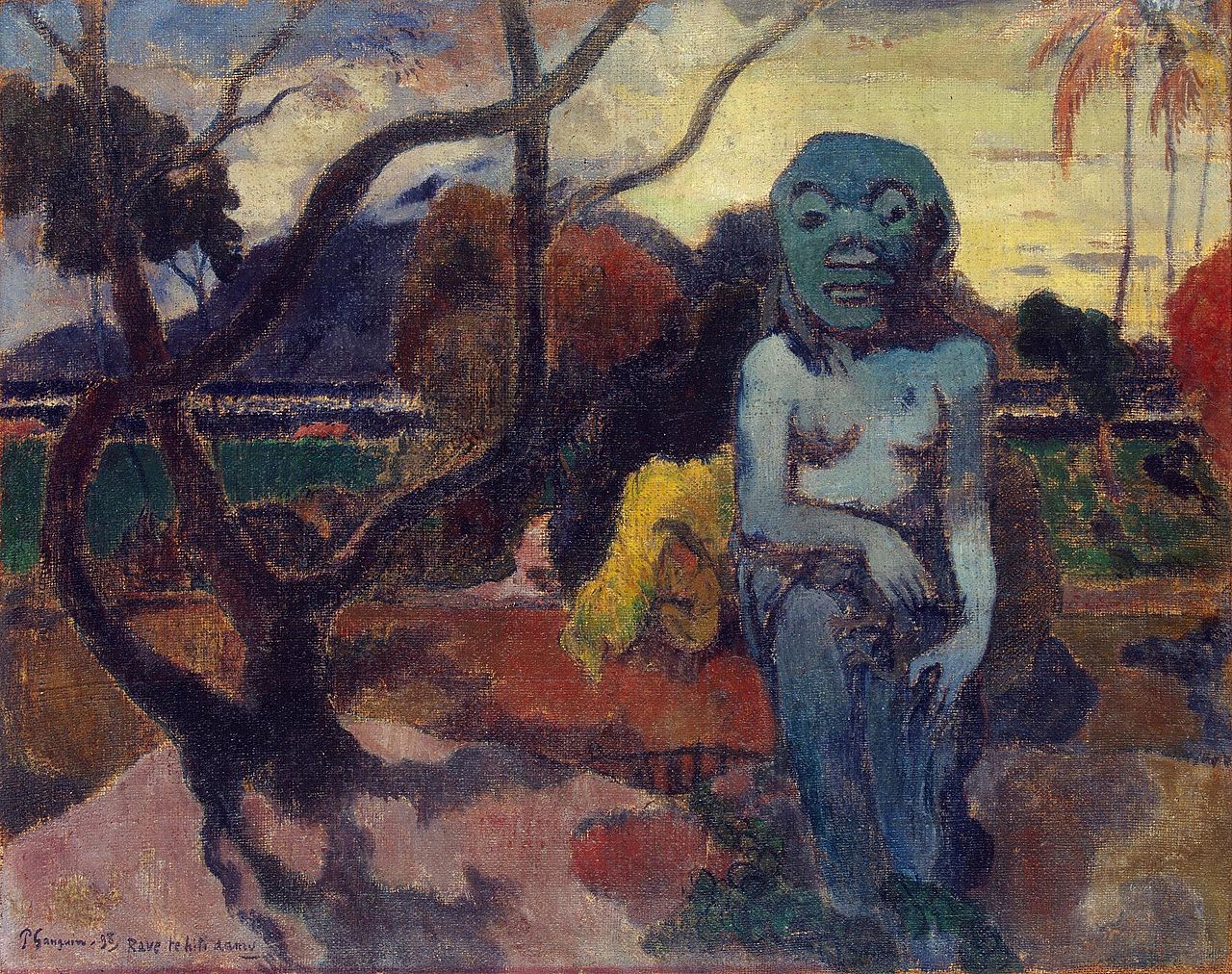
Картина написана Гогеном в Полинезии в последние годы жизни. Ее тема восходит к творчеству Ван Гога, в котором мотив подсолнечника - символа солнца - занимал особое место. В 1888 г. оба художника работали в Арле, где Ван Гог писал натюрморты с подсолнечниками. Гоген вырастил эти цветы в Океании из семян, присланных ему из Франции. Фантазия мастера преображает реальность и наделяет ее таинственностью. Глаз, раскрывающийся в центре цветка на заднем плане, создает мистическое настроение. Он напоминает "всевидящее око", изображение которого часто встречается в христианских церквях. Лицо в проеме окна походит своими непроницаемыми чертами на лик Будды, фигуру которого Гоген вырезал однажды из дерева. Так экзотика Океании соединилась с ностальгическими воспоминаниями об оставленной художником Европе.
Eremitage
Angaben
- Inventarnummer
- ГЭ-6516
Im Katalog
Quellen
- Eremitage
- Bild: Eremitage — Museum open access
Derweil im Leben von Paul Gauguin
Das ganze Leben1891–1901 · Wirkungsort
Tahiti
1899
Birth of a Son by Pahura
In 1899 the artist's Tahitian lover Pahura bore him a son; the painting Women by the Sea (Maternity) is associated with this event.
1899
Son born: Emile Gauguin
16 September 1901
Move to Hiva Oa, the House of Pleasure
On 16 September 1901 Gauguin arrived at Atuona on the island of Hiva Oa (Marquesas Islands), where he bought a plot from the Catholic mission and built a two-story house he named the Maison du Jouir ("House of Pleasure"). Here, despite illness and poverty, he worked at full strength — painting landscapes, writing stories, and engaging in journalism.
27 March 1903
Sentence: Fine and Three Months in Prison
After Gauguin's campaign against the gendarmes and his accusations of corruption, the gendarme Claverie sued him for libel: on 27 March 1903 the local magistrate sentenced the artist to a fine of 500 francs and three months in prison. Gauguin appealed to Papeete, but the imprisonment was never carried out — he died shortly afterwards.
8. Mai 1903
Died



![Pair of Wooden Shoes (Sabots) [left], Paul Gauguin, 1889/1890](https://api.nga.gov/iiif/44a731a9-e900-4898-a282-01034fcaa6ca/full/!2400,2400/0/default.jpg)