Jasper JohnsVereinigte Staaten, 1930
Perilous Night
Kann ich es sehen?
Derzeit nicht ausgestellt
Wo ist „Perilous Night“ heute? Sammlung: Art Institute of Chicago, Chicago. Derzeit nicht ausgestellt. Geprüft 23. November 2026.

Chicago, Vereinigte Staaten
Es gehört zur Sammlung, ist derzeit aber nicht ausgestellt.
- Geprüft
- Unverändert seit
- Quelle
- Das Museum
Über das Werk
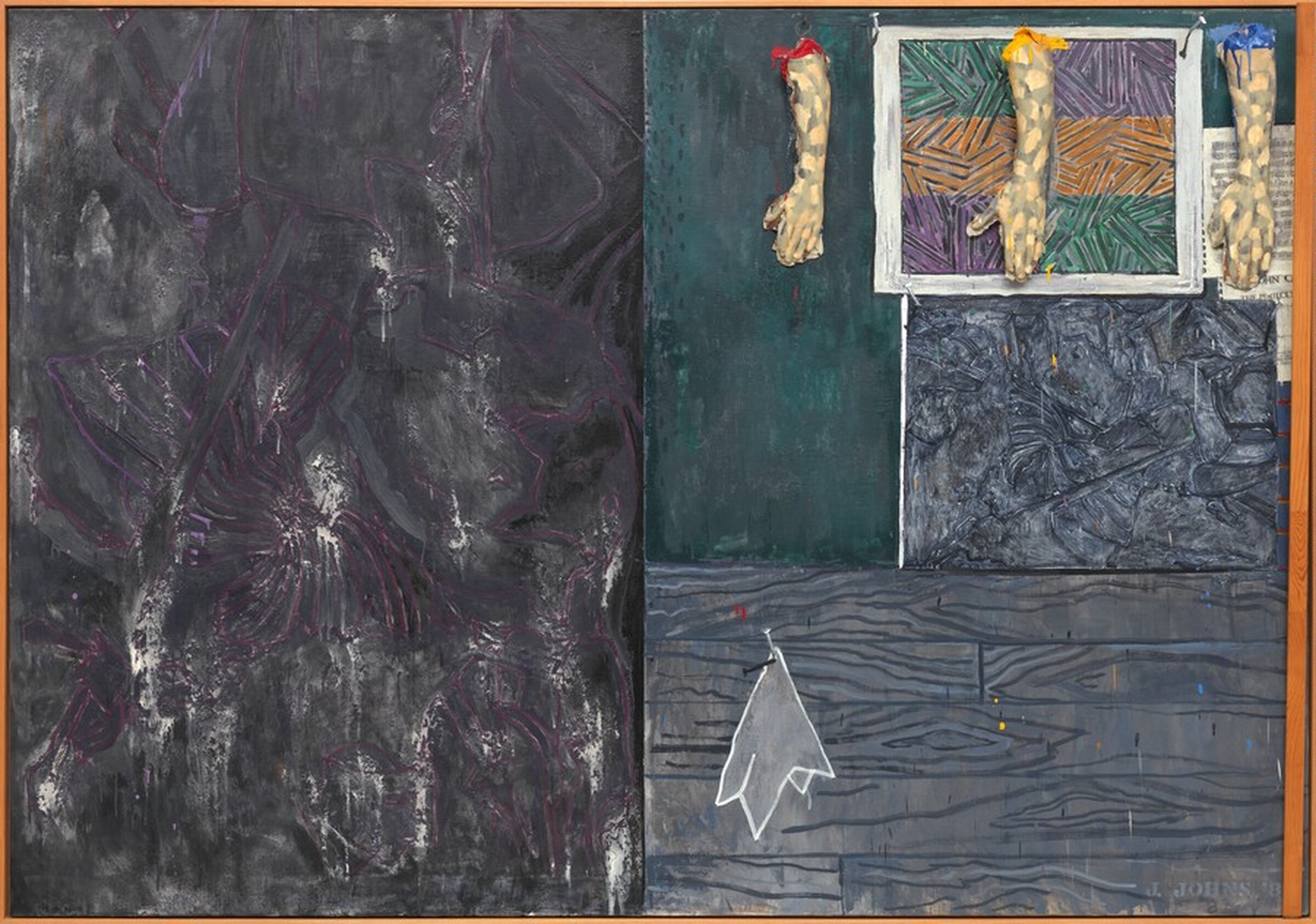
Jasper Johns began his career in the mid-1950s by re-creating, with great precision, such familiar images as targets, letters, numbers, and flags. Although his subject matter has become less commonplace, he continues to “borrow” from the public domain. Perilous Night, for instance, owes its title to a pivotal and expressive piece of music written by the American composer John Cage (1912–1992) in 1945. Both score and cover sheet are rendered on the right-hand side of the drawing with Johns’s characteristically fluid handling of ink. On the sheet’s left side is a freehand rendition—abstracted, reversed, and turned ninety degrees—of a single, terror-stricken soldier from the Resurrection panel of Matthias Grünewald’s sixteenth-century masterwork the Isenheim Altarpiece (Unterlinden Museum, Colmar).
Mehr lesen
Between the soldier and the musical score is a black imprint of Johns’s right arm, evidence perhaps of the creative power that can merge two disparate images into a cogent statement. The overcome soldier witnessing the Resurrection of Christ and a piece of music marking a key transition in a composer’s career both point to “perilous nights” that can change the course of a human life. Characteristically, Johns also explored the same subject in different media. This somberly colored drawing derives from a painting of the same name (1982; National Gallery of Art, Washington, DC).
Art Institute of ChicagoCC BY 4.0
Angaben
- Inventarnummer
- 1989.82
Was es zeigt
Im Katalog
Quellen
- Art Institute of Chicago
- Bild: Art Institute of Chicago — © the artist or rights holder
Im Leben von Jasper Johns
Das ganze Leben1967–1980
Künstlerischer Berater der Merce Cunningham Dance Company
Johns hatte die Merce Cunningham Dance Company lange unterstützt, Mittel und Aufmerksamkeit beschafft und in den 1950er Jahren Rauschenberg bei Bühnen- und Kostümentwürfen geholfen; von 1967 bis 1980 war er ihr künstlerischer Berater.
1973–1987
Ein Bauernhaus mit Glasatelier in Stony Point
Von 1973 bis 1987 unterhielt Johns ein rustikales Bauernhaus aus den 1930er Jahren mit einem Atelier mit Glaswänden in Stony Point, New York.
1980
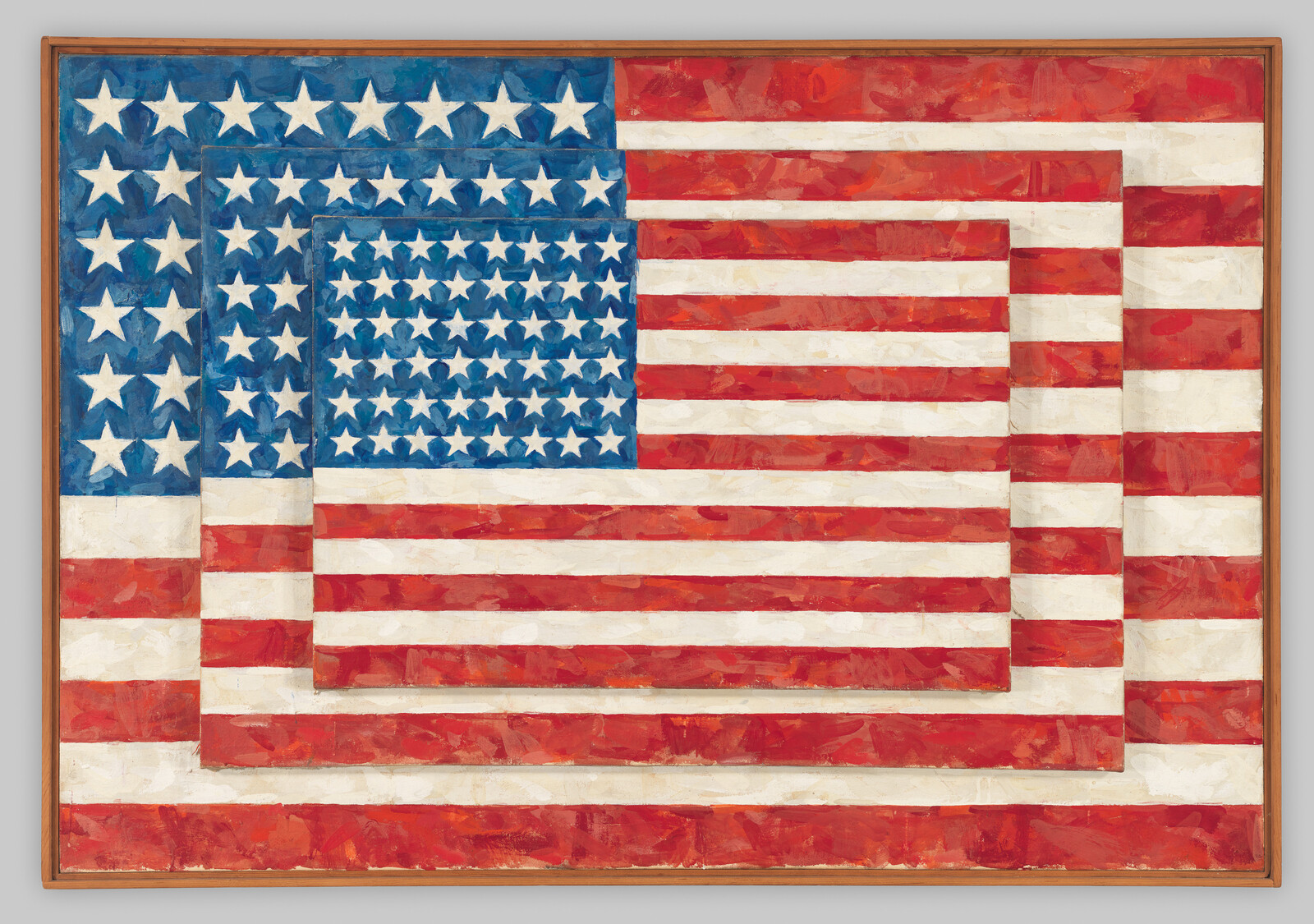
Das Whitney kauft „Three Flags“ für eine Million Dollar
1980 zahlte das Whitney Museum of American Art eine Million Dollar für „Three Flags“ (1958), damals der höchste je für das Werk eines lebenden Künstlers gezahlte Preis.