Jusepe de RiberaSpanien, 1591–1652
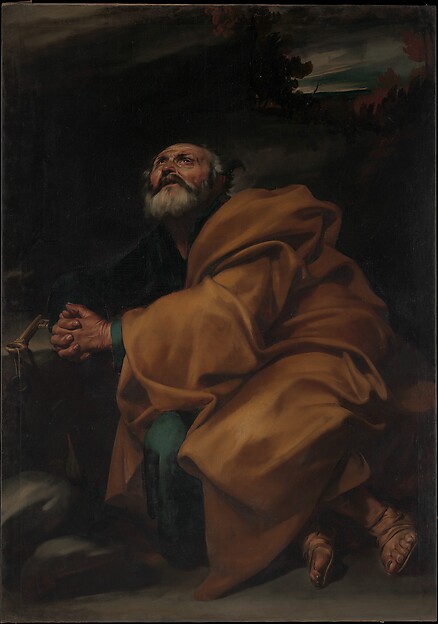
Penitent Saint Peter
Darf man es sehen?
Ja, es empfängt Besucher

Art Institute of Chicago
Saal211Chicago, Vereinigte Staaten
Öffentlich ausgestellt. Wer dafür bürgt, steht unten.
- Geprüft
- vorgestern
- Unverändert seit
- 19. Aug. 2026
- Quelle
- Sammlungsdaten des Museums selbst
About the painting
Emerging from darkness into a blaze of light falling from heaven, Saint Peter’s enraptured upward expression and gesture here suggest a moment of spiritual dialogue as he grapples with his bitter remorse for having denied that he is a follower of Christ.
Jusepe de Ribera was born near Valencia, Spain, but worked in Italy, in Rome from about 1612 until 1613, when the influence of the painter Caravaggio was at its height, then in Naples from 1616. In Naples, which was then under Spanish rule, he enjoyed the patronage of successive Spanish viceroys, producing altarpieces and paintings of classical subjects and expressive single figures like the one seen here, so lifelike in their conception that they appear to be portraits of their historical or religious subjects.
Art Institute of ChicagoCC BY 4.0
Angaben
- Inventarnummer
- 1993.60
What it shows
Im Katalog
Quellen
- Art Institute of Chicago: the museum's own open data · abgerufen vor 6 Tagen
- Bild: Art Institute of Chicago — CC0
Derweil im Leben von Jusepe de Ribera
Das ganze Leben1616–1656 · Wirkungsort
Naples
1626
The Cross of the Order of Christ from Pope Urban VIII
In 1626 Pope Urban VIII awards Ribera the Cross of the Portuguese Order of Christ.
late 1620s
Recognised as Naples's leading painter
Ribera's career picks up in the late 1620s, and he is accepted as the leading painter in Naples thereafter; he runs a workshop with many pupils, among them Francesco Fracanzano, Luca Giordano, Bartolomeo Passante and Hendrick de Somer.
1630
Velázquez visits Ribera in Naples
In 1630 Diego Velázquez visits Ribera in Naples — evidence of how well known the master was in his homeland.
1630s
The palette brightens: from tenebrism to colour
In the 1630s Ribera's colour range changes under the influence of Anthony van Dyck, Guido Reni and others: stark tenebrism gives way to more diffused light.