ART WIKI32.963 ausgestellt
KarteSammlungKünstlerMuseenAusstellungenJournal
Anmelden

ART WIKI

Wo das Meisterwerk hängt und wann man vorgelassen wird.

Sammlungen: Art Institute of Chicago, Cleveland Museum of Art, Eremitage, Getty Villa, Harvard Art Museums, Hirshhorn Museum and Sculpture Garden, J. Paul Getty Museum, Louvre, Metropolitan Museum of Art, Minneapolis Institute of Art, Museum of Modern Art, National Gallery of Art, National Museum of Asian Art, National Portrait Gallery, Puschkin-Museum, Rijksmuseum Amsterdam, Russisches Museum, Smithsonian American Art Museum, Statens Museum for Kunst, Tretjakow-Galerie, Victoria and Albert Museum, Whitney Museum of American Art, Staatskatalog des Museumsfonds Russlands (274 Museen), Europeana (19 Museen), Wikidata (6 Museen), Paris Musées (12 Museen) und Joconde, die Museumsdatenbank des französischen Kulturministeriums (495 Museen). Die Bilder gehören ihren Rechteinhabern.

Rubriken

  • Karte
  • Suche
  • Sammlung
  • Meisterwerke
  • Jetzt ausgestellt
  • Künstler

Mehr

  • Museen & Galerien
  • Ausstellungen
  • Journal
  • Woher die Daten stammen
  • Datenschutz & Cookies
StartseiteKarteKatalog
  1. Sammlung/
  2. Musée d’Orsay/
  3. On the beach
On the beach, Édouard Manet, 1873
Édouard Manet, PorträtÉdouard ManetFrankreich, 1832–1883

On the beach

1873 · Painting · 60 × 73.5 cm

Darf man es sehen?

Unbekannt

Musée d’Orsay

Paris, Frankreich

Der Besitzer ist bekannt; ob das Werk derzeit ausgestellt ist, nicht.

Unverändert seit
29. Sept. 2026
Quelle
Das Museum
Auf der KarteMuseumsseite

Über das Gemälde

Am Strand (französisch: Sur la plage) ist ein Gemälde des französischen Malers Édouard Manet. Das in Öl auf Leinwand im Stil des Impressionismus gemalte Bild entstand während der Sommerferien 1873 in Berck. Es zeigt Manets Frau Suzanne und seinen Bruder Eugène am Strand der Normandieküste. Das Gemälde hat eine Höhe von 59,6 cm und eine Breite von 73,2 cm. Es gehört zur Sammlung des Musée d’Orsay in Paris.

Wikipedia · CC BY-SA

Angaben

1873 · mit 41 Jahren
18321883
Inventarnummer
sans 28

Im Katalog

GemäldeFranzösische MalereiRealismusImpressionismus19. Jahrhundert

Quellen

  • Wikidata
  • Bild: Musée d’Orsay — Édouard Manet · Public domain · Wikimedia Commons

Derweil im Leben von Édouard Manet

Das ganze Leben
  1. 1870s

    Refuses to exhibit with the Impressionists

    Although his own work influenced and anticipated the Impressionist style, Manet resisted involvement in Impressionist exhibitions: he did not wish to be seen as the representative of a group identity and held that modern artists should seek to exhibit at the Salon.

  2. 1871

    Manet's name on the Commune's Fédération des artistes

    In his absence his friends added his name to the Paris Commune's “Fédération des artistes”; he himself stayed out of politics and perhaps returned to the city only after the “bloody week” — in a letter to Berthe Morisot of 10 June he writes that they had come back a few days earlier.

  3. 1871

    Oloron and Bordeaux: letters to Bracquemond

    In January 1871 Manet travelled to Oloron-Sainte-Marie in the Pyrenees and then visited Bordeaux, the provisional seat of the National Assembly, where Émile Zola showed him the sights. On 18 March he wrote to Félix Bracquemond that he had never imagined France could be represented by such doddering old fools.

  4. 1873

    “Le Bon Bock”: a huge success

    In his new studio in 1873 Manet painted “Le Bon Bock”, which became famous: for the first time in almost fifteen years he had a huge success, yet he did not turn into a fashionable, opportunistic painter.

  5. 1874

    “The Railway”: ridicule at the Salon of 1874

    “The Railway”, painted in 1873, puzzled visitors and critics at the Salon of 1874: its subject seemed baffling, its composition incoherent and its execution sketchy; caricaturists ridiculed it, and only later was it recognised as a symbol of modernity. The model was Victorine Meurent, for the last time.

  6. 1874–1876

    The Salon jury rejects his paintings again

    In 1874 the jury rejected “Masked Ball at the Opera”, and in 1876 both paintings Manet sent. Independent exhibitions in those years brought nothing but public censure and the mockery of critics.

Mehr von Édouard Manet

Alle Werke
The Spanish Singer, Edouard Manet, 1860

Spanischer Sänger

1860 · Metropolitan Museum of Art

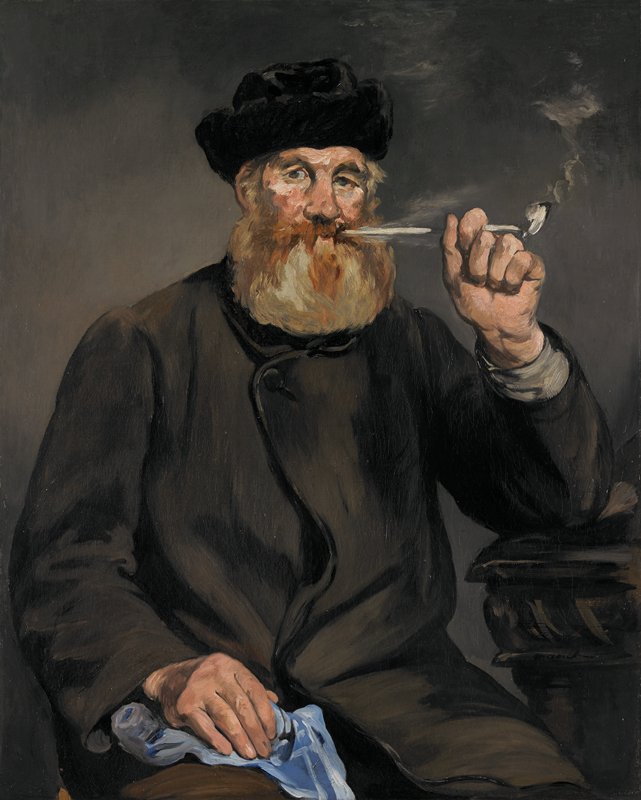
The Smoker, Édouard Manet, 1866

The Smoker

1866 · Minneapolis Institute of Art

Young Lady in 1866, Edouard Manet, 1866

Young Lady in 1866

1866 · Metropolitan Museum of Art

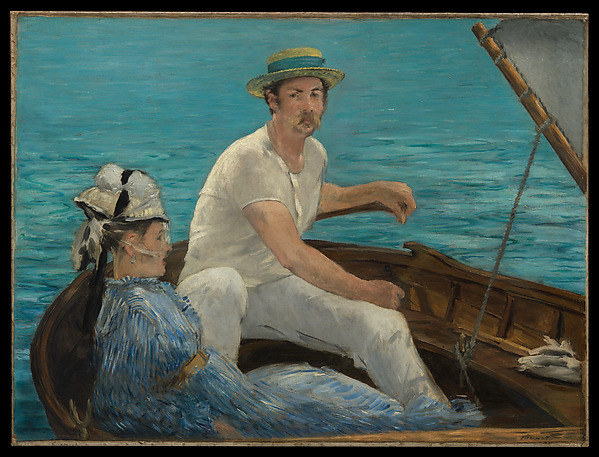
Boating, Edouard Manet, 1874

Im Boot

1874 · Metropolitan Museum of Art

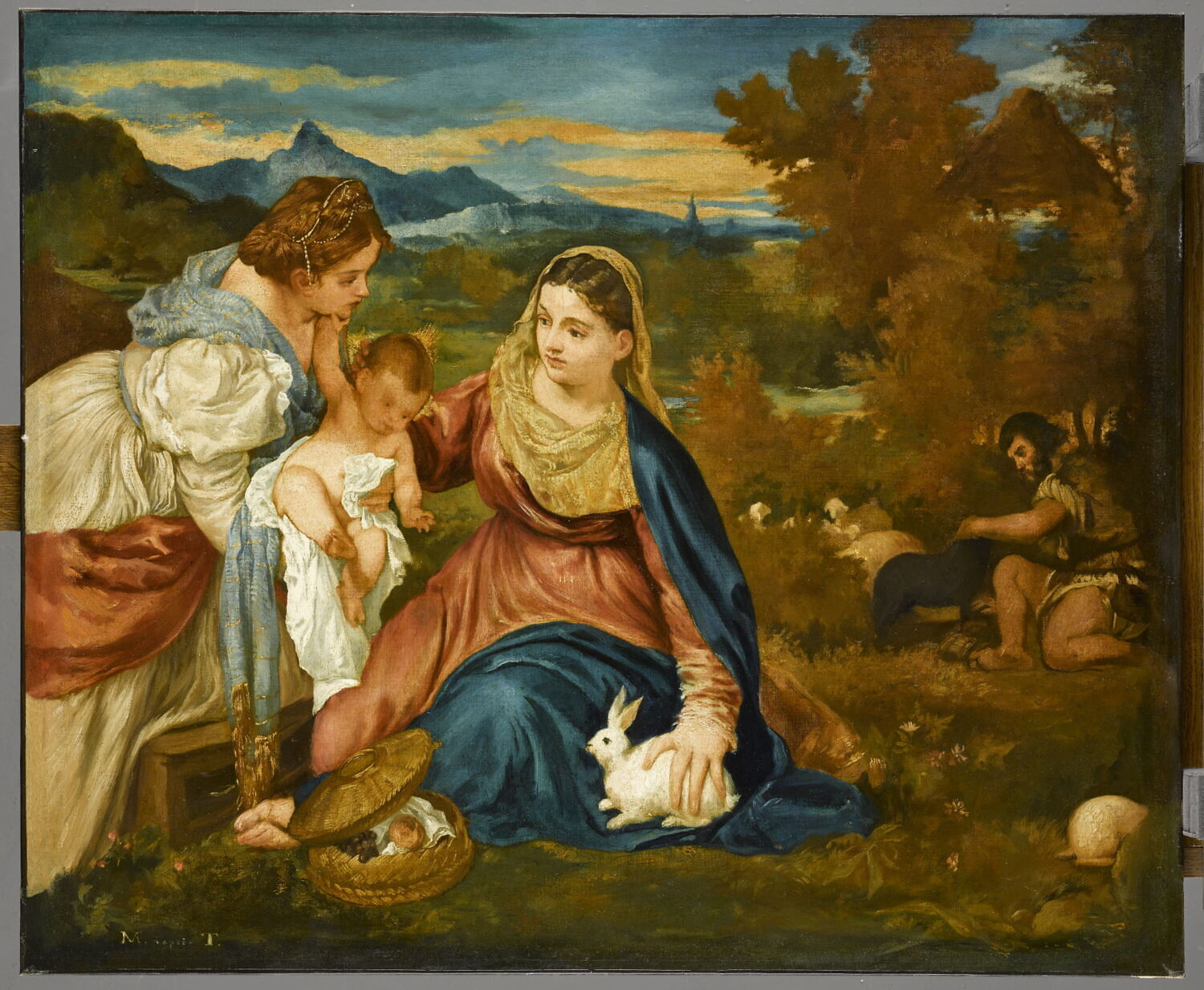
La Vierge au lapin, Manet, Édouard, Milieu du XIXe siècle (1840 - 1860)

La Vierge au lapin

Milieu du XIXe siècle (1840 - 1860) · Louvre

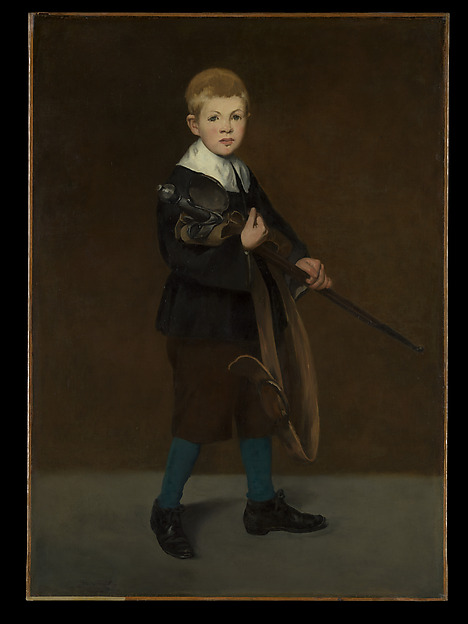
Boy with a Sword, Edouard Manet, 1861

Knabe mit Schwert

1861 · Metropolitan Museum of Art

Portrait of Madame Brunet, Édouard Manet, about 1861–1863, reworked by 1867

Portrait of Madame Brunet

about 1861–1863, reworked by 1867 · J. Paul Getty Museum

The Old Musician, Edouard Manet, 1862

Der alte Musikant

1862 · National Gallery of Art

Aus der Sammlung: Musée d’Orsay

Museumsseite
Still Life: Japanese Vase with Roses and Anemones, Vincent van Gogh, 1890

Vincent van Gogh

Still Life: Japanese Vase with Roses and Anemones, 1890

Chaumes de Cordeville, Vincent van Gogh, 1890

Vincent van Gogh

Chaumes de Cordeville, 1890

Doctor Gachet's Garden in Auvers, Vincent van Gogh, 1890

Vincent van Gogh

Doctor Gachet's Garden in Auvers, 1890

Two Children, Vincent van Gogh, 1890

Vincent van Gogh

Two Children, 1890

The siesta (after Millet), Vincent van Gogh, 1890

Vincent van Gogh

Mittagsruhe nach Millet, 1890

Marguerite Gachet in the Garden, Vincent van Gogh, 1890

Vincent van Gogh

Marguerite Gachet in the Garden, 1890

The Church at Auvers, Vincent van Gogh, 1890

Vincent van Gogh

Die Kirche von Auvers, 1890

Portrait of Dr. Gachet, Vincent van Gogh, 1890

Vincent van Gogh

Portrait of Dr. Gachet, 1890