Kuzma Petrov-VodkinRussland, 1878–1939
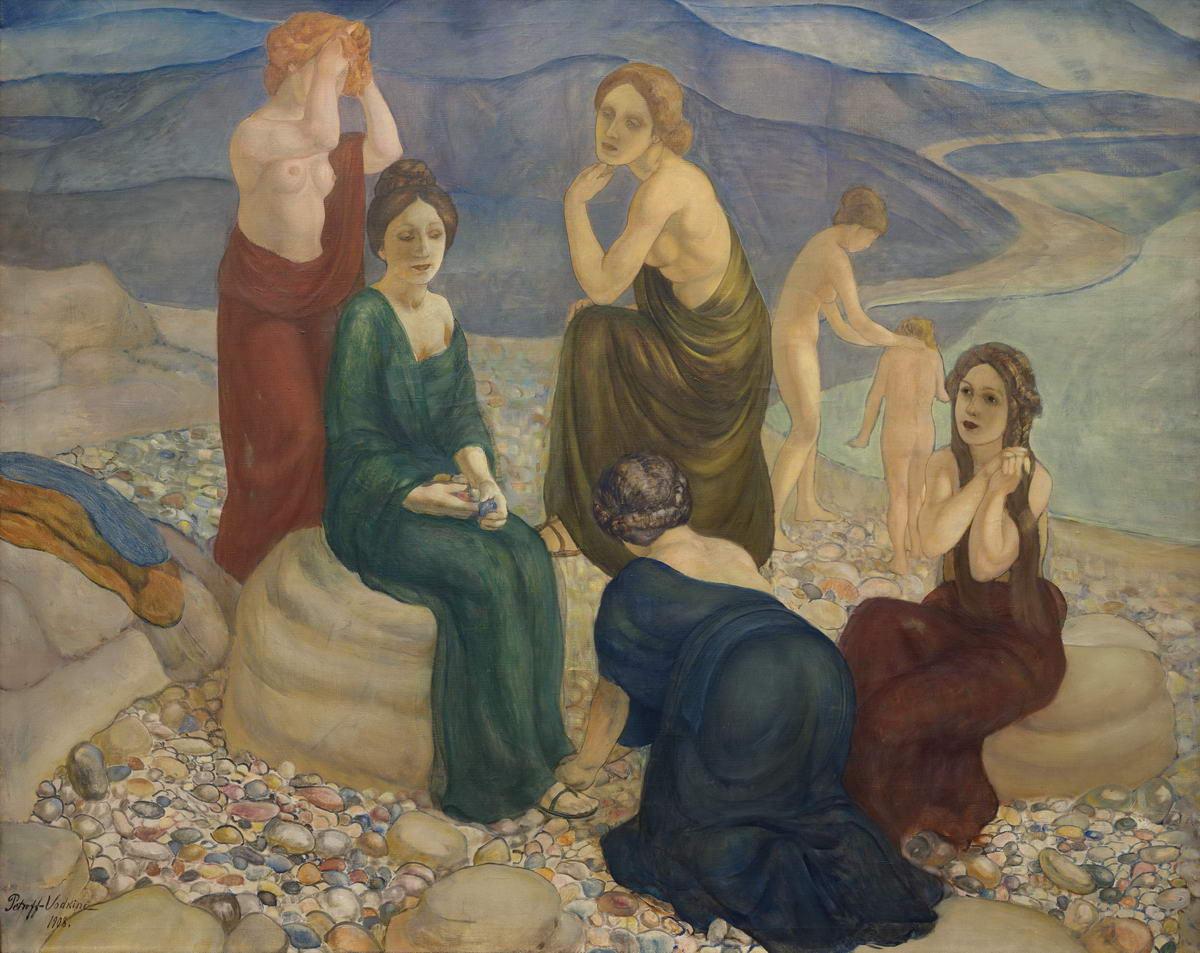
On the Shore
Kann ich es sehen?
Derzeit nicht ausgestellt
Wo ist „On the Shore“ heute? Sammlung: Eremitage, Sankt Petersburg. Derzeit nicht ausgestellt. Geprüft 29. August 2026.

Sankt Petersburg, Russland
Es gehört zur Sammlung, ist derzeit aber nicht ausgestellt.
- Geprüft
- Unverändert seit
- Quelle
- Das Museum
Über das Gemälde
In den Worten des Museums — auf Russisch
В историю русского искусства Петров-Водкин вошел как создатель своей собственной, оригинальной теории художественного творчества, которую он сам называл «наукой видеть». В ее основе лежит стремление сделать фигуру зрителя активно воспринимающей. Для постижения сути предметов и явлений, по мысли Петрова-Водкина, необходимо воспринимать их в постоянном движении. Содержательно важным художественным приемом у художника стала так называемая наклонная перспектива и последовательность движений главных персонажей, преображённая в ряд связанных между собой, чередующихся моментов, своеобразных стоп-кадров. Особенно наглядно эта теория проявляется в ряде работ середины 1920-х годов, к которым относится и эрмитажная картина «На берегу». Сюжетная канва не играет в картине главной роли; это произведение, в котором художник решает чисто формальные задачи, своеобразная теоретическая штудия.
Mehr lesen
Картина наглядно демонстрирует стремление Петрова-Водкина к упрощению живописной системы. Ясность пластической формы и цвета, уплощенность пространства, простота и элементарность линий, замедленный ритм движений - в этом суть образной системы Петрова-Водкина. Автор: Юрий Гудыменко
Eremitage
Angaben
- Inventarnummer
- ЭРЖ-2065
Im Katalog
Quellen
- Eremitage
- Bild: Eremitage — © State Hermitage Museum
Im Leben von Kuzma Petrov-Vodkin
Das ganze Leben1 October 1922
Birth of his daughter Elena
His long-awaited daughter Elena (later Dunaeva, 1922–2008) is born; as he writes to his mother, he has already drawn her several times.
1923–1928
Teaching crowds out painting; the fight over studios
As early as December 1923 he complains to his mother that professorship is crowding out painting; under the party rector E. E. Essen teaching at Vkhutein grows harder, and in 1928, when the individual studios are abolished, he argues that this flattens the students’ artistic thinking and presses for the old system to be restored.
spring 1924
Exhibition of Russian art in New York
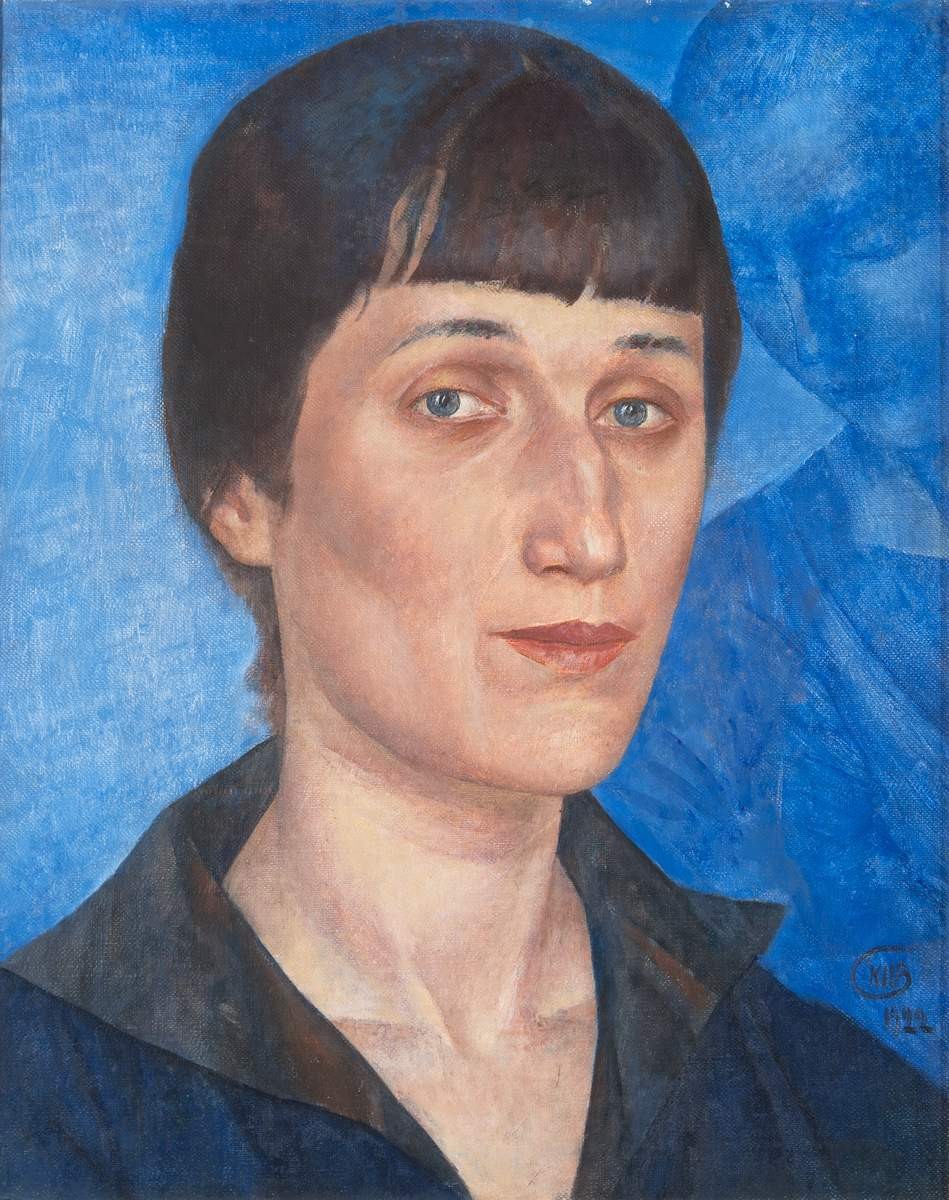
Seven of his works, including the “Portrait of Anna Akhmatova”, are shown at the Exhibition of Russian Art in New York.
summer 1924
To France with his family
He receives a year’s leave from the Academy of Arts, at his own expense, to study foreign art education, and travels via Riga to France with his wife and little daughter, where his wife is to undergo treatment. Hoping for commissions and sales, he earns nothing in the first six months: a hotel room in Paris serves as his studio, while the family rents a flat in Versailles.
1925
Founding member of the “Four Arts” society
He is among the founding members of the “Four Arts” society; at its 1926 exhibition in Moscow he shows “At the Samovar”, “Lenushka in Bed” and “In Shuvalovo”. Other accounts say the society existed from 1924 to 1931.
early 1925
French collectors start buying his pictures
In early 1925 French collectors begin to buy his pictures; he paints portraits of the Italian actress Penyo and the conductor Sergei Koussevitzky, and the Paris papers write about him.