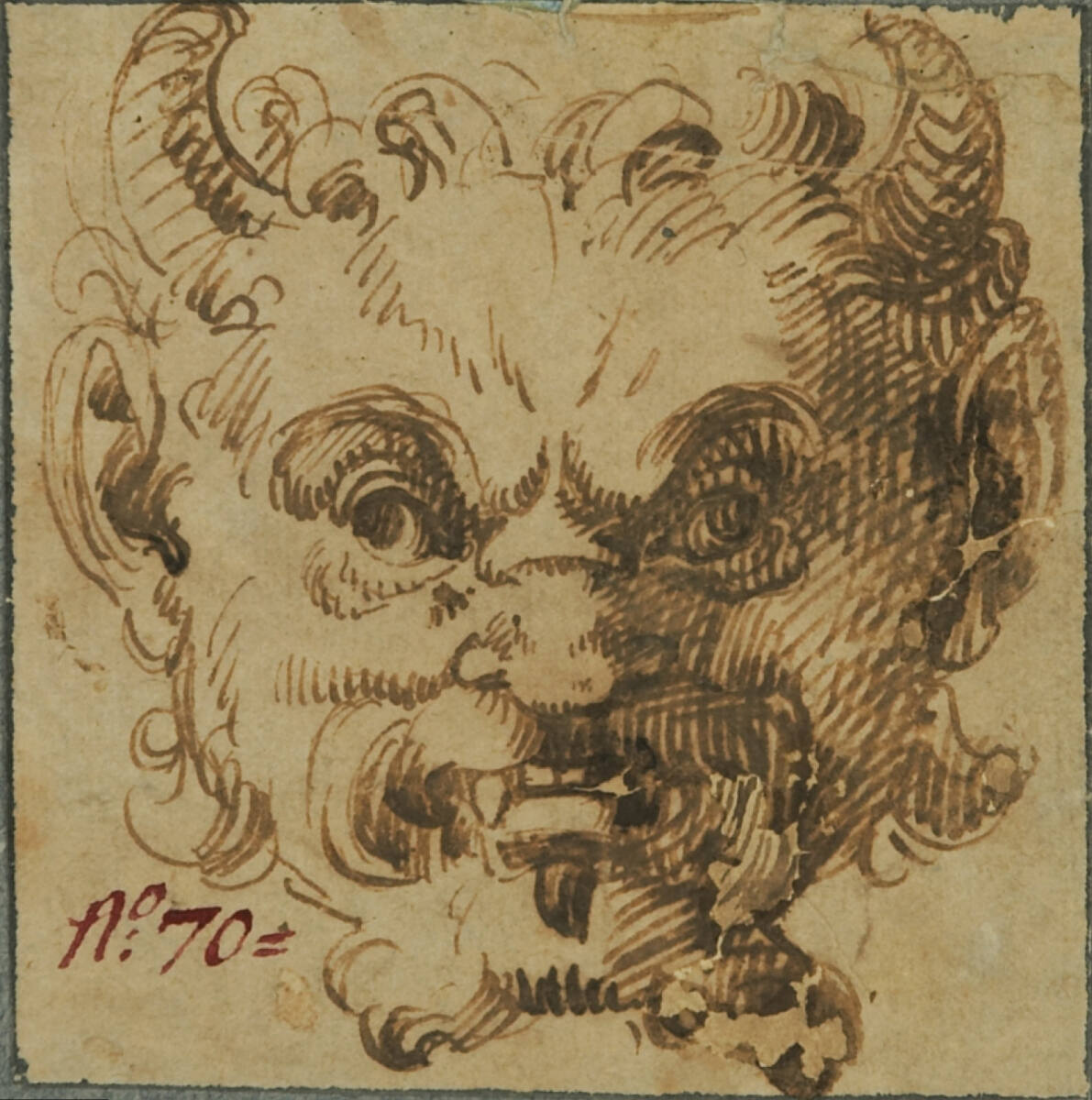
 Giulio RomanoItalien, 1499–1546
Maske
Darf man es sehen?
Unbekannt: Das Museum schweigt sich aus

Albertina
Wien, Österreich
Der Eigentümer ist bekannt. Ob es heute ausgestellt ist, sagt das Museum nicht, und Raten haben wir nicht gelernt.
- Unverändert seit
- 27. Sept. 2026
- Quelle
- Sammlungsdaten des Museums selbst
Angaben
Quellen
- Albertina: the museum's own open data · abgerufen vor 5 Tagen
- Bild: Albertina — Public Domain Mark 1.0
Derweil im Leben von Giulio Romano
Das ganze Leben1499
Born
c. 1515
Joins Raphael's workshop
The young Giulio became the most gifted pupil and one of the chief assistants in Raphael's crowded workshop, working with him on the frescoes of the Villa Farnesina and the Vatican Loggias and Stanze; his hand is recognised, for example, in the monochrome herms beneath the Expulsion of Heliodorus and the Fire in the Borgo. The start of the collaboration is placed around 1515.
1520
Inherits Raphael's workshop
After Raphael's early death, Giulio, under his master's will, inherited the workshop and its commissions together with his long-time collaborator Giovan Francesco Penni — the start of his independent career. He was entrusted with finishing the master's unfinished work, including the frescoes of the Hall of Constantine in the Vatican.
late 1524
Moves to Mantua
Having finished his Roman commissions, Giulio agreed in late 1524 to move to Mantua, where he stayed for the rest of his life. There, as a non-native artist, he came to be called after his origin, Giulio Romano, 'the Roman' (the name is also linked to his fame as a connoisseur of Roman antiquities).
1526
Appointed prefect of Mantua's building works
The post of prefect of building works and 'superintendent of the city streets' put him in charge of all the court's architecture and art — from frescoes to the fanciful inventions fashionable at the Mannerist courts of Europe.
1. November 1546
Died