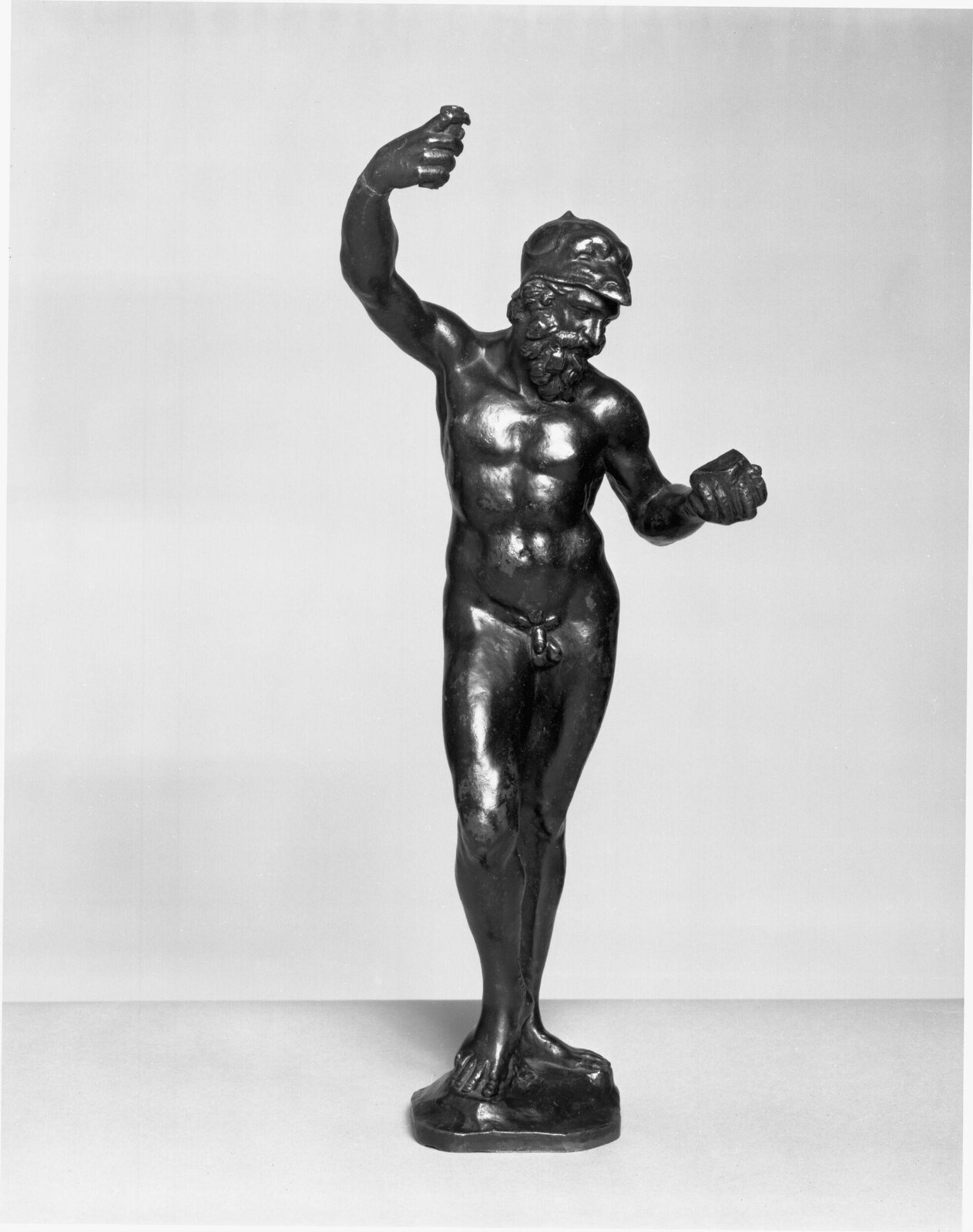
 Benvenuto CelliniItalien, 1500–1571
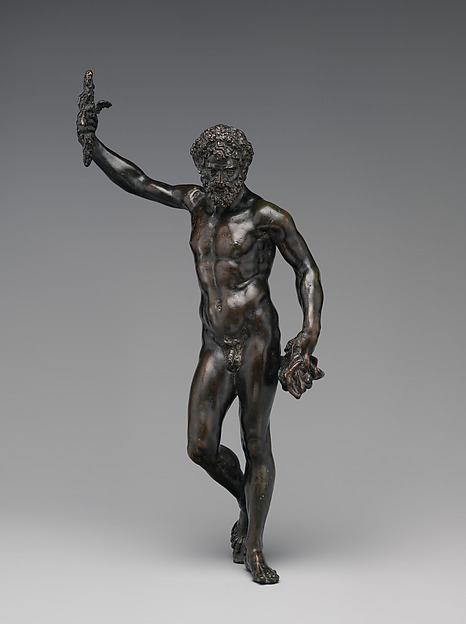
Mars
Kann ich es sehen?
Derzeit nicht ausgestellt
Wo ist „Mars“ heute? Sammlung: Victoria and Albert Museum, London. Derzeit nicht ausgestellt. Geprüft 25. September 2026.

London, Vereinigtes Königreich
Es gehört zur Sammlung, ist derzeit aber nicht ausgestellt.
- Geprüft
- Unverändert seit
- Quelle
- Das Museum
Über die Skulptur
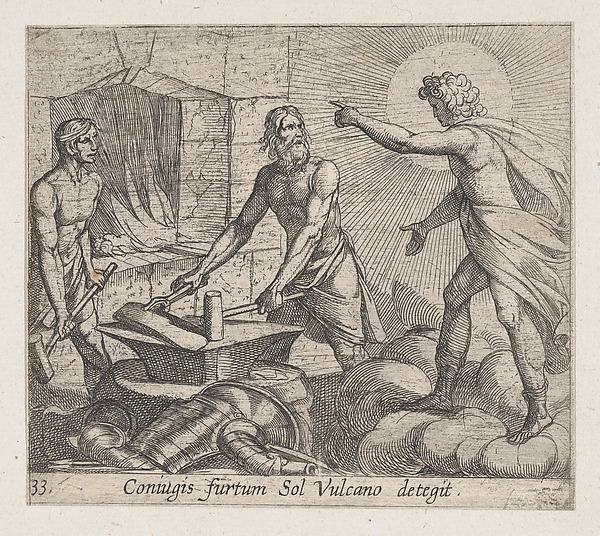
Vulcan the Roman god of fire and blacksmith to the gods, is shown holding a firestone in his left hand and the remains of a hammer in his right. The bronze possibly reflects a model made by the Florentine sculptor and goldsmith Benvenuto Cellini for one of a series of twelve life-size silver statues, six each of gods and goddesses, commissioned by Francis I of France to stand as candelabra in his dining hall. Cellini produced wax models of Jupiter, Juno, Apollo and Vulcan while in Paris in 1540, and bronzes associated with the Jupiter and Juno also survive. Only the lost silver figure of Jupiter was completed before Cellini left France in 1545.
Mehr lesen
Benvenuto Cellini (1500-1571) was trained as a goldsmith in Florence. He developed great skill and originality in hi techniques. He lived a dramatic but vibrant life which is documented in his aitobiography (unfinished, but published in 1728). This book was translated by many writers, one of them Goethe and was the basis for Berlioz’ opera ‘Benvenuto Cellini’ (1837). As a sculptor he has a Mannerist style, which is elaborate, elegant and precious. He stands for the tragic yet roamantic artist.
Victoria and Albert Museum
Angaben
- Inventarnummer
- A.113-1910
Was es zeigt
Im Katalog
Quellen
- Victoria and Albert Museum
- Bild: Victoria and Albert Museum — © Victoria and Albert Museum, London