Auguste RodinFrankreich, 1840–1917
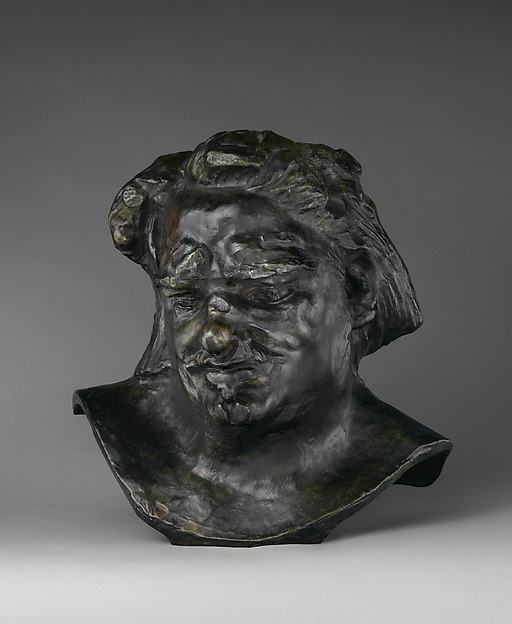
Man with the broken nose
Darf man es sehen?
Unbekannt

Stockholm, Schweden
Der Besitzer ist bekannt; ob das Werk derzeit ausgestellt ist, nicht.
- Unverändert seit
- Quelle
- Das Museum
Über die Skulptur
The Man with Broken Nose is the most important work preserved from Rodin’s early career. It is a portrait of Bibi – a general workman employed in the workshop. The original head was damaged by cold weather, but Rodin submitted it in its flawed condition to the Paris Salon in 1865, where it was rejected. Rodin preserved the sculpture carefully and later made a version in marble and several casts.
Schwedisches Nationalmuseum
Angaben
Im Katalog
Quellen
- Schwedisches Nationalmuseum
- Bild: Schwedisches Nationalmuseum — CC BY-SA 4.0
Derweil im Leben von Auguste Rodin
Das ganze Leben1890s–1900s
Young sculptors in Rodin's studio
His income let him hire gifted young sculptors, among them Antoine Bourdelle, Charles Despiau, Jules Desbois, François Pompon and Aristide Maillol. Constantin Brancusi left after two months, convinced that nothing grows under a big tree.
1900s
Portraits of the famous and the rich
Rodin began to receive regular commissions for portraits; his clients included Bernard Shaw, Gustav Mahler, Georges Clemenceau, the Argentine president Sarmiento, the chemist Berthelot and the philanthropist Bertha Palmer. Clemenceau was displeased: he thought the portrait looked like a “Mongol general”.
1903
Succeeds Whistler as head of the International Society
After the death of James Abbott McNeill Whistler, Rodin was elected president of the International Society of Painters, Sculptors and Engravers, largely thanks to Albert Ludovici.
20. Mai 1903 · Auszeichnung
Commander of the Legion of Honour
1905 · Auszeichnung
honorary doctor of the University of Jena
1905–1906
Rilke as Rodin's secretary
In 1905–1906 the sculptor's private secretary was the German poet Rainer Maria Rilke, who later wrote an admiring monograph on Rodin.