 RaphaelItalien, 1483–1520
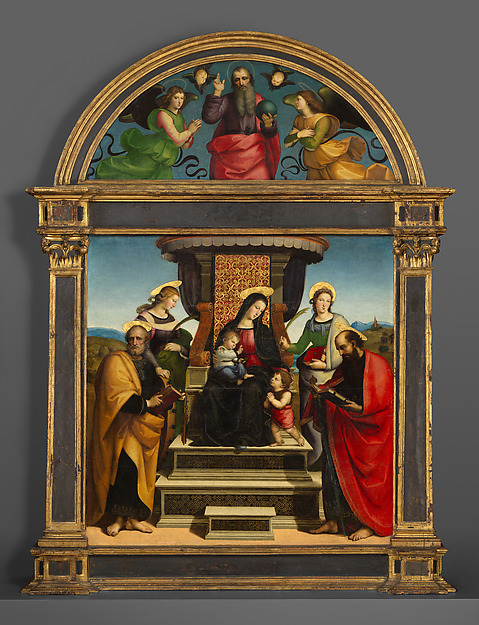
Pala Colonna
Madonna and Child Enthroned with Saints
Kann ich es sehen?
Ja, derzeit ausgestellt
Wo ist „Pala Colonna“ heute? Metropolitan Museum of Art, Saal 609, New York City. Ja, derzeit ausgestellt. Geprüft 29. September 2026.

New York City, Vereinigte Staaten
Jetzt geöffnet· bis 21:00
Öffentlich ausgestellt.
- Geprüft
- Unverändert seit
- Quelle
- Das Museum
Über das Gemälde
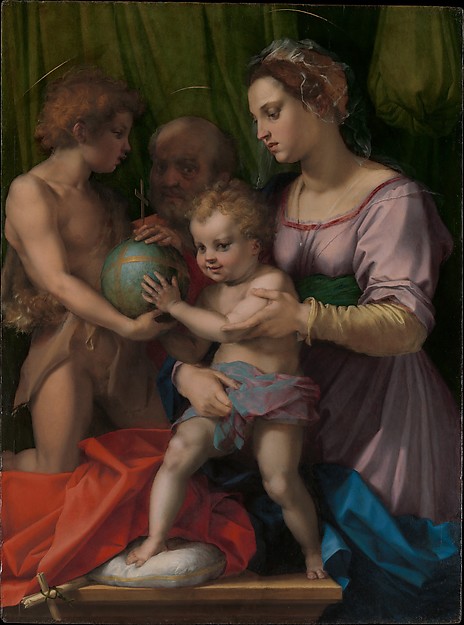
Die Pala Colonna ist ein Altargemälde des italienischen Renaissance-Malers Raffael.
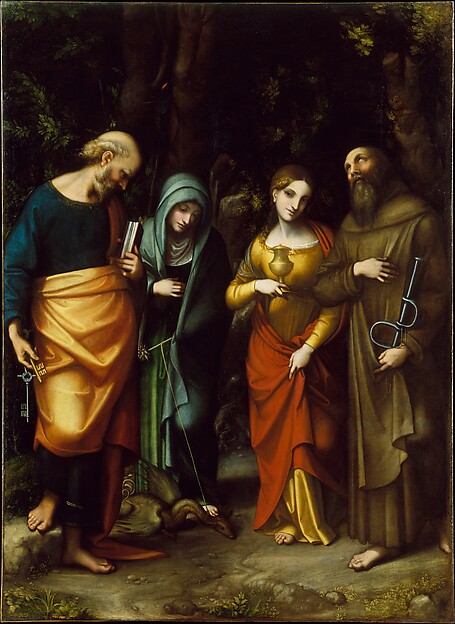
Es zeigt eine Sacra Conversazione mit der thronenden Jungfrau Maria und dem Christuskind, dem Johannesknaben und vier Heiligen.
Die Haupttafel des um 1501 und 1506 in Perugia entstandenen Altarbildes befindet sich im Metropolitan Museum of Art in New York. Es ist das einzige Altarbild Raffaels in den Vereinigten Staaten und wurde seit 1913 ausschließlich in den USA gezeigt.
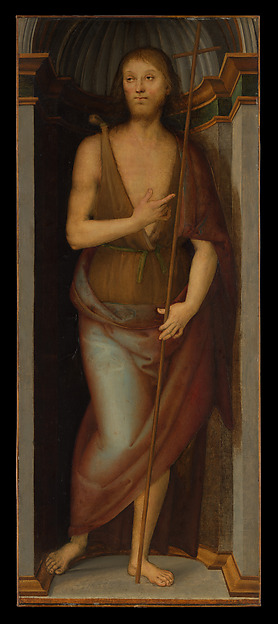
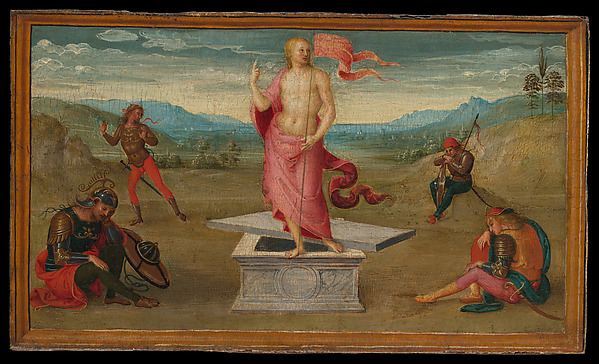
Die ursprünglich zur Pala gehörende fünfteilige Predella wurde im 17. Jahrhundert zerteilt, die einzelnen Bilder befinden sich in vier verschiedenen Museen in den USA und in Europa.
Angaben
- Inventarnummer
- 16.30ab
Was es zeigt
Im Katalog
Quellen
- Metropolitan Museum of Art
- Bild: Metropolitan Museum of Art — Open Access (CC0)
Im Leben von Raphael
Das ganze Lebenc. 1501 – c. 1502 · Wirkungsort
Perugia
1502
To Siena at Pinturicchio's invitation
Another pupil of Perugino, Pinturicchio, “being a friend of Raphael and knowing him to be a draughtsman of the highest quality”, invited him to Siena to help with the cartoons, and very likely the designs, for the frescoes of the Piccolomini Library in Siena Cathedral.
c. 1503 – c. 1504 · Wirkungsort
Siena
late 1504
Meets Leonardo and Michelangelo
Having moved to Florence, Raphael met Leonardo da Vinci, Michelangelo and Bartolomeo della Porta and closely studied Leonardo's sfumato. His first Florentine commission, portraits of Agnolo Doni and his wife, was painted under the clear impression of the “Mona Lisa”.
1504
Friendship with Baldassare Castiglione
In Urbino Raphael met the philosopher, writer and patron Count Baldassare Castiglione; they formed a firm friendship and correspondence, including the famous letters about the fresco “The Triumph of Galatea”.
1504
To Florence, to study
The mother of the next Duke of Urbino gave Raphael a letter of recommendation to the Gonfaloniere of Florence: “The bearer of this will be found to be Raphael, painter of Urbino, who, being greatly gifted in his profession has determined to spend some time in Florence to study.” She called him “a sensible and well-mannered young man”.