Snyders, FransFlandern, 1579–1657
Larder Still life
Kann ich es sehen?
Unbekannt
Wo ist „Larder Still life“ heute? Sammlung: Rijksmuseum Amsterdam, Amsterdam. Unbekannt.

Amsterdam, Niederlande
Der Besitzer ist bekannt; ob das Werk derzeit ausgestellt ist, nicht.
- Quelle
- Das Museum
Über das Gemälde
In den Worten des Museums — auf Niederländisch
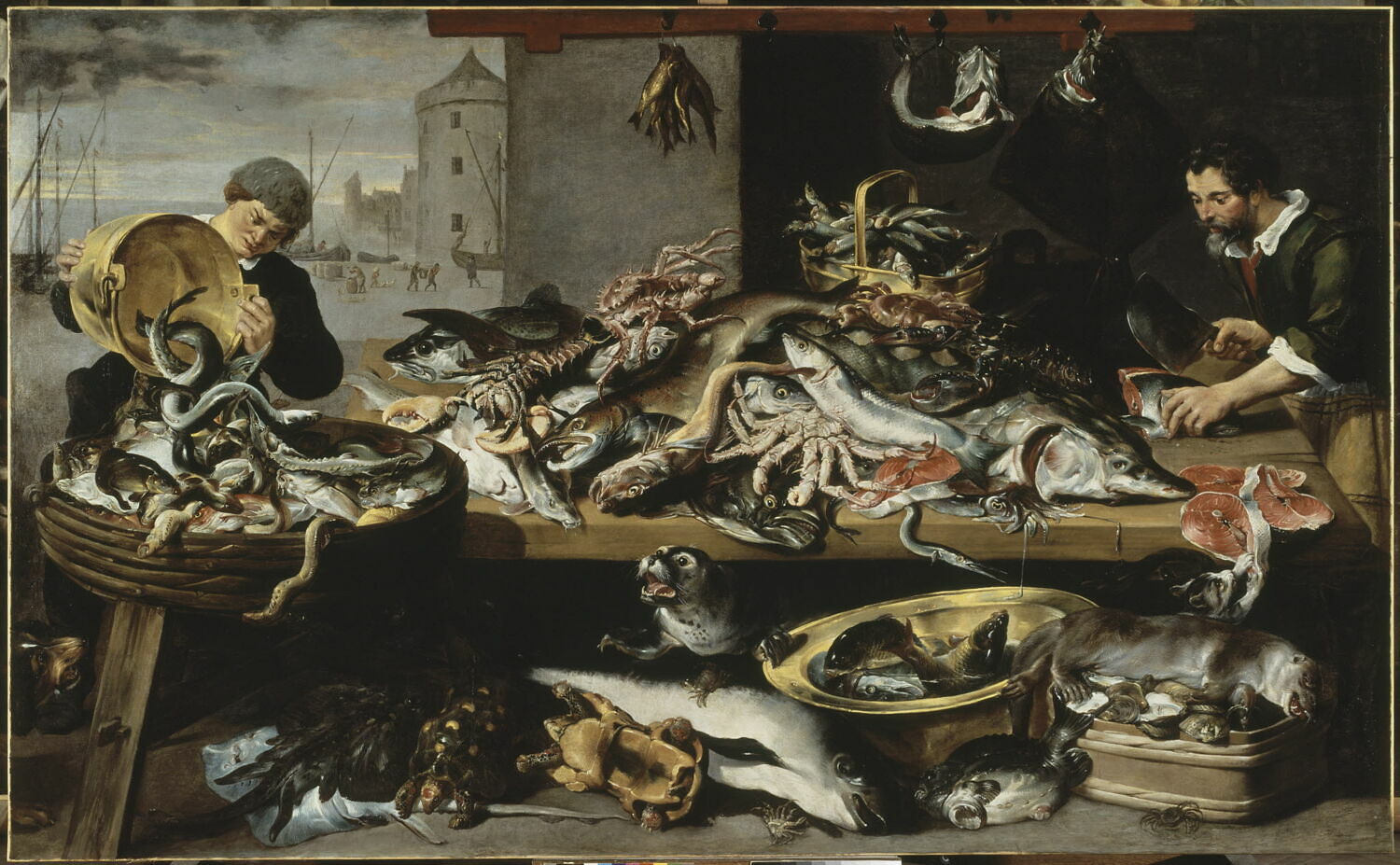
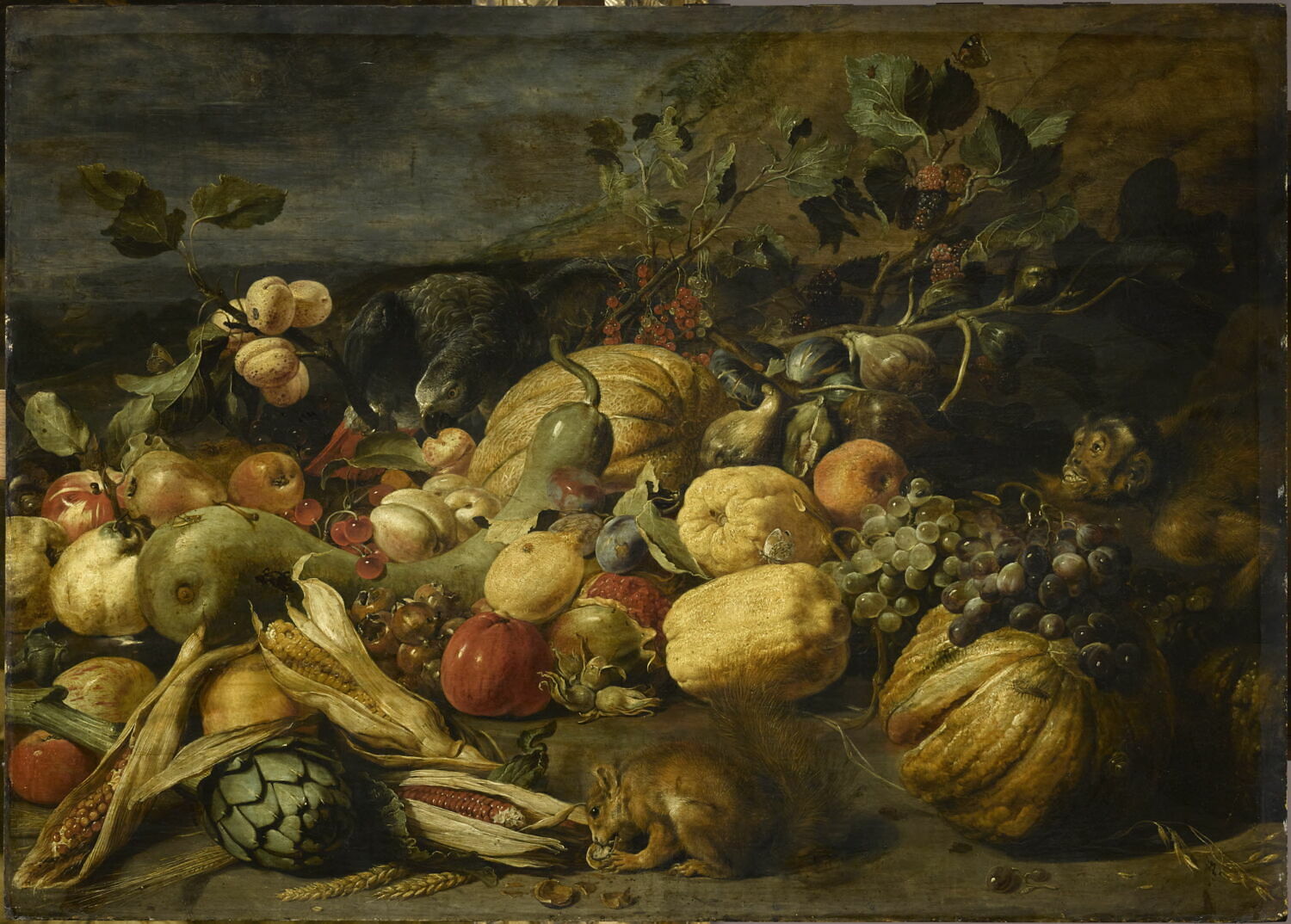
Stilleven met groot dood wild, vruchten en bloemen. Op een tafel voor een muur liggen een mand met druiven, perziken en pruimen, een opengesneden ree opgehangen aan een poot, de kop van een wild zwijn, artisjokken, een schaal met een kreeft en een bos asperges. Een katje gluurt naar de kreeft. Op de achtergrond links in de muur een nis met vaatwerk, rechts een nis met een boeket bloemen in een glazen vaas.
Rijksmuseum Amsterdam
Angaben
- Inventarnummer
- SK-A-379
Was es zeigt
Im Katalog
Quellen
- Rijksmuseum Amsterdam
- Bild: Rijksmuseum Amsterdam — public domain
Im Leben von Snyders, Frans
Das ganze Leben1609–1657 · Wirkungsort
Antwerp
1610–1640
A close collaboration with Rubens
From the 1610s Snyders works with Rubens, who admires his ability to render the textures of fur and skin and often has him paint animals, fruit and still life in his own pictures; the collaboration is particularly close between 1610 and 1640. At first Rubens himself sketches the whole composition in oils and marks the place for Snyders’s contribution (“The Recognition of Philopoemen”, regarded as the first Baroque still life with figures), while in “Prometheus Bound” it is the reverse: Snyders makes the sketch, leaving space for Rubens’s figure. Contemporaries had difficulty telling their hands apart in joint works, and after Rubens’s death Snyders was one of the appraisers of the inventory of his collection.
after 1614
The dark backgrounds of his early still lifes disappear
After 1614 the dark surroundings of his early still lifes disappear, and Snyders becomes a fine colourist with a strong sense of composition, able to structure a profusion of disparate objects.