 Albrecht DürerDeutschland, 1471–1528
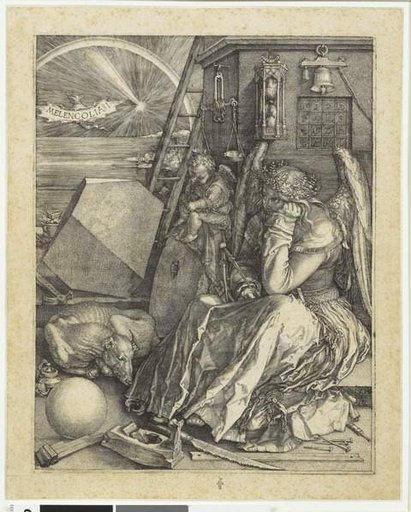
Melencolia I
La Mélancolie
Darf man es sehen?
Unbekannt
Chantilly, Frankreich
Der Besitzer ist bekannt; ob das Werk derzeit ausgestellt ist, nicht.
- Unverändert seit
- Quelle
- Das Museum
Über das Werk
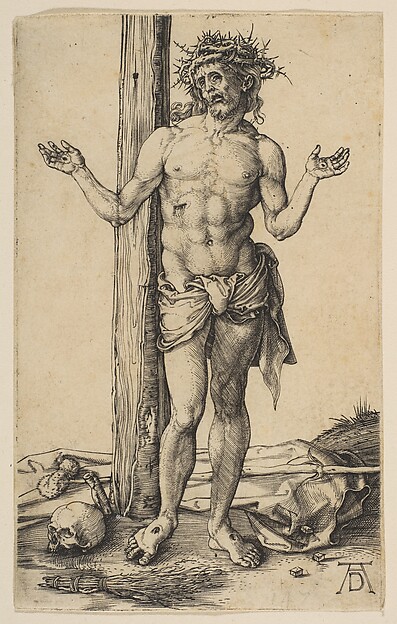
Das Bild Melencolia I aus dem Jahre 1514 ist einer der drei Meisterstiche Albrecht Dürers. Der Kupferstich misst 24,2 cm × 19,1 cm. Er gilt als eine Glanzleistung Dürers, gibt aber dem Betrachter viele Rätsel auf und zeichnet sich durch eine komplexe Ikonographie und Symbolik aus. Die Nummer nach dem Titel ist als Klassifizierung nach den Lehren von Agrippa von Nettesheim (De occulta philosophia) gedeutet worden, wonach der Planet Saturn, der den Melancholiker beeinflusst, drei Arten des Genies hervorbringt – die erste Stufe wird hier verdeutlicht. Zum Thema wird dieses Motiv für den Künstler, da er sich als Genie oft in einer ähnlichen Gemütsverfassung wiederfindet wie die abgebildete Allegorie, nämlich mit dem Willen zum Schaffen, aber unfähig, etwas zu tun. Eine ganz ähnliche Darstellung und Haltung der Figur findet sich in Dürers Bild Christus als Schmerzensmann, das sich im Besitz der Staatlichen Kunsthalle Karlsruhe befindet.
Angaben
- Inventarnummer
- EST 232
Was es zeigt
Im Katalog
Quellen
- Musée Condé
- Bild: Musée Condé — © Réunion des musées nationaux - utilisation soumise à autorisation; Ministère de la Culture (France), base Joconde
Derweil im Leben von Albrecht Dürer
Das ganze Leben1507–1528 · Wirkungsort
Nuremberg
1512
Emperor Maximilian I becomes his chief patron
From 1512 Emperor Maximilian I was Dürer's chief patron. For him Dürer and his workshop produced the Triumphal Arch, a giant woodcut 295 × 357 cm printed from 192 blocks and modelled on the triumphal arches of ancient Rome.
3 January 1512
Nuremberg's privilege against forgeries
Nuremberg's city council granted Dürer a privilege for the sale of his prints, with penalties for anyone who forged them.
1513–1516
Three years without painting
Complaining that painting did not pay enough to justify the time compared with his prints, Dürer produced no paintings from 1513 to 1516.
1514
Death of his mother
In the year of Melencolia I and St Jerome in His Study, the artist's mother, Barbara Holper, died.
1515
A life pension from the emperor
The perpetually cash-strapped Maximilian could not pay on time and offered to exempt the artist from city taxes, which the Nuremberg Council opposed. At Dürer's request the emperor granted him a life pension of 100 guilders a year from the sums Nuremberg paid into the imperial treasury.
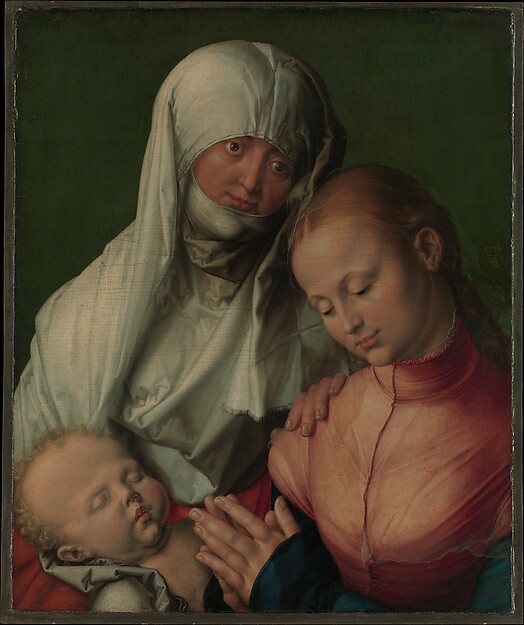
![Madonna and Child [obverse], Albrecht Dürer, c. 1496/1499](https://api.nga.gov/iiif/878db7e6-10ae-4cae-ba5d-6d6f5c413ae8/full/!2400,2400/0/default.jpg)
![Lot and His Daughters [reverse], Albrecht Dürer, c. 1496/1499](https://api.nga.gov/iiif/7565a449-f82a-414b-9bda-c93f55a51b4d/full/!2400,2400/0/default.jpg)