Edward SteichenVereinigte Staaten, 1879–1973
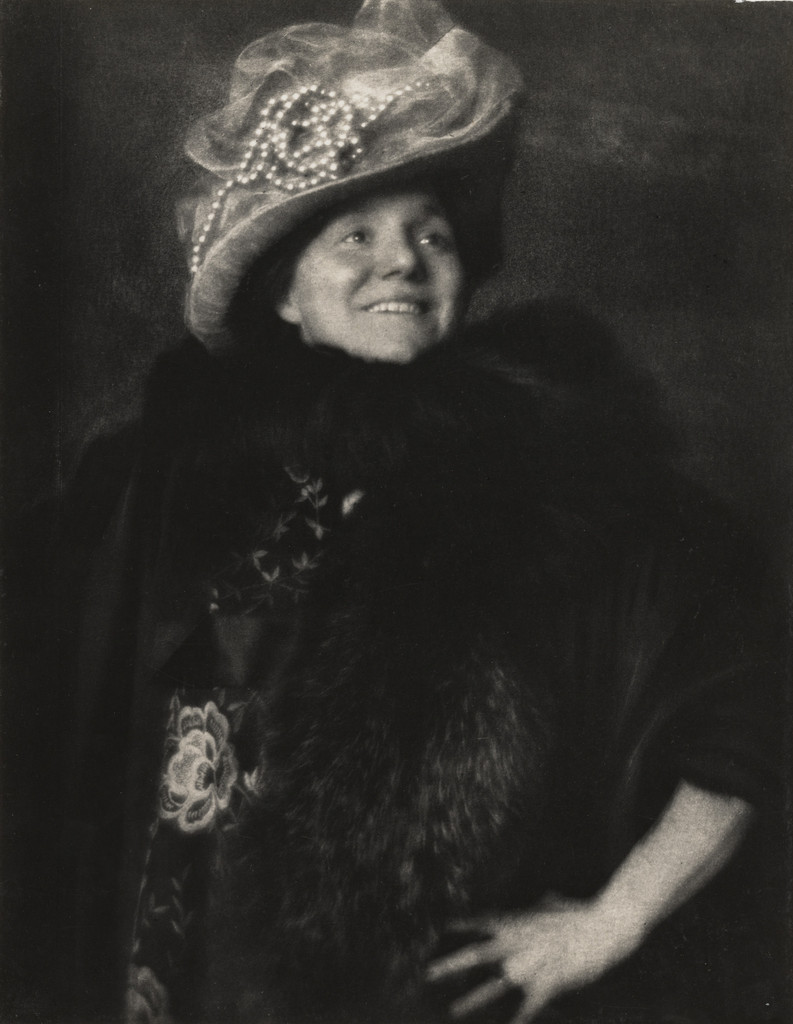
Kitty and Alfred Stieglitz
Darf man es sehen?
Empfängt derzeit nicht

Art Institute of Chicago
Chicago, Vereinigte Staaten
Es gehört zur Sammlung, ist derzeit aber nicht ausgestellt.
- Geprüft
- Unverändert seit
- Quelle
- Sammlungsdaten des Museums selbst
Über das Werk
Edward Steichen began his career under the wings of photographer Alfred Stieglitz, who was also a modern-art gallerist. When Stieglitz saw the 21-year-old's portfolio in 1900, he was sufficiently impressed to buy three prints. The two men gradually built a strong personal and professional relationship. Stieglitz promoted the younger artist through Camera Work, his exquisitely printed quarterly journal, and with Steichen's help, he started the Little Galleries of the Photo-Secession, which eventually became known as Gallery 291. This rich platinum print depicting Stieglitz and his daughter Kitty reflects the prevailing aesthetic of fine-art photography around the turn of the 20th century. As proponents of pictorialism, Stieglitz, Steichen, and many of their contemporaries sought to elevate photography to the status of high art by infusing their work with handcraft and painterly effects.
Weiterlesen
For more on the Alfred Stieglitz collection at the Art Institute, along with in-depth object information, please visit the website: The Alfred Stieglitz Collection.
Art Institute of ChicagoCC BY 4.0
Angaben
- Inventarnummer
- 1949.874
Im Katalog
Quellen
- Art Institute of Chicago: die offenen Daten des Museums · abgerufen vor 8 Tagen
- Bild: Art Institute of Chicago — © the artist or rights holder
Derweil im Leben von Edward Steichen
Das ganze Leben1904
First experiments with colour photography
He begins experimenting with colour photography and becomes one of the earliest in the United States to use the Autochrome Lumière process.
1. Juli 1904
Daughter born: Mary Calderone
1905
The Little Galleries of the Photo-Secession
With Stieglitz he creates the Little Galleries of the Photo-Secession in what had been Steichen’s portrait studio; the gallery later becomes known as 291 after its address and presents some of the first American exhibitions of Rodin, Matisse, Cézanne, Picasso and Brâncuși. Constantly crossing between Europe and the US by steamship, he becomes, in the art historian William A. Ewing’s words, one of the earliest “jet setters,” bringing European art to America.