 Beatrix Potter1866–1943
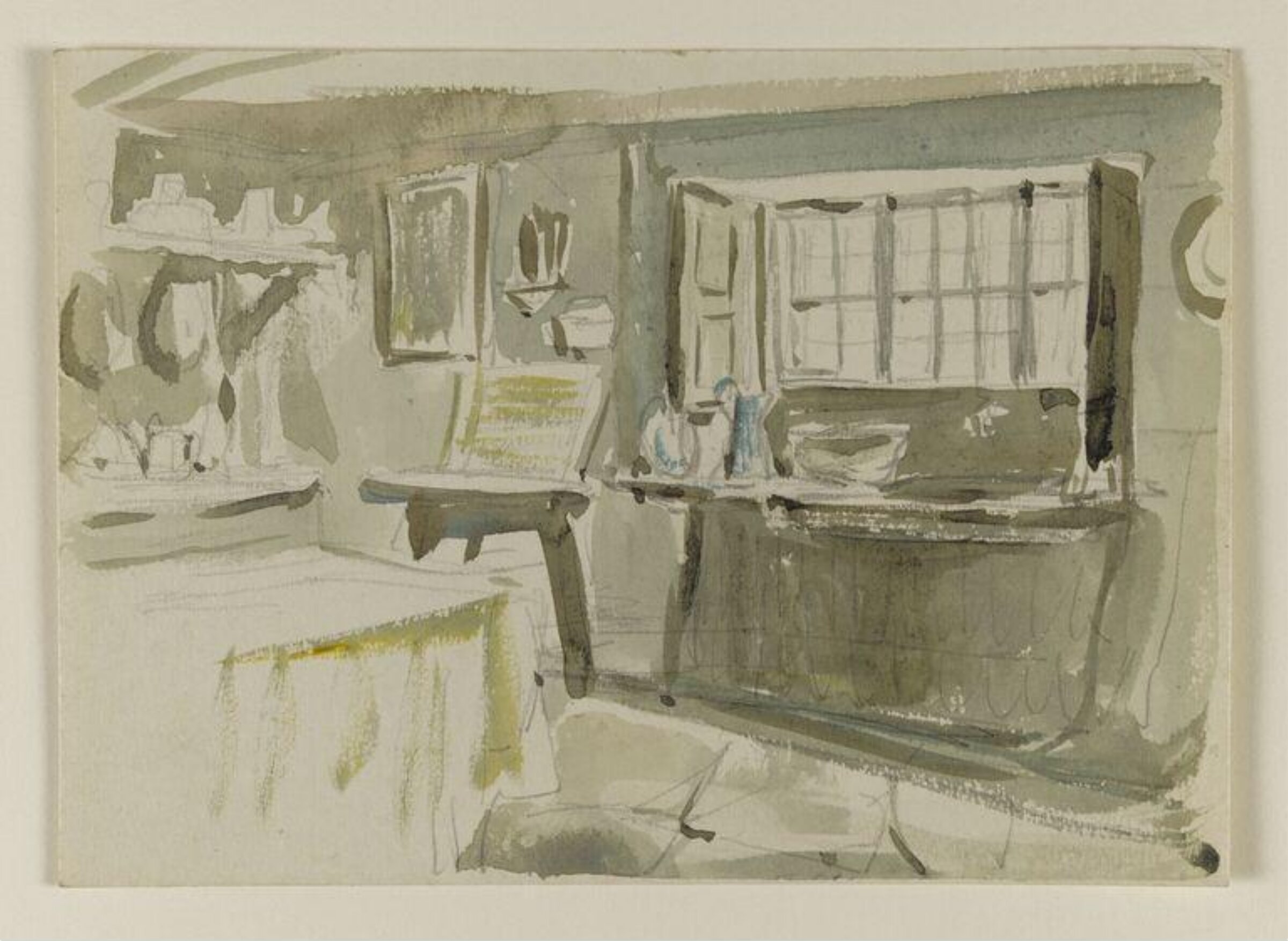
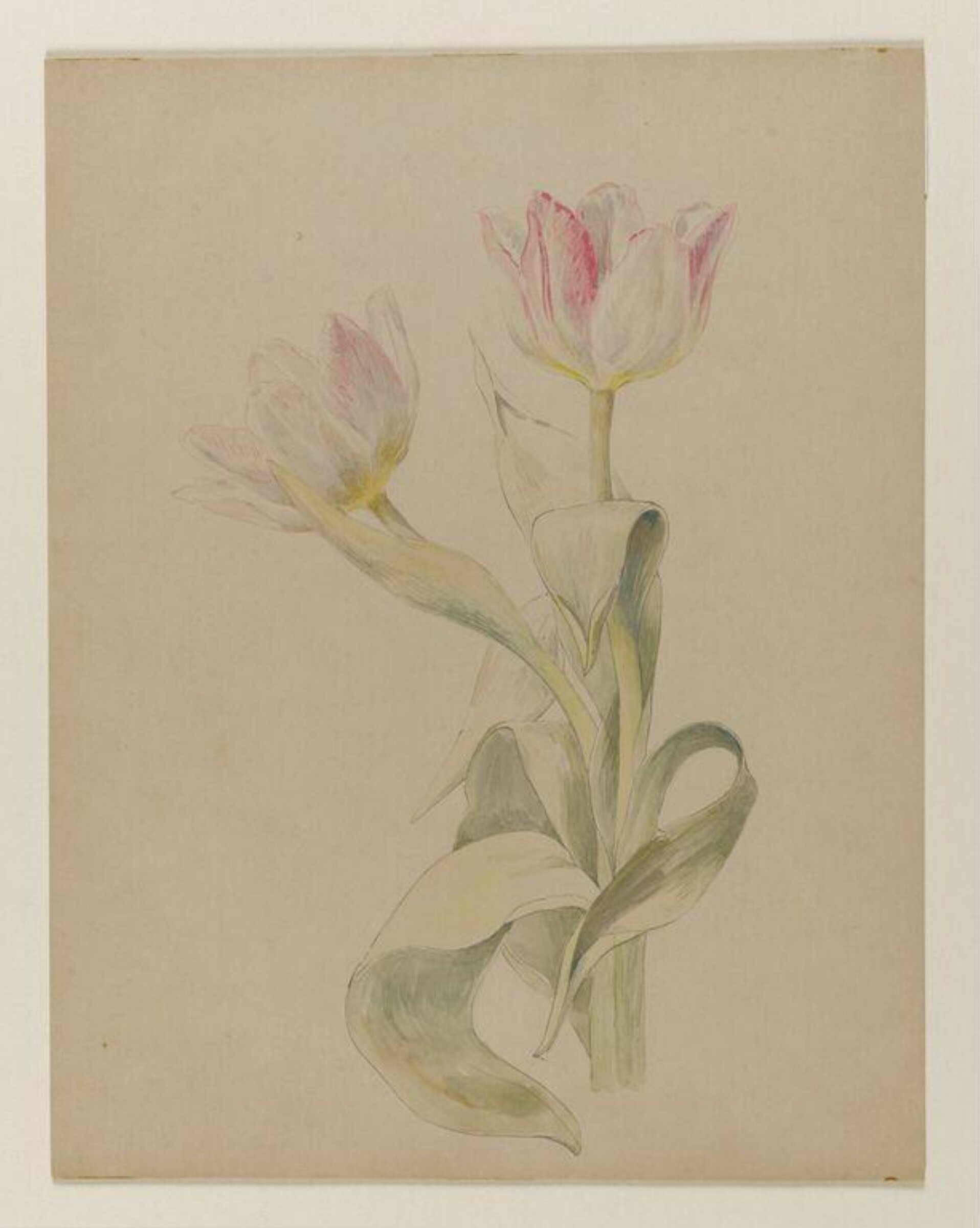
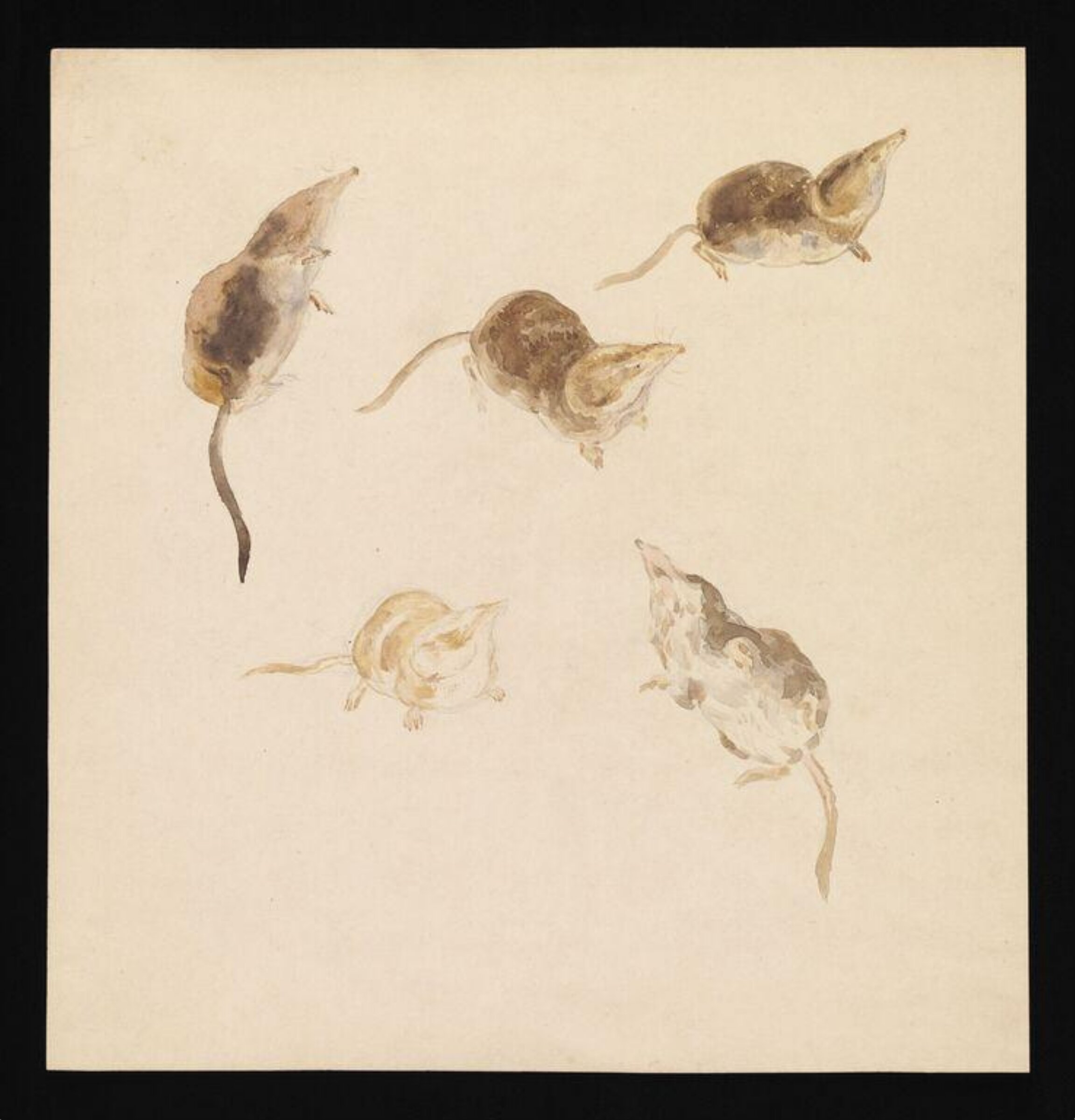
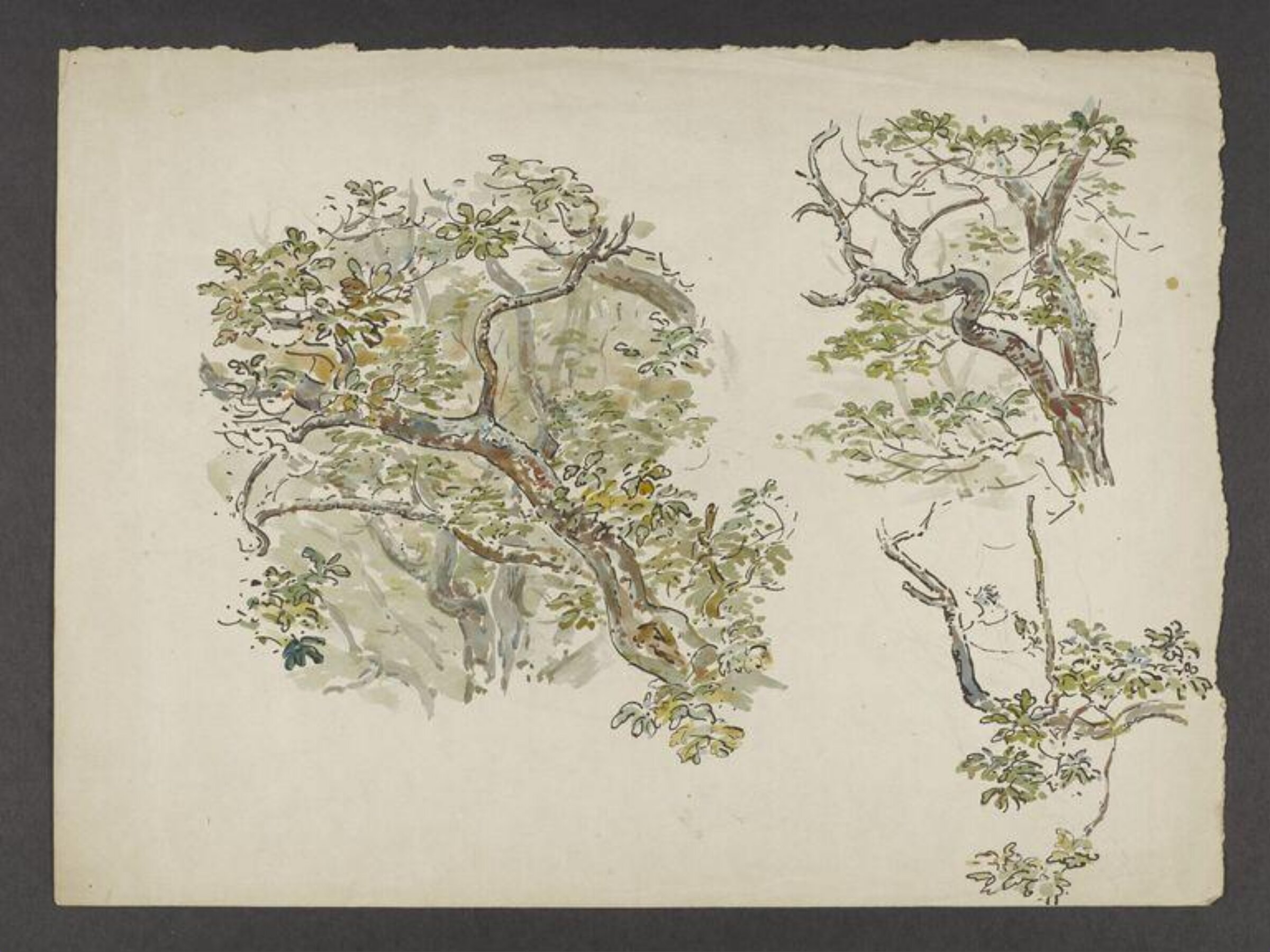
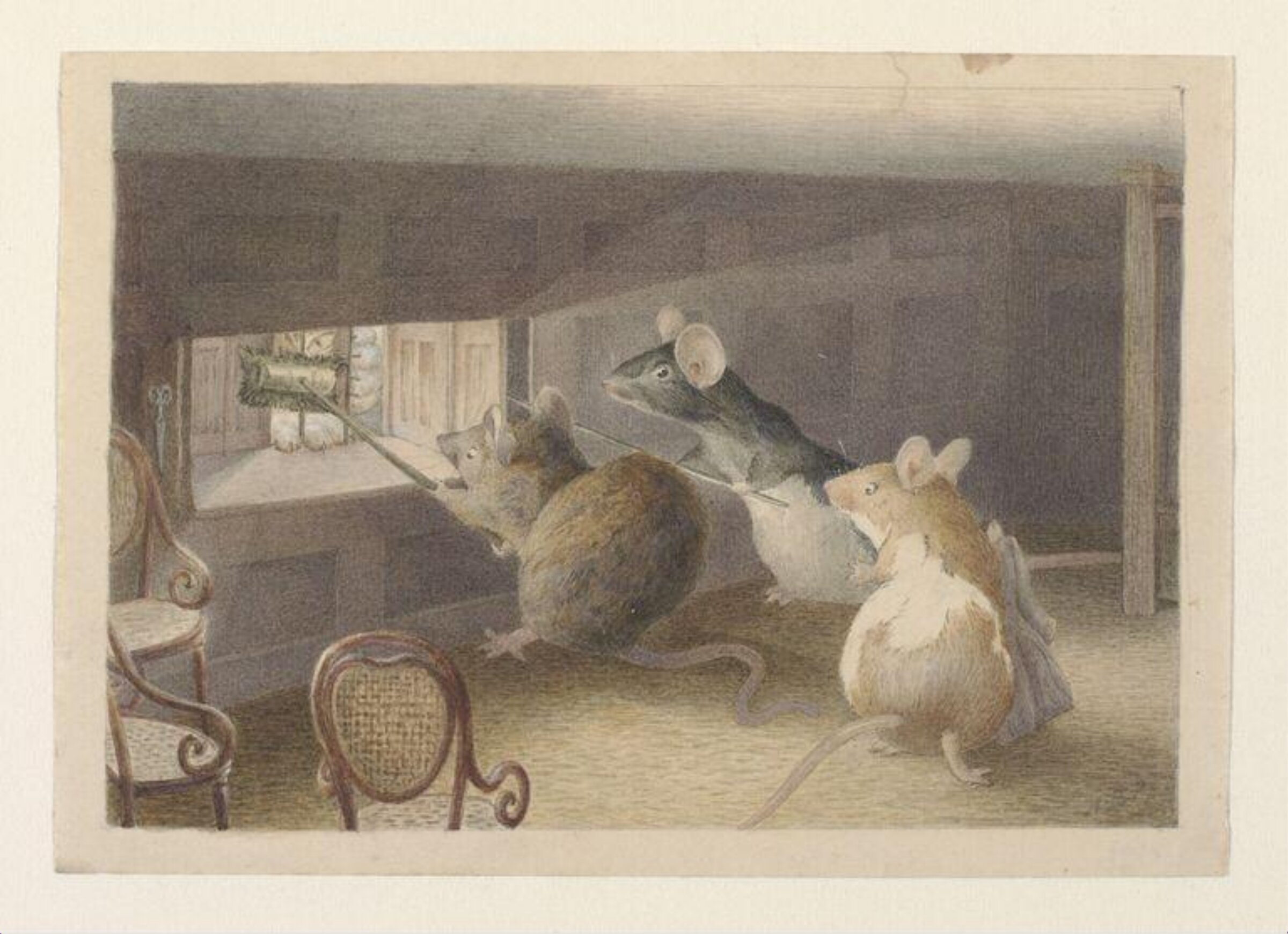
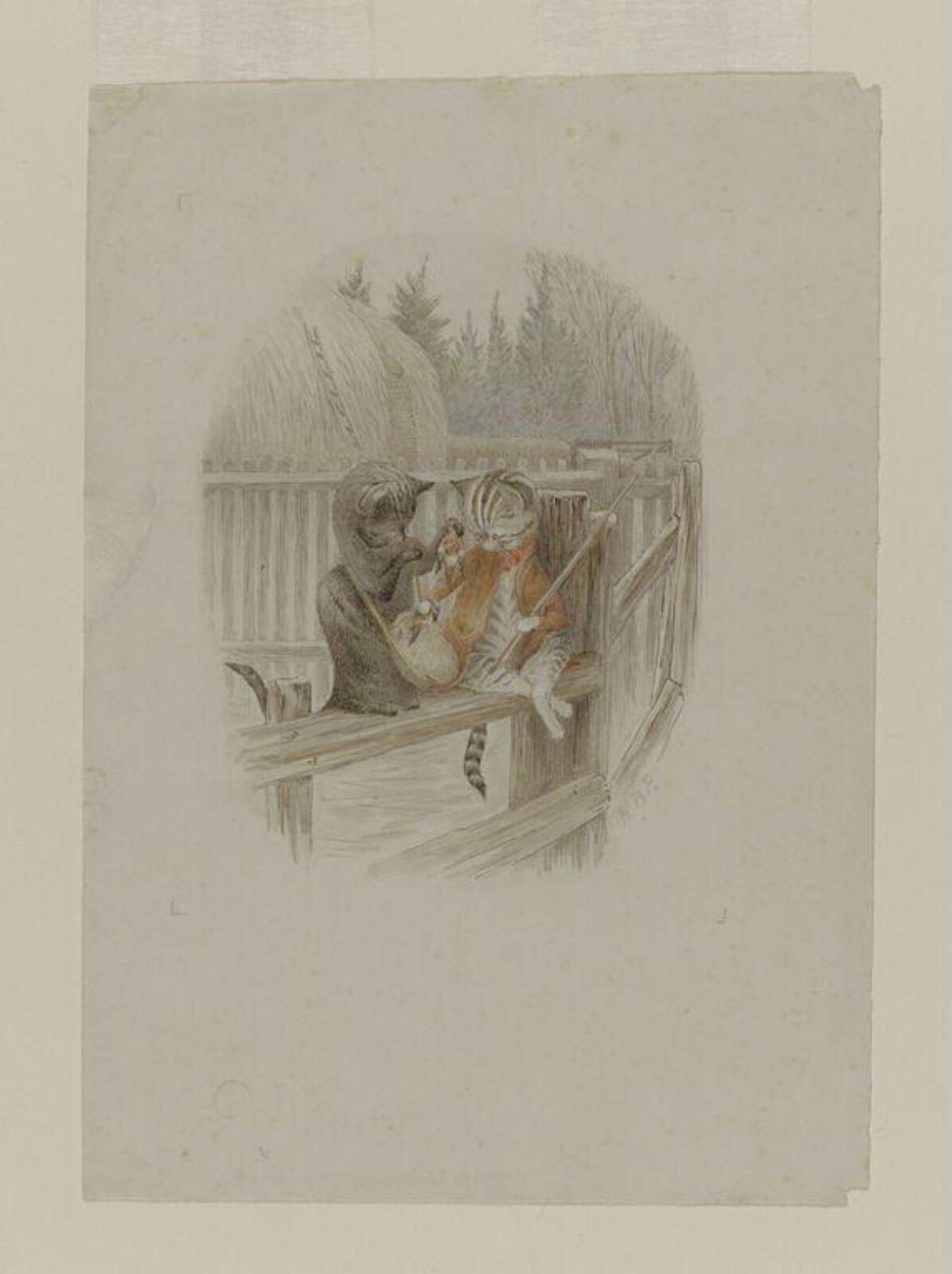
Kittens with game collected for the White Cat's supper
Kann ich es sehen?
Derzeit nicht ausgestellt
Wo ist „Kittens with game collected for the White Cat's supper“ heute? Sammlung: Victoria and Albert Museum, London. Derzeit nicht ausgestellt. Geprüft 25. September 2026.

London, Vereinigtes Königreich
Es gehört zur Sammlung, ist derzeit aber nicht ausgestellt.
- Geprüft
- Unverändert seit
- Quelle
- Das Museum
Über das Werk
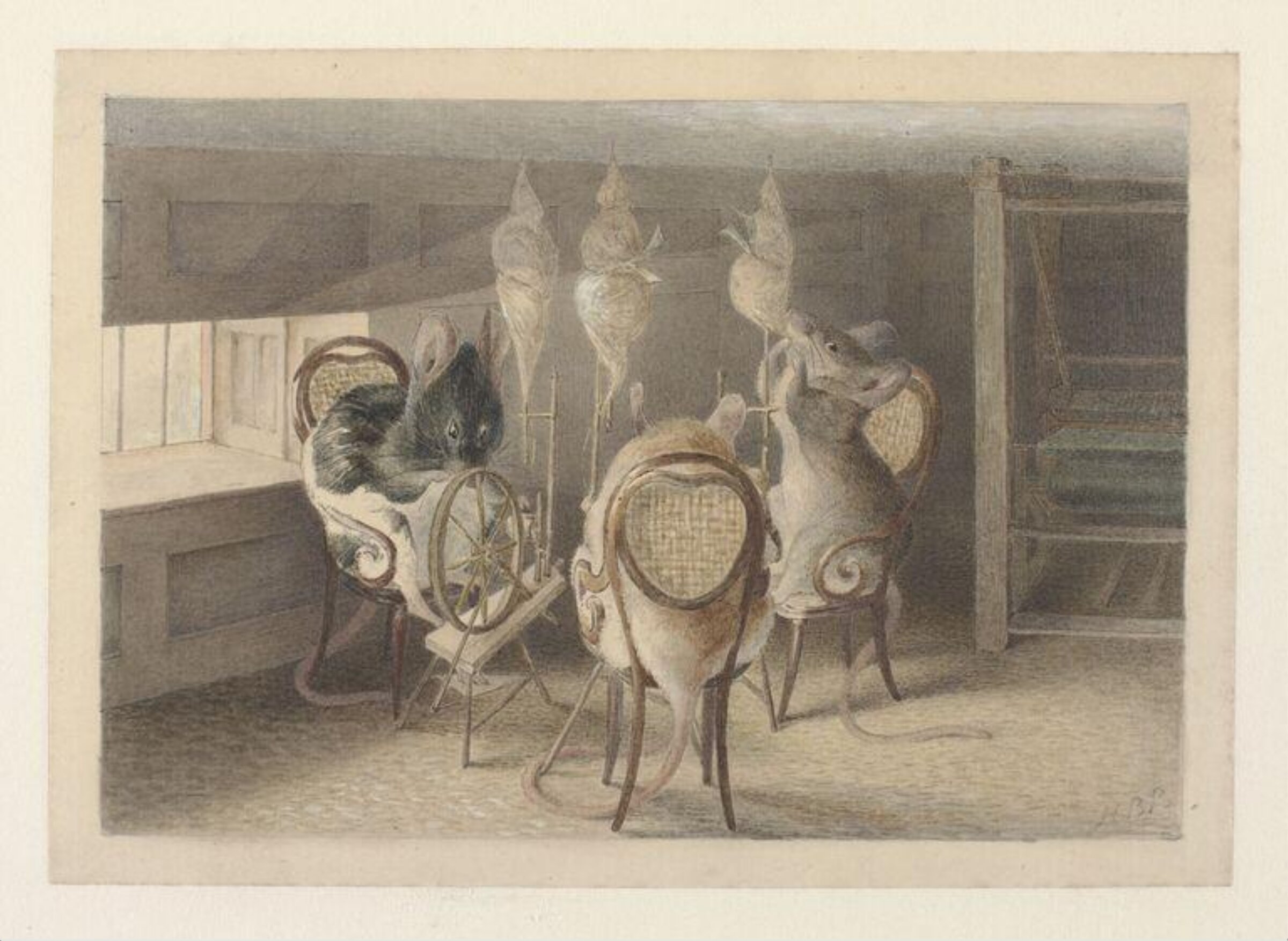
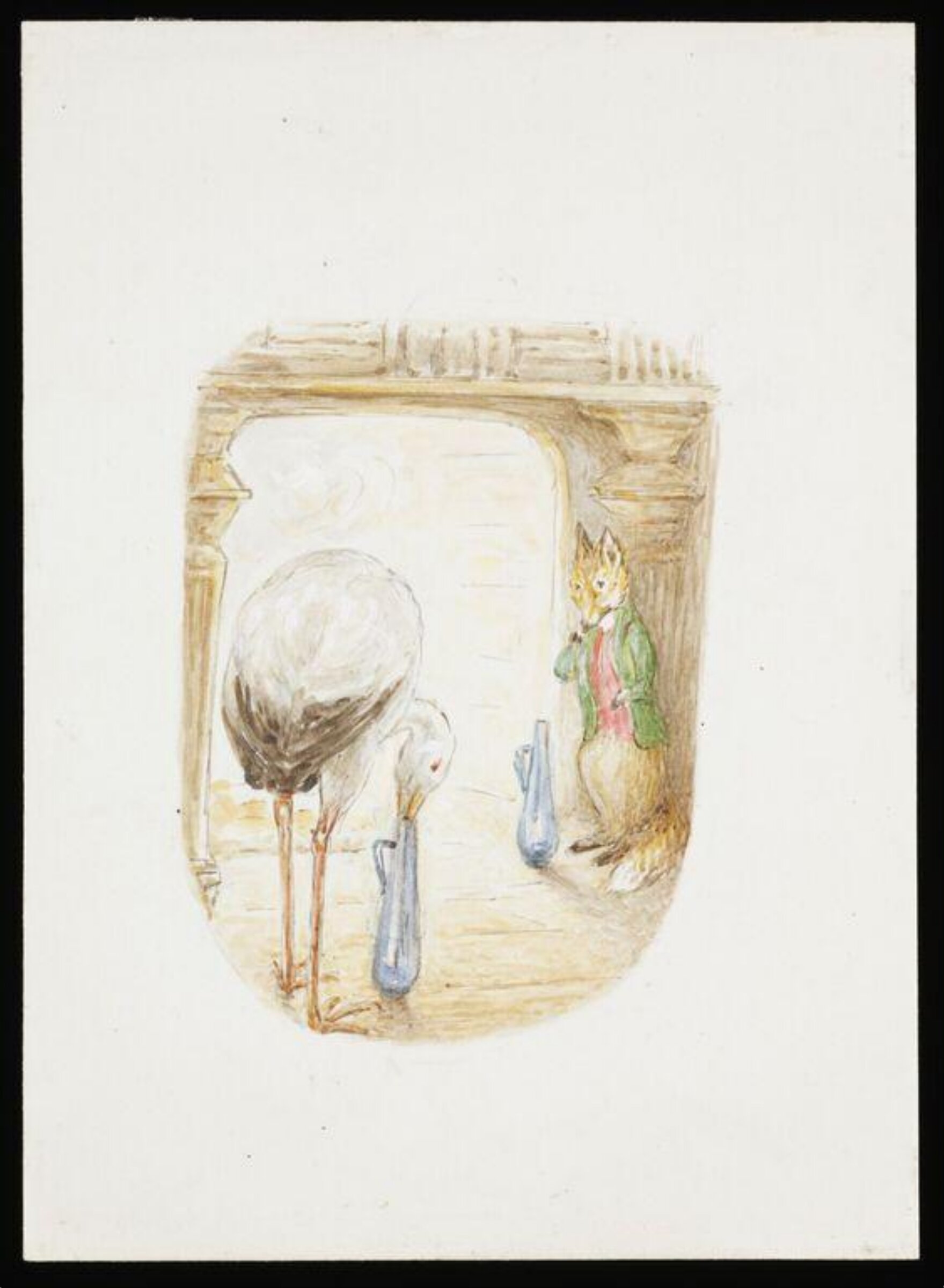
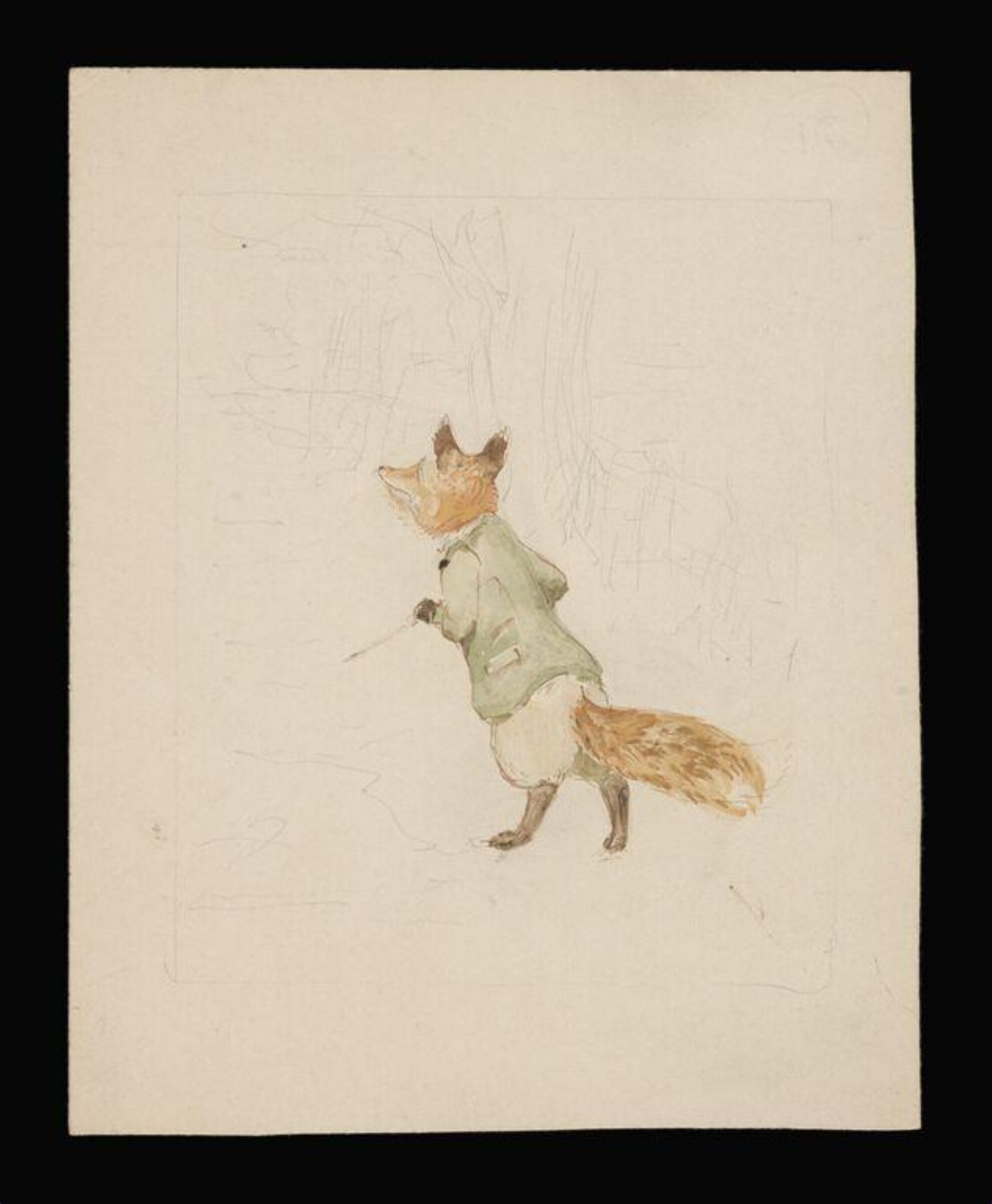
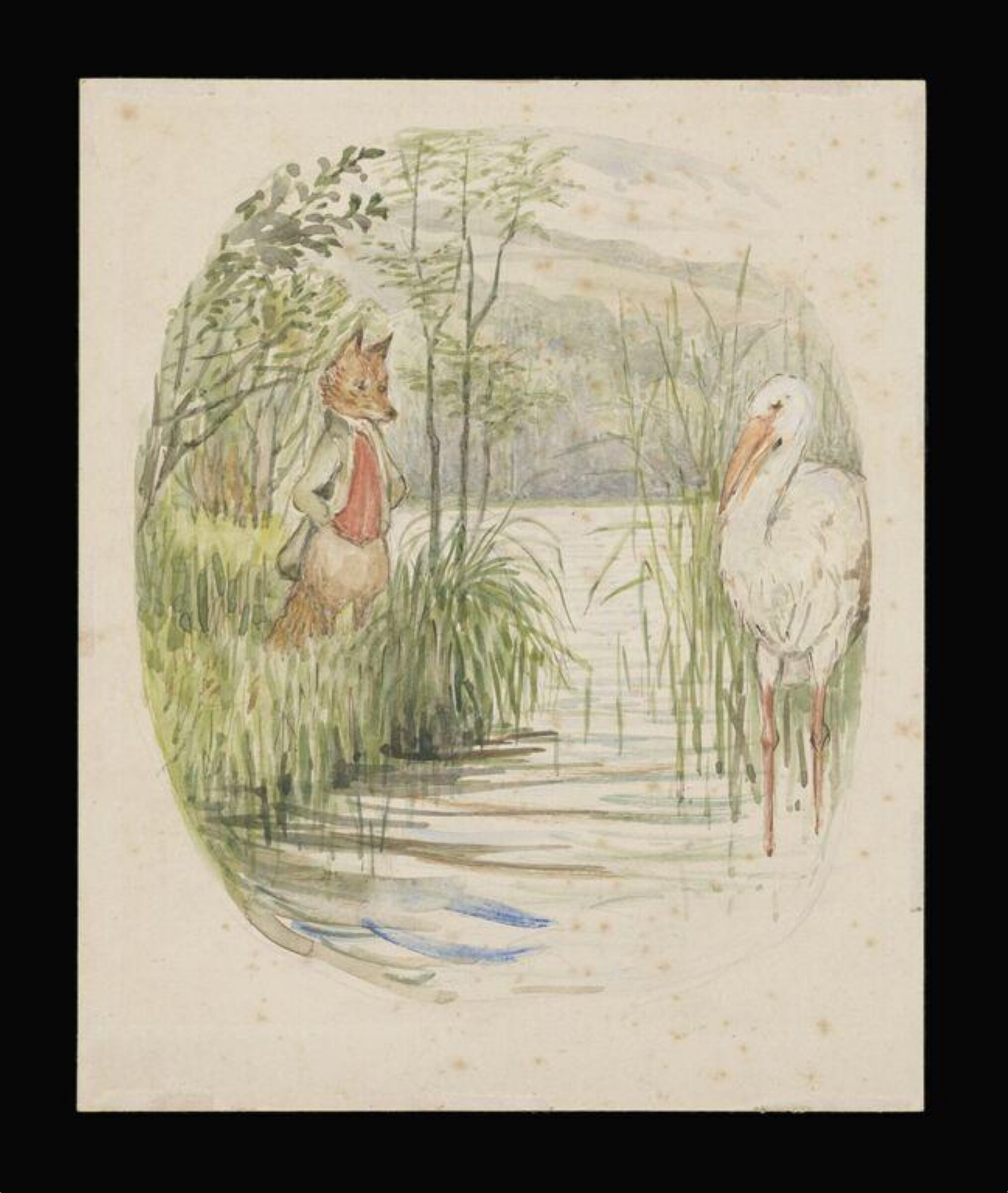
Beatrix Potter (1866-1943) is one of the world's best-loved children's authors and illustrators. She wrote the majority of the twenty-three Original Peter Rabbit Books between 1901 and 1913. The Tale of Peter Rabbit (Frederick Warne, 1902) is her most famous and best-loved tale.
Before publishing her own stories from 1901, Potter illustrated fables, fairy tales and classic texts, such as Uncle Remus, Alice in Wonderland and Cinderella. She drew largely to amuse herself, or children she knew, but also to develop her illustrative technique. Her interpretations of these well-known texts are always fresh, original, and faithful to the true nature and appearance of animals.
Mehr lesen
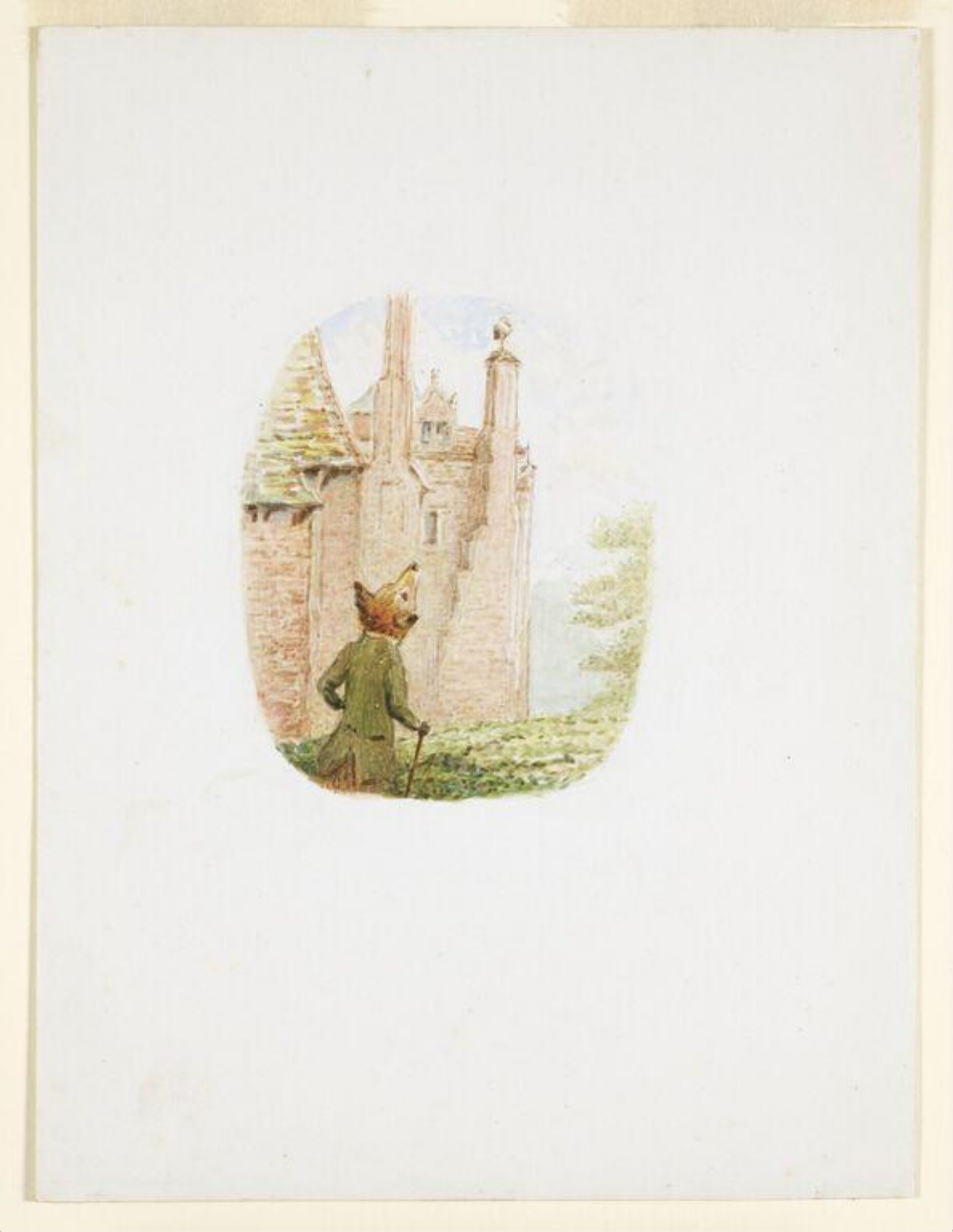
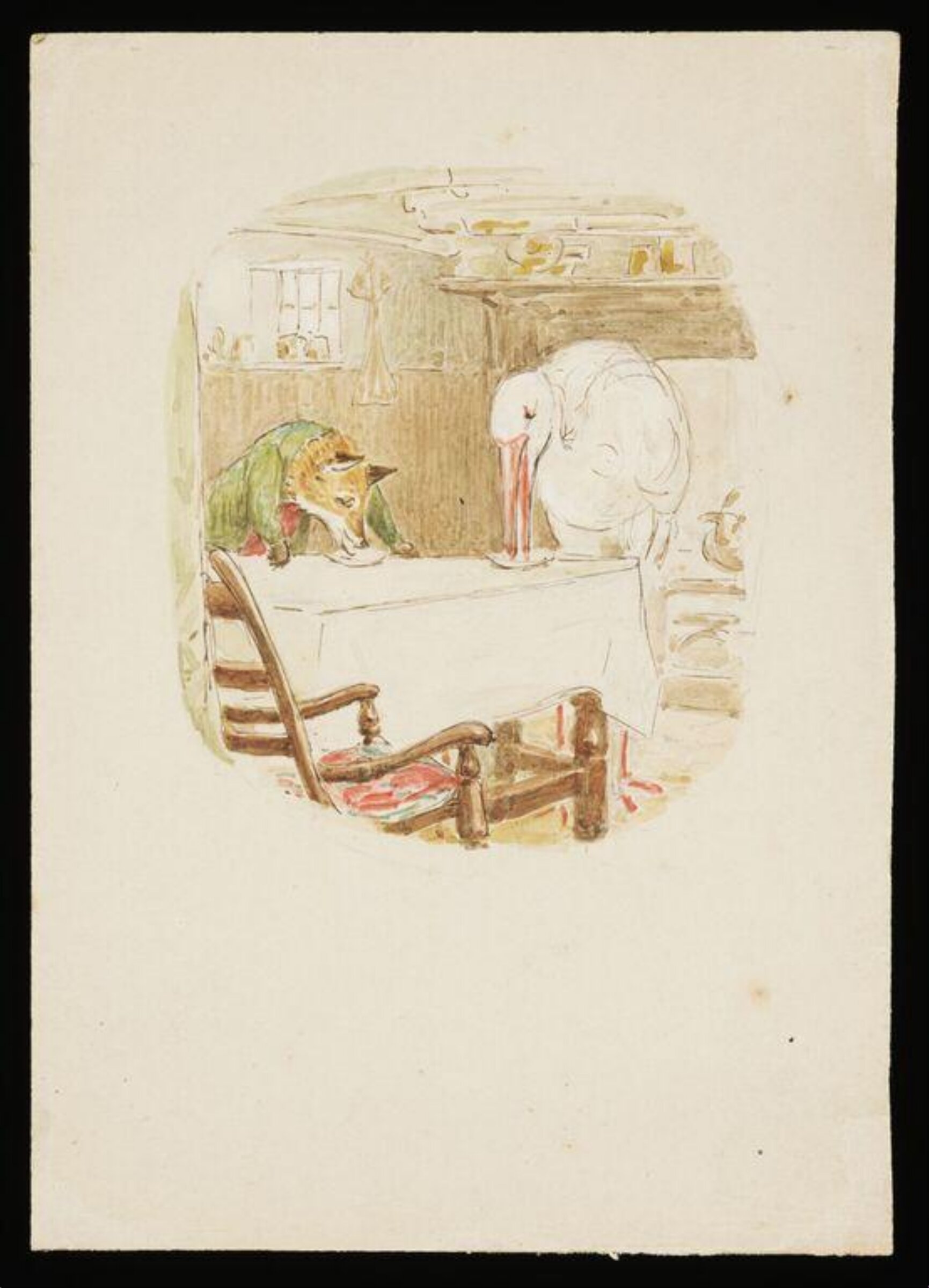
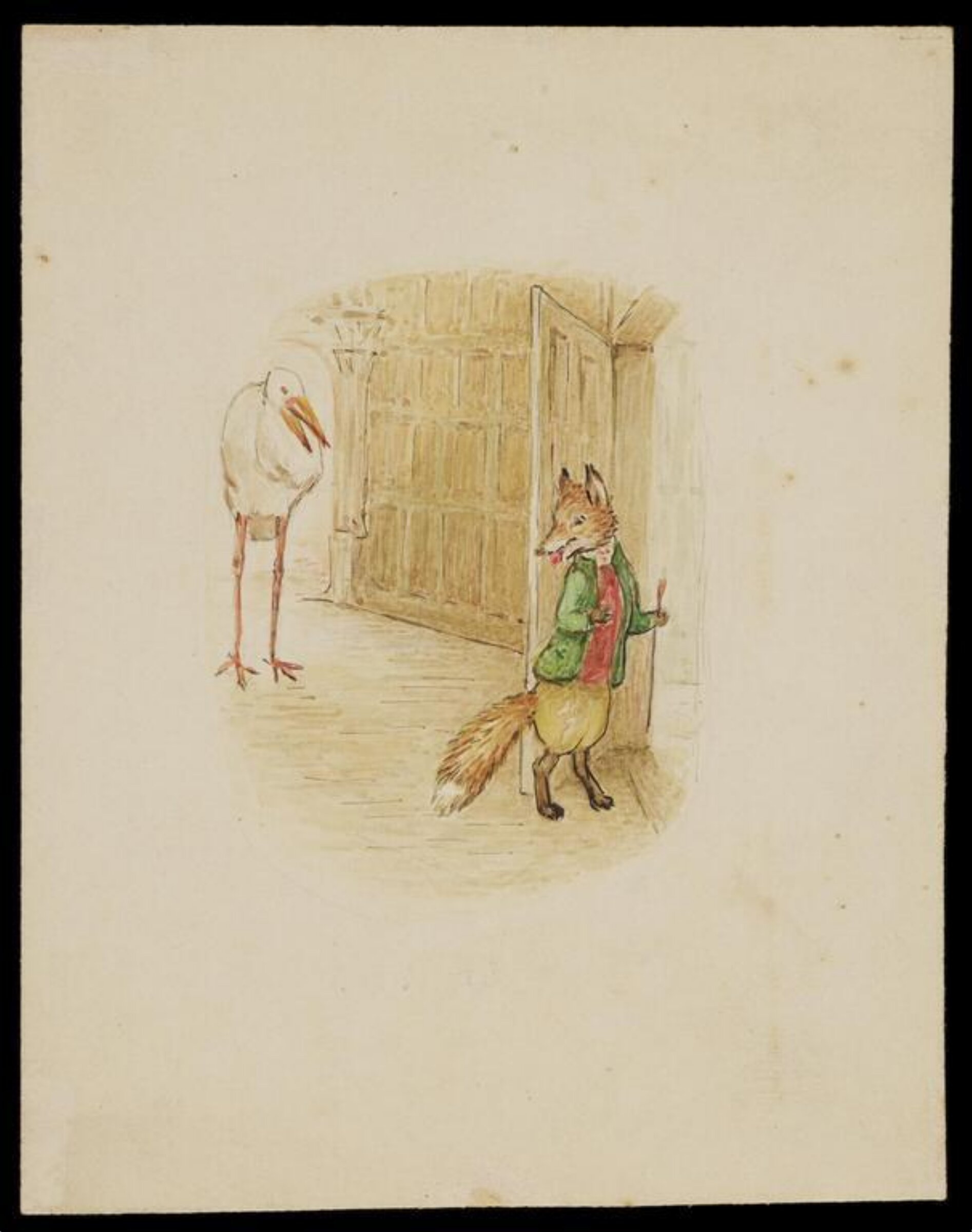
This design illustrates ‘The White Cat’, a fairy tale by the Countess d’Aulnoy. Potter inscribed one of the four sheets relating to the tale in the Linder Bequest: ‘Hertfordshire’. As such, the drawings were probably made during one of Potter’s 1894 visits to Camfield Place in Hertfordshire, the country home of her paternal grandparents, the surrounding landscape, seen with a covering snow, included within her illustrations. Writing in her journal Potter called Camfield, ‘the place I love best in the world’.
Another drawing related to this group was published in a booklet by the firm of Ernest Nister, who published some of Potter’s drawings within their children’s publications of the 1890s. Their 1896 Holiday Annual, for example, included Potter’s series of drawings, ‘A Frog He Would a-Fishing Go’.
Anne Stevenson Hobbs suggested that the kittens included in Potter’s illustrations of ‘The White Cat’, with their guns and game-bag, might have been inspired by sporting prints. These early cat characters also seem to pre-empt Potter’s 1914 protagonist, the gun-wielding and boot-wearing cat in Kitty in Boots (not published during Potter’s lifetime).
Victoria and Albert Museum
Angaben
- Inventarnummer
- BP.1473(B)
Was es zeigt
Im Katalog
Quellen
- Victoria and Albert Museum
- Bild: Victoria and Albert Museum — © Victoria and Albert Museum, London
Im Leben von Beatrix Potter
Das ganze Leben1881–1897
A journal in a cipher of her own
From 1881 Beatrix kept a journal in a simple substitution cipher of her own devising — in tiny handwriting, serving as both sketchbook and literary experiment, in which she described society, her impressions of art and the life around her. The entries stop in 1897, when her energies were absorbed in scientific study and in efforts to publish her drawings.
1890–1894
First commissions: cards, rabbits and frogs
In the 1890s Beatrix printed Christmas and other greeting cards of her own design — her first commercially successful works. In 1890 the firm of Hildesheimer and Faulkner bought several drawings of her rabbit Benjamin Bunny to illustrate Frederic Weatherly’s verses “A Happy Pair”, in 1893 several more for “Our Dear Relations”, and in 1894 the publisher Ernest Nister took a series of frog illustrations and verses for the annual “Changing Pictures”.
summer 1892
Charles McIntosh and the fungi
In the summer of 1892, at Dunkeld in Perthshire, Beatrix met Charles McIntosh, a revered naturalist and amateur mycologist: he helped make her illustrations more accurate, taught her taxonomy and supplied her with live specimens to paint in winter. By the 1890s her scientific interests had centred on mycology; she was first drawn to fungi by their colours and their evanescence.
1893
A letter to Noel Moore about four rabbits
In September 1893, on holiday at Eastwood near Dunkeld, Beatrix ran out of things to write to Noel, the often-ill eldest son of her former governess Annie Carter Moore, and told him a story about “four little rabbits whose names were Flopsy, Mopsy, Cottontail, and Peter”. It became one of the most famous children’s letters ever written and the basis of her future career; it was Annie who later suggested that such letters might make good children’s books.
1895–1897
A theory of spore germination, and Kew Gardens
In 1895, curious about how fungi reproduce, Beatrix began microscopic drawings of agaric spores and developed a theory of their germination. Through her uncle, the chemist Sir Henry Roscoe, she consulted botanists at Kew and convinced George Massee of her ability to germinate spores, but William Thiselton-Dyer, the director of Kew, rebuffed her because of her sex and amateur status.