 Beatrix Potter1866–1943
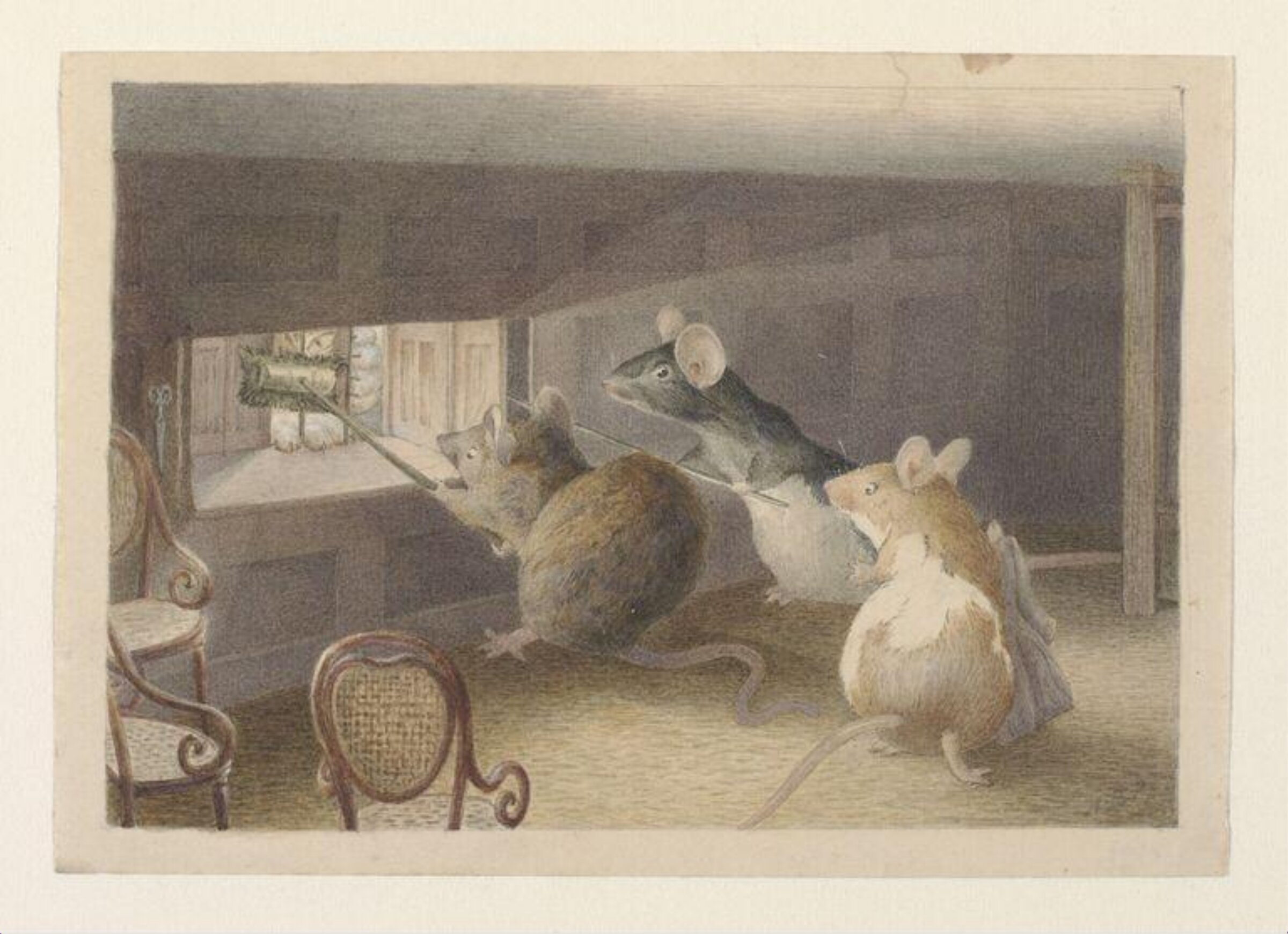
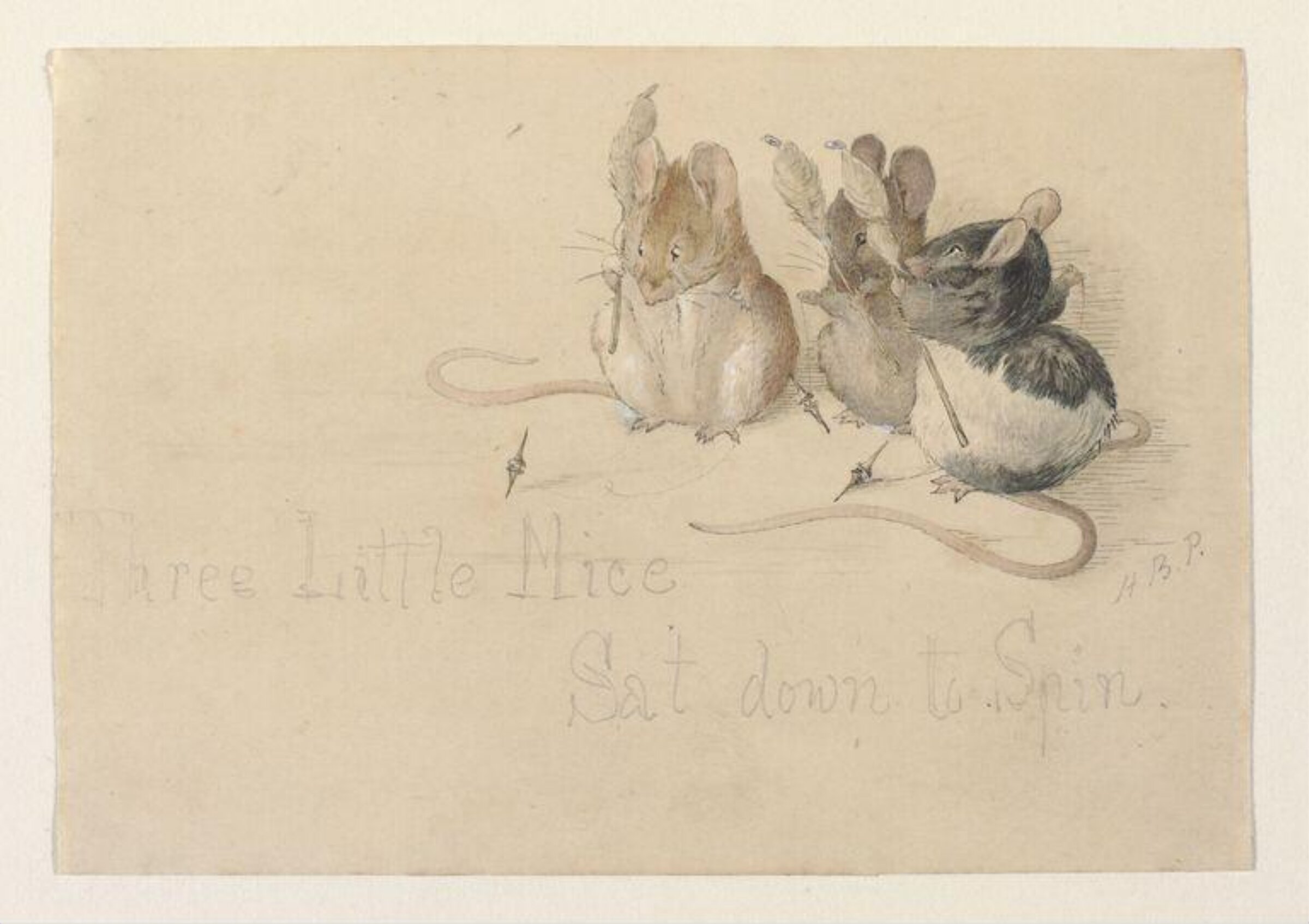
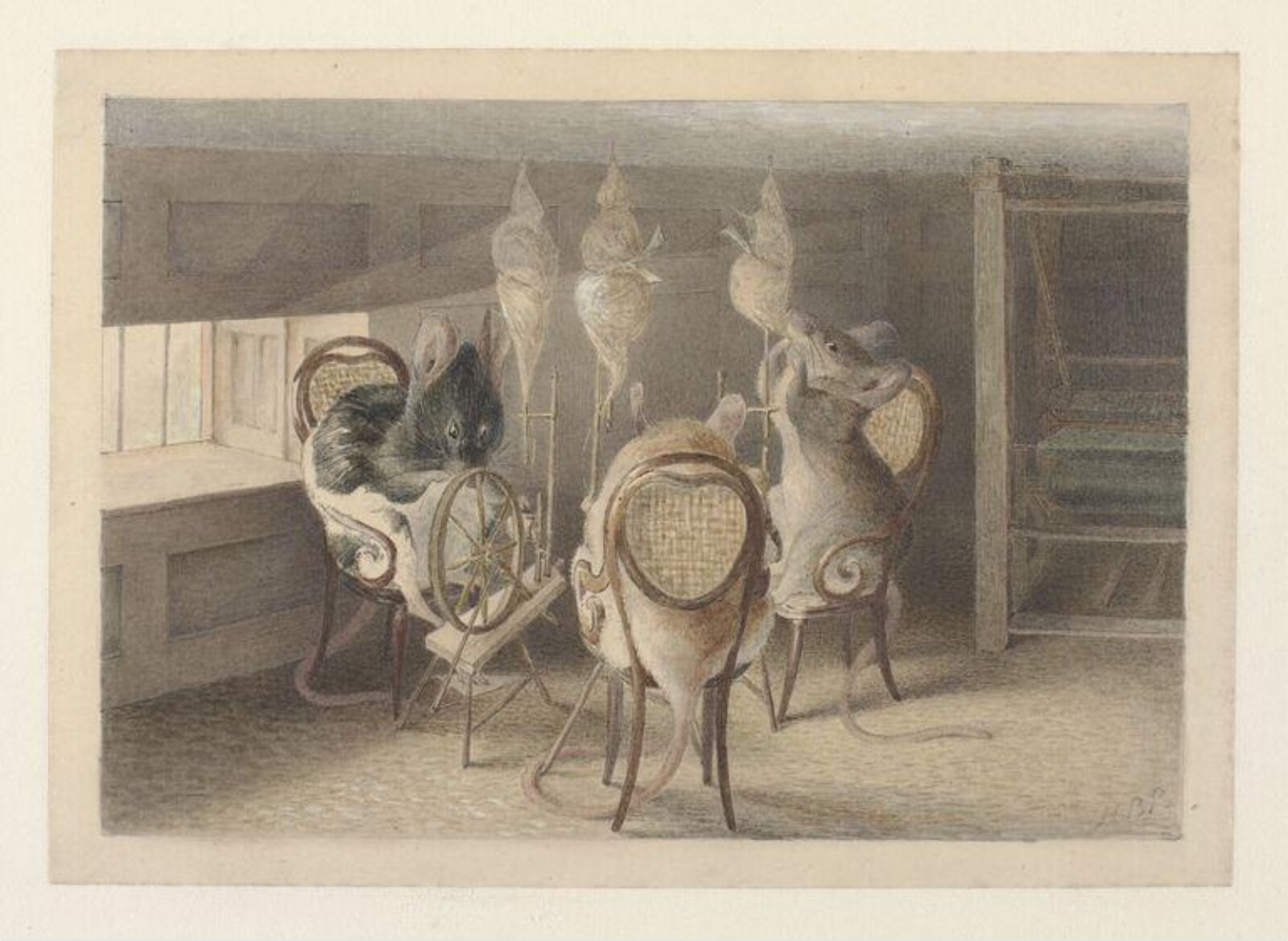
Three little Mice sat down to spin
Darf man es sehen?
Derzeit nicht ausgestellt
Wo ist „Three little Mice sat down to spin“ heute? Sammlung: Victoria and Albert Museum, London. Derzeit nicht ausgestellt. Geprüft 25. September 2026.

London, Vereinigtes Königreich
Es gehört zur Sammlung, ist derzeit aber nicht ausgestellt.
- Geprüft
- Unverändert seit
- Quelle
- Das Museum
Über das Werk
Beatrix Potter (1866-1943) is one of the world's best-loved children's authors and illustrators. She wrote the majority of the twenty-three Original Peter Rabbit Books between 1901 and 1913. The Tale of Peter Rabbit (Frederick Warne, 1902) is her most famous and best-loved tale.
Mehr lesen
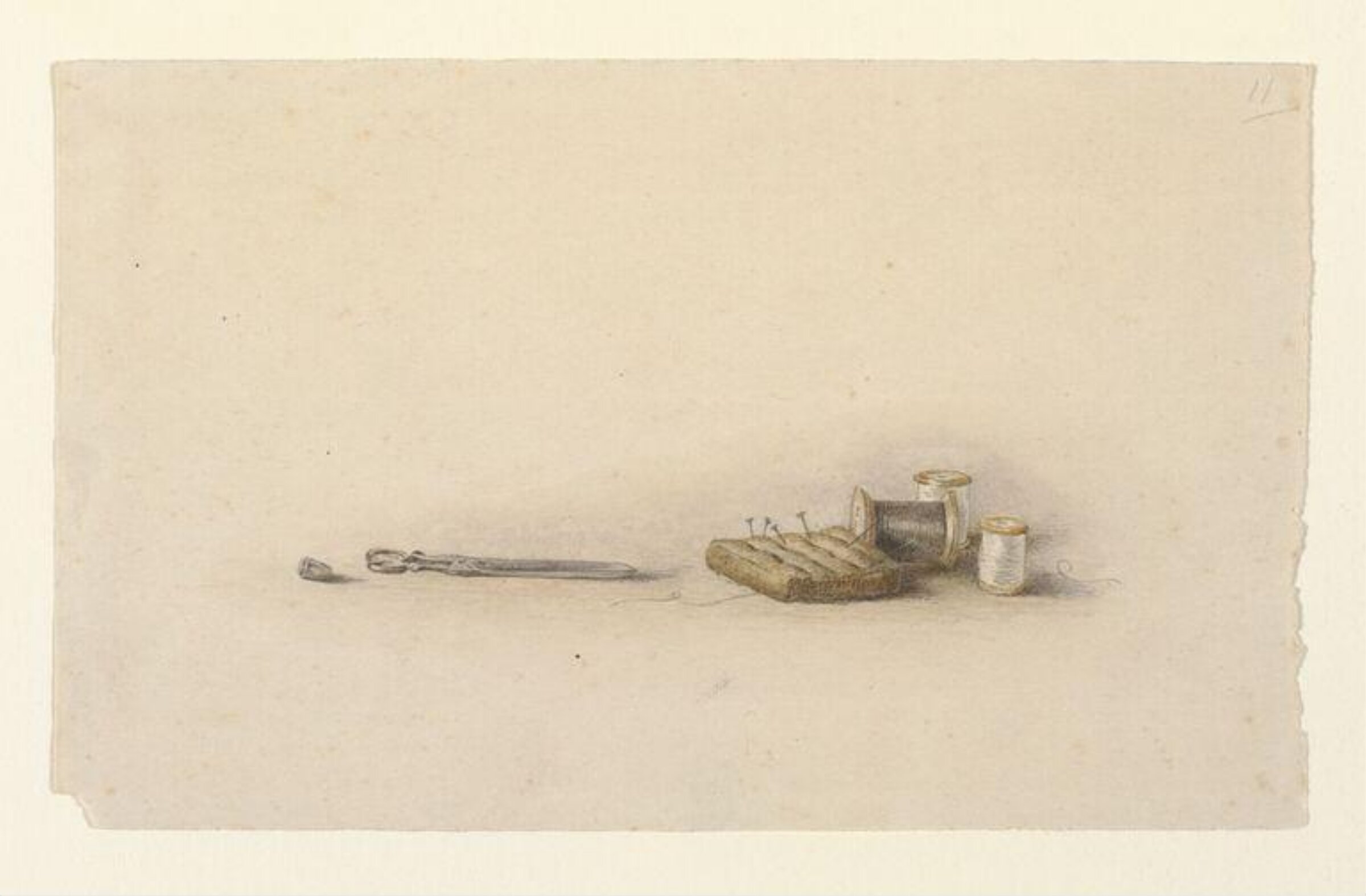
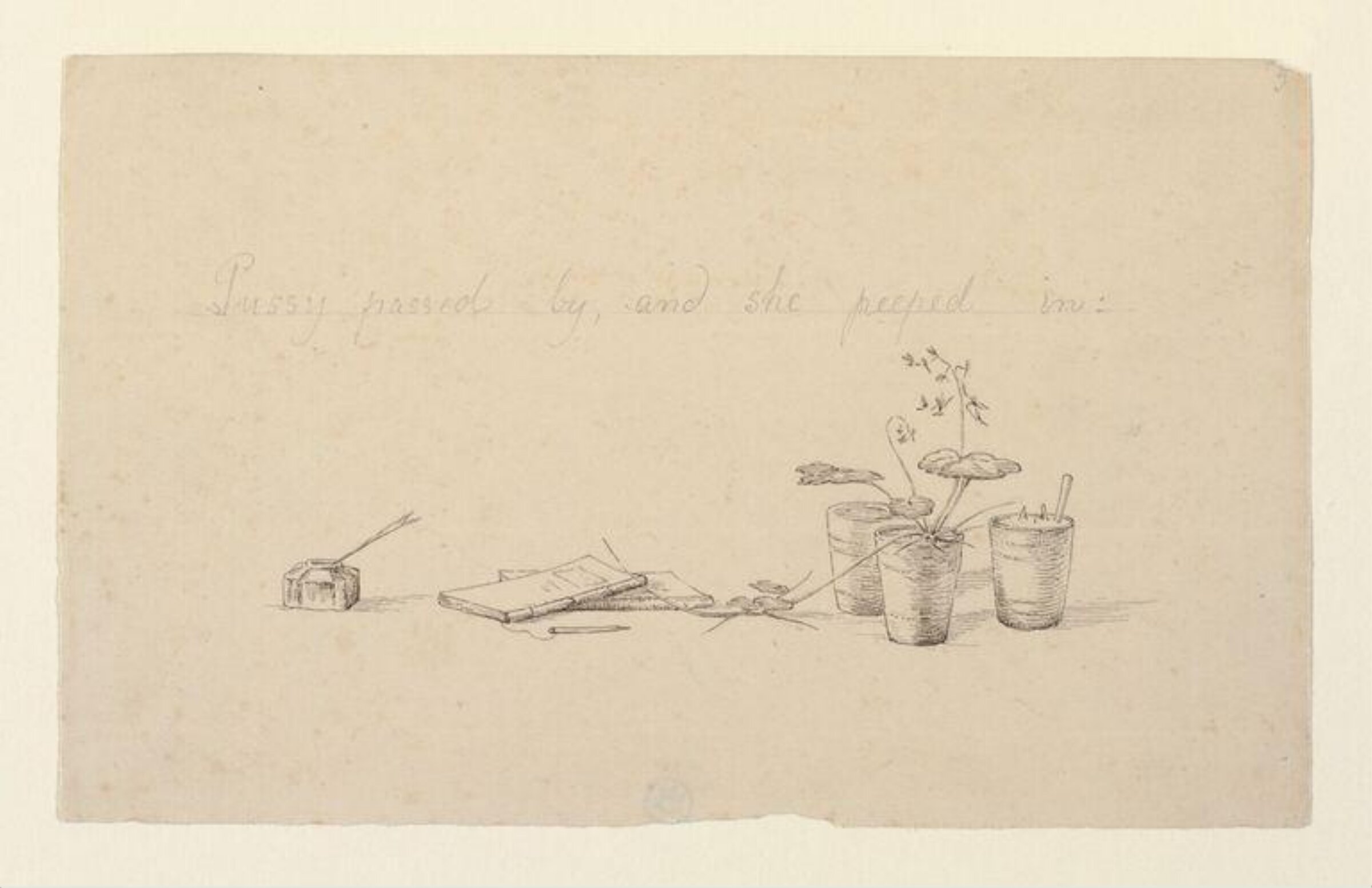
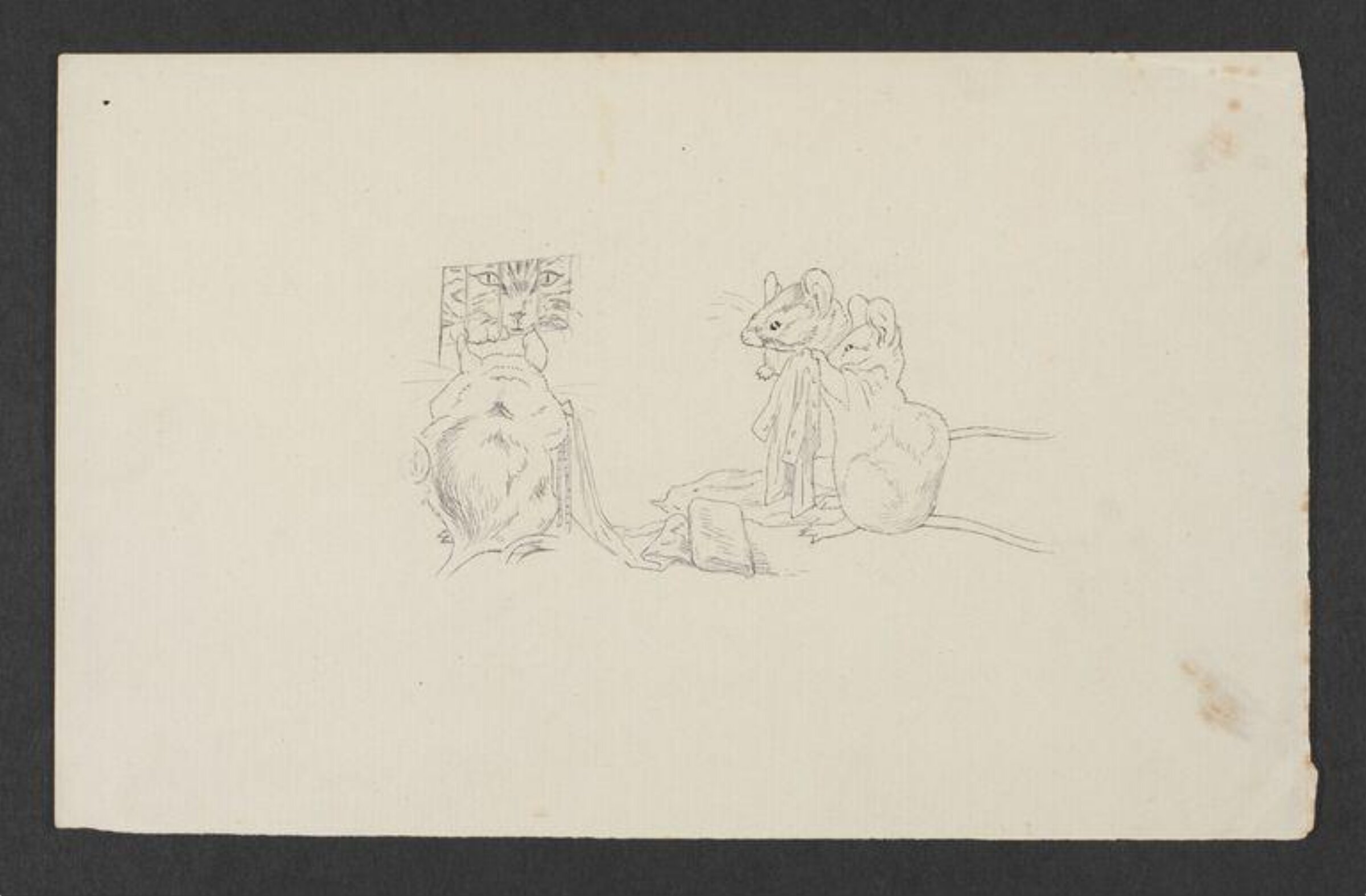
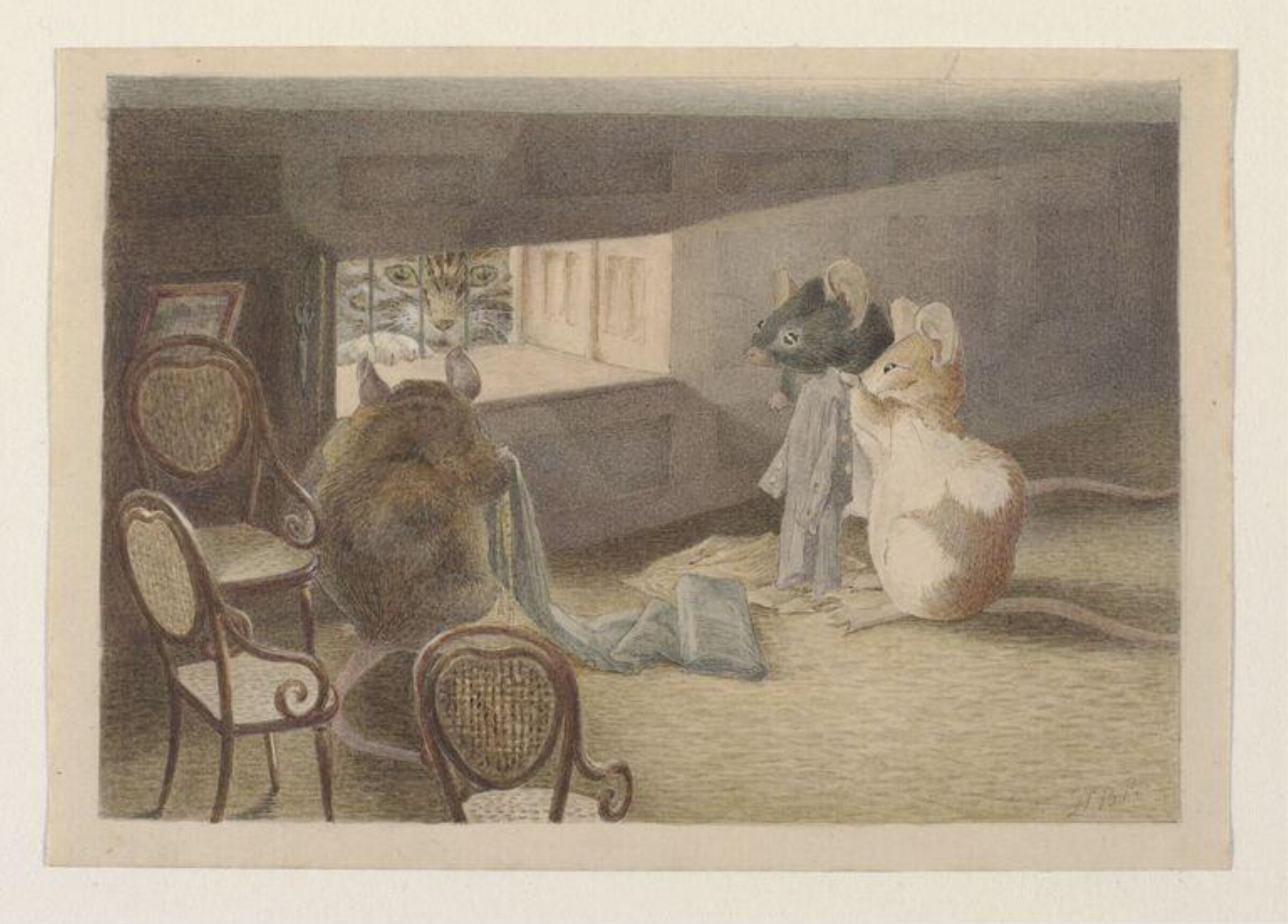
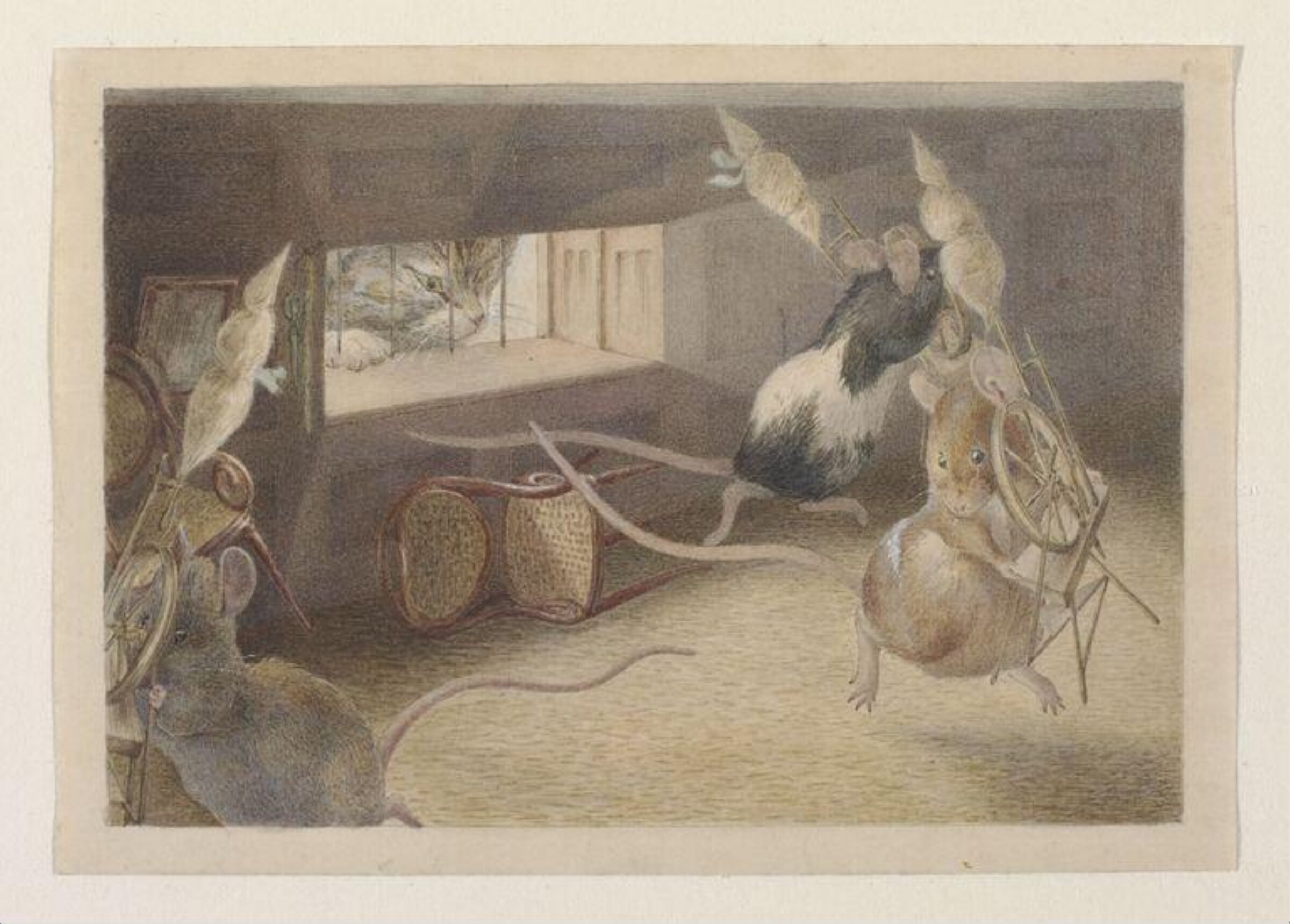
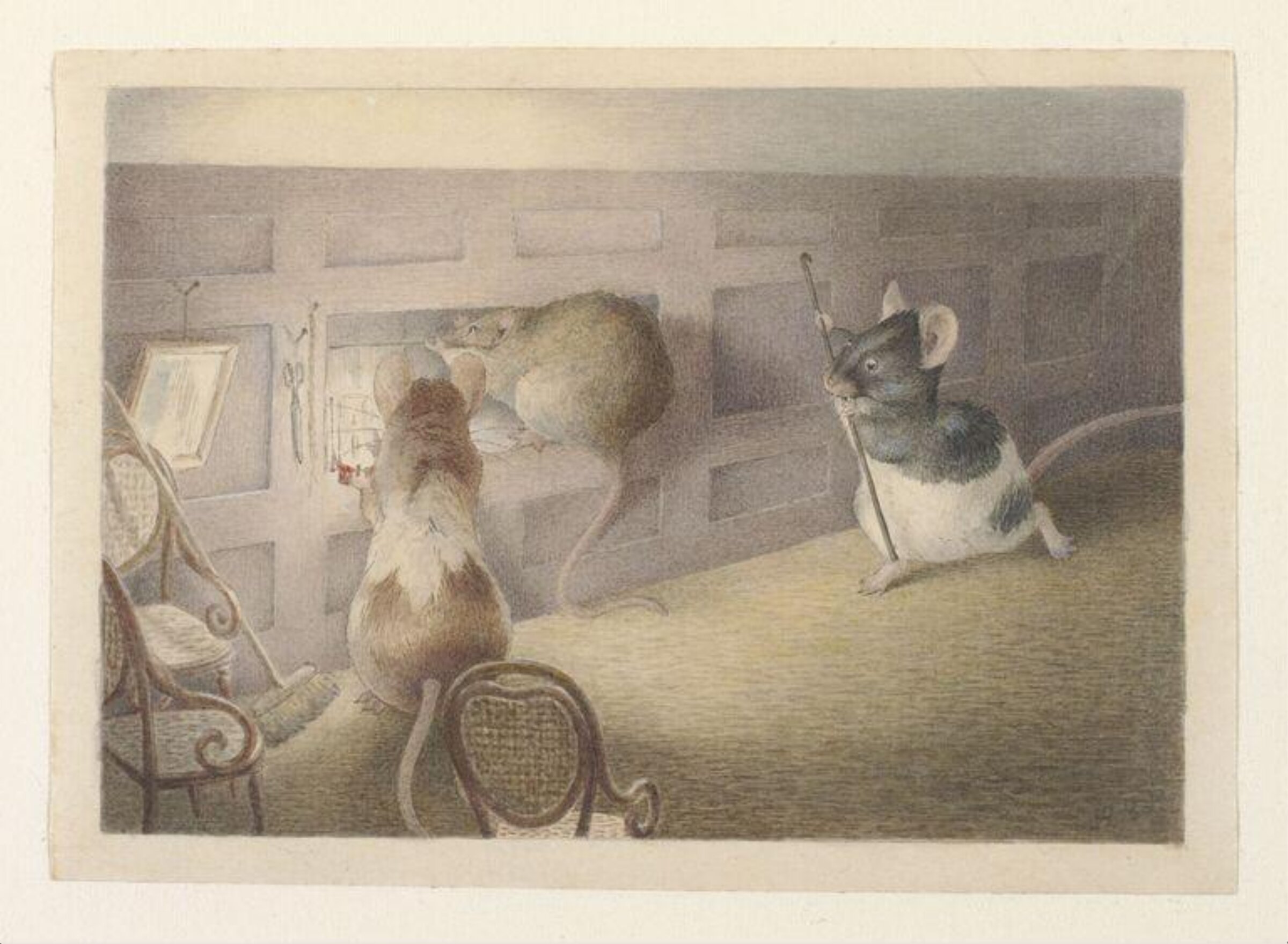
A number of Beatrix Potter’s narrative sequences of drawings were inspired by nursery rhymes. She explored the rhyme ‘Three little mice sat down to spin’ in around 1892, envisaging an illustrated booklet, possibly in a concertina format. She made detailed pen and ink studies and six finished watercolours: one for each line of the nursery rhyme (she omitted the last two lines of the usually eight-line rhyme). Potter also made a title-page and six decorated text pages. However, although the booklet reached this advanced stage of preparation it was never published. The fourth design, however, ‘Making coats for Gentlemen’, was adapted for her later book, The Tailor of Gloucester (1903).
The nursery rhyme, as she used it, reads:
Three little Mice sat down to spin
Pussy passed by, and she peeped in
‘What are you at, my fine little Men?’
‘Making coats for Gentlemen’
‘Shall I come in, and cut off your threads?’
‘Oh no! Miss Pussy, you’d bite off our heads’
This finished watercolour illustrates the first line of the rhyme, ‘Three little Mice sat down to spin.’ For a related pen and ink study, see museum number BP.634(2).
Victoria and Albert Museum
Angaben
- Inventarnummer
- BP.634(8)
Was es zeigt
Im Katalog
Quellen
- Victoria and Albert Museum
- Bild: Victoria and Albert Museum — © Victoria and Albert Museum, London
Derweil im Leben von Beatrix Potter
Das ganze Leben1881–1897
A journal in a cipher of her own
From 1881 Beatrix kept a journal in a simple substitution cipher of her own devising — in tiny handwriting, serving as both sketchbook and literary experiment, in which she described society, her impressions of art and the life around her. The entries stop in 1897, when her energies were absorbed in scientific study and in efforts to publish her drawings.
1890–1894
First commissions: cards, rabbits and frogs
In the 1890s Beatrix printed Christmas and other greeting cards of her own design — her first commercially successful works. In 1890 the firm of Hildesheimer and Faulkner bought several drawings of her rabbit Benjamin Bunny to illustrate Frederic Weatherly’s verses “A Happy Pair”, in 1893 several more for “Our Dear Relations”, and in 1894 the publisher Ernest Nister took a series of frog illustrations and verses for the annual “Changing Pictures”.
summer 1892
Charles McIntosh and the fungi
In the summer of 1892, at Dunkeld in Perthshire, Beatrix met Charles McIntosh, a revered naturalist and amateur mycologist: he helped make her illustrations more accurate, taught her taxonomy and supplied her with live specimens to paint in winter. By the 1890s her scientific interests had centred on mycology; she was first drawn to fungi by their colours and their evanescence.
1893
A letter to Noel Moore about four rabbits
In September 1893, on holiday at Eastwood near Dunkeld, Beatrix ran out of things to write to Noel, the often-ill eldest son of her former governess Annie Carter Moore, and told him a story about “four little rabbits whose names were Flopsy, Mopsy, Cottontail, and Peter”. It became one of the most famous children’s letters ever written and the basis of her future career; it was Annie who later suggested that such letters might make good children’s books.