Le CorbusierSchweiz, 1887–1965
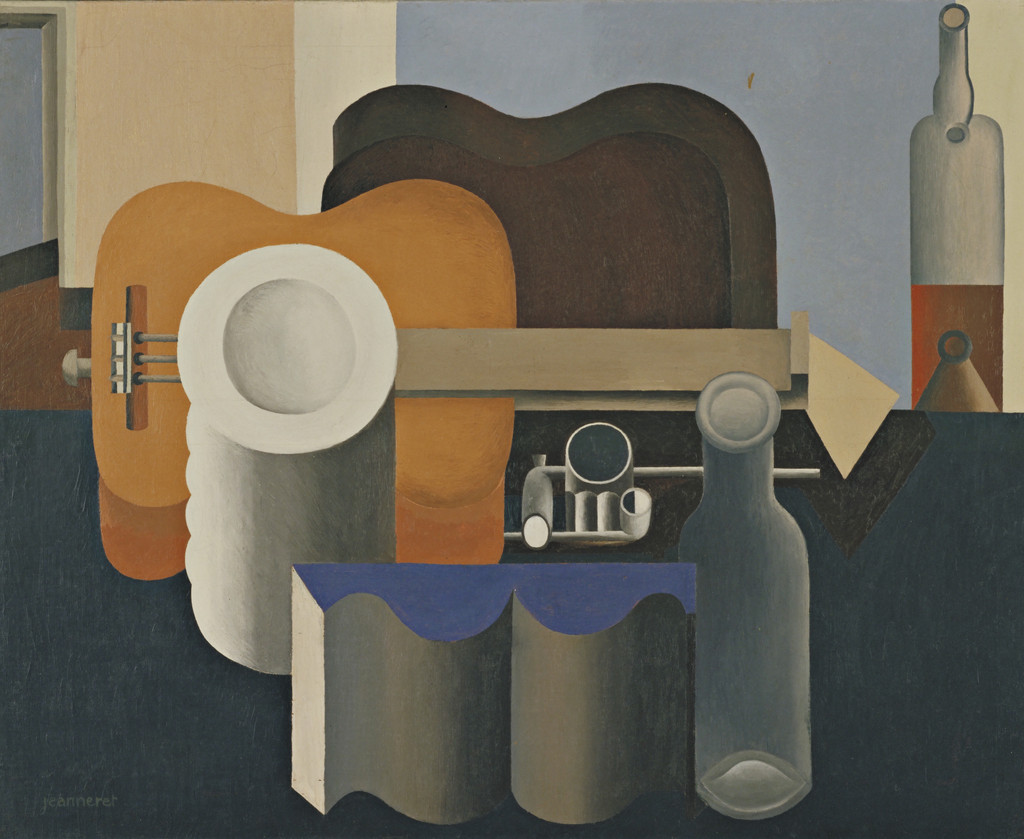
Kitchen Still-Life
Darf man es sehen?
Empfängt derzeit nicht

Art Institute of Chicago
Chicago, Vereinigte Staaten
Es gehört zur Sammlung, ist derzeit aber nicht ausgestellt.
- Geprüft
- Unverändert seit
- Quelle
- Sammlungsdaten des Museums selbst
Angaben
- Inventarnummer
- 1963.434
Im Katalog
Quellen
- Art Institute of Chicago: the museum's own open data · abgerufen vor 6 Tagen
- Bild: Art Institute of Chicago — © the artist or rights holder
Derweil im Leben von Le Corbusier
Das ganze Lebenearly 1917
Leaves Switzerland for Paris
In early 1917 Charles-Édouard Jeanneret left La Chaux-de-Fonds and Switzerland to settle in Paris for good. Until January 1919 he worked as consulting architect to Max Dubois's Society for the Application of Reinforced Concrete and ran a building-materials factory at Alfortville.
1918
The manifesto After Cubism: the birth of Purism
Ozenfant introduced Jeanneret to Georges Braque, Pablo Picasso, Juan Gris and Jacques Lipchitz, and painting became his second profession. Together they issued the manifesto After Cubism, calling for reality to be “purified” of the accidental in favour of ideal, pure forms, and staged joint “Purist” exhibitions.
1918
Meets Amédée Ozenfant
Jeanneret met the Cubist painter Amédée Ozenfant, in whom he recognised a kindred spirit. Ozenfant encouraged him to paint, and the two began a period of collaboration.
1920
Adopts the name Le Corbusier
In the first issue of L'Esprit Nouveau, Charles-Édouard Jeanneret signed himself Le Corbusier, an altered form of his maternal grandfather's name, Lecorbésier. The pseudonym reflected his belief that anyone could reinvent themselves.
1920
The magazine L'Esprit Nouveau
With financial backing from the Swiss businessman Raoul La Roche, Jeanneret and Ozenfant launched the art magazine L'Esprit Nouveau. Jeanneret ran its architecture section, where the first chapters of his book Towards an Architecture appeared.