Willem de KooningVereinigte Staaten, 1904–1997
Excavation
Darf man es sehen?
Empfängt derzeit nicht

Art Institute of Chicago
Chicago, Vereinigte Staaten
Es gehört zur Sammlung, ist derzeit aber nicht ausgestellt.
- Geprüft
- Unverändert seit
- Quelle
- Sammlungsdaten des Museums selbst
About the painting
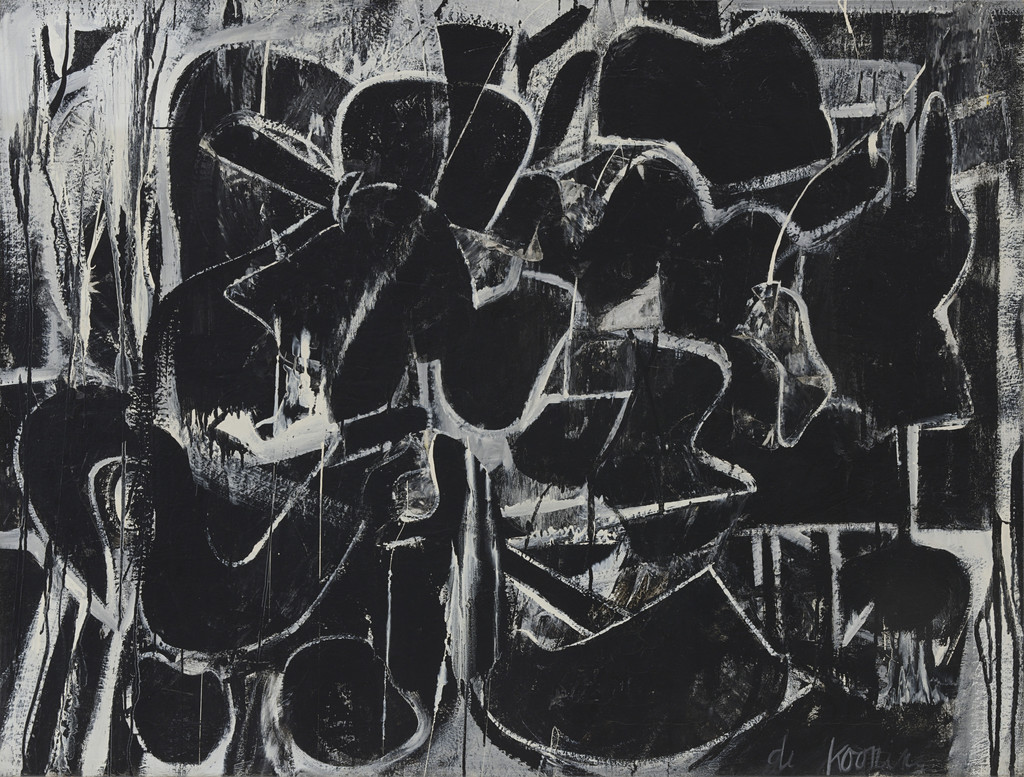
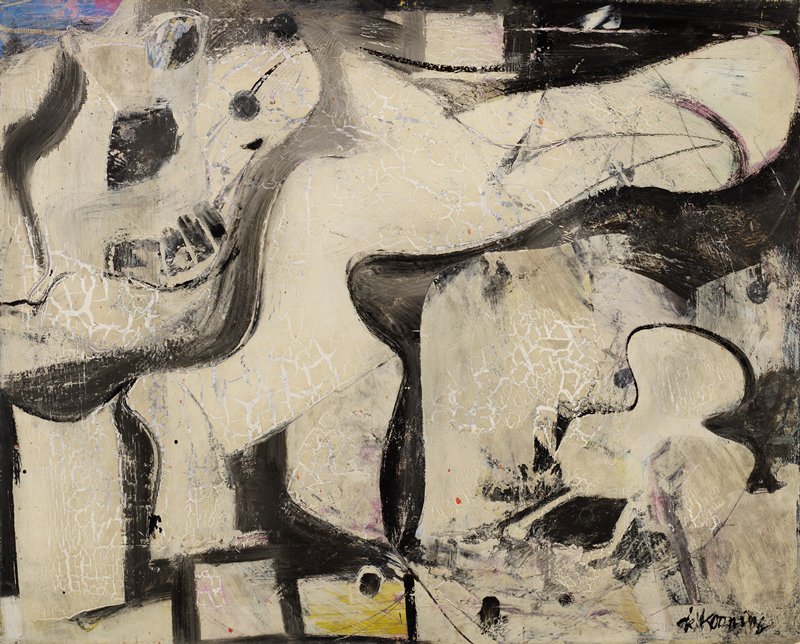
Willem de Kooning was a central figure in Abstract Expressionism, an art movement that espoused the painterly actions of the artist as a sign of his or her emotions. De Kooning completed Excavation in June 1950, just in time for it to be exhibited in the twenty-fifth Venice Biennale. His largest painting up to that date, the work exemplifies the Dutch-born innovator’s style, with its expressive brushwork and distinctive organization of space into sliding planes with open contours. According to the artist, the point of departure for the painting was an image of women working in a rice field in Bitter Rice, a 1949 Neorealist film by Italian director Giuseppe de Santis.
Read on
The mobile structure of hooked calligraphic lines defines anatomical parts—bird and fish shapes, human noses, eyes, teeth, necks, and jaws—that seem to dance across the painted surface, revealing the particular tension between abstraction and figuration that is inherent in de Kooning’s work. The original white pigment has yellowed over the years, diluting somewhat the flashes of red, blue, yellow, and pink that punctuate the composition. Aptly titled, the painting reflects de Kooning’s technically masterful painting process: an intensive building up of the surface and scraping down of its paint layers, often for months, until the desired effect was achieved.
Art Institute of ChicagoCC BY 4.0
Angaben
- Inventarnummer
- 1952.1
What it shows
Im Katalog
Kommen und Gehen
Derzeit nicht ausgestellt
Art Institute of Chicago · 2. Okt. 2026 — jetzt · Geprüft
Ausgestellt · Regenstein Hall
Art Institute of Chicago · 28. Sept. 2026 — 2. Okt. 2026 · Geprüft
Ausgestellt · Saal 291
Art Institute of Chicago · 19. Aug. 2026 — 28. Sept. 2026 · Geprüft
Quellen
- Art Institute of Chicago: the museum's own open data · abgerufen vor 7 Tagen
- Bild: Art Institute of Chicago — © the artist or rights holder
Derweil im Leben von Willem de Kooning
Das ganze Leben1940s
Meets Franz Kline
De Kooning met the younger painter Franz Kline, who was also working in the figurative style of American realism and had been drawn to monochrome. Kline, who died young, became one of De Kooning’s closest artist friends; his influence is evident in De Kooning’s calligraphic black images of this period.
1943–1957
An “open” marriage with Elaine
Willem and Elaine’s marriage was later called an open marriage: both were casual about sex and about each other’s affairs. Elaine had affairs with men who helped further Willem’s career, such as the art critic Harold Rosenberg, the ARTnews editor Thomas B. Hess and Charles Egan, owner of the Charles Egan Gallery.
1948
First solo exhibition at the Charles Egan Gallery
In 1948 De Kooning had his first one-man show at the Charles Egan Gallery in New York City, consisting largely of black-and-white works, though a few pieces had passages of bright colour. By then he had already acquired a formidable underground reputation.
1948–1966
Fourteen solo exhibitions
From 1948 to 1966 De Kooning had 14 solo exhibitions, many in New York but also nationally and internationally, among them the Egan Gallery, the Sidney Janis Gallery, the Martha Jackson Gallery, the Allan Stone Gallery and museums such as the Museum of Fine Arts, Boston and the Smith College Museum of Art. There were two a year in 1953, 1964 and 1965.
1950s
The path of “figurative abstractions”
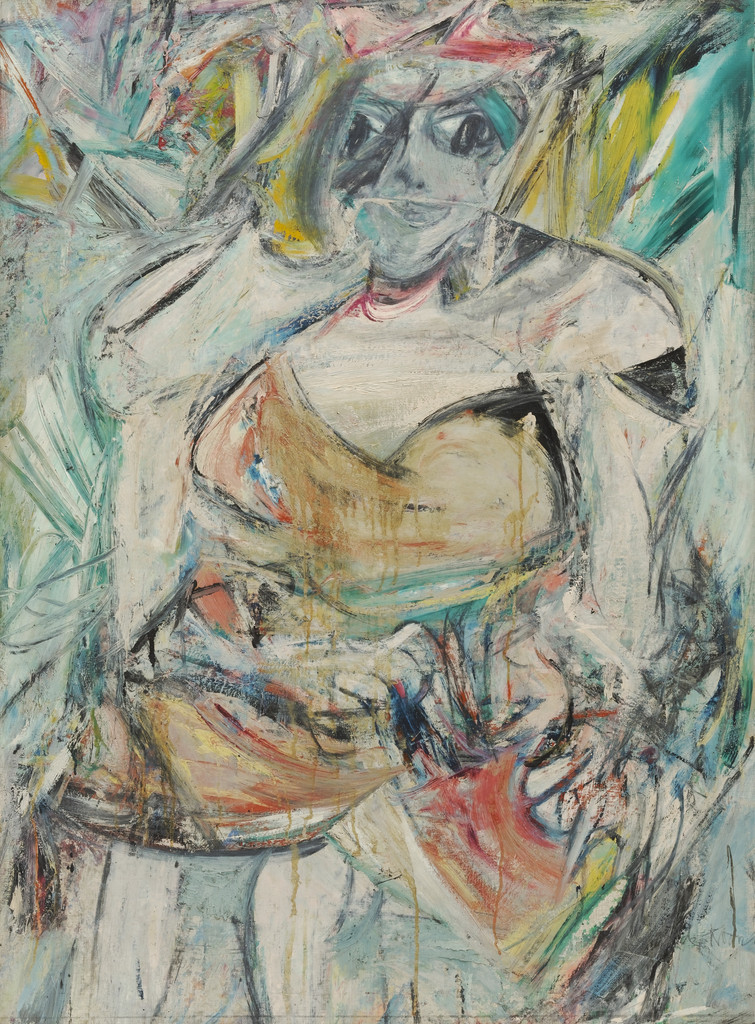
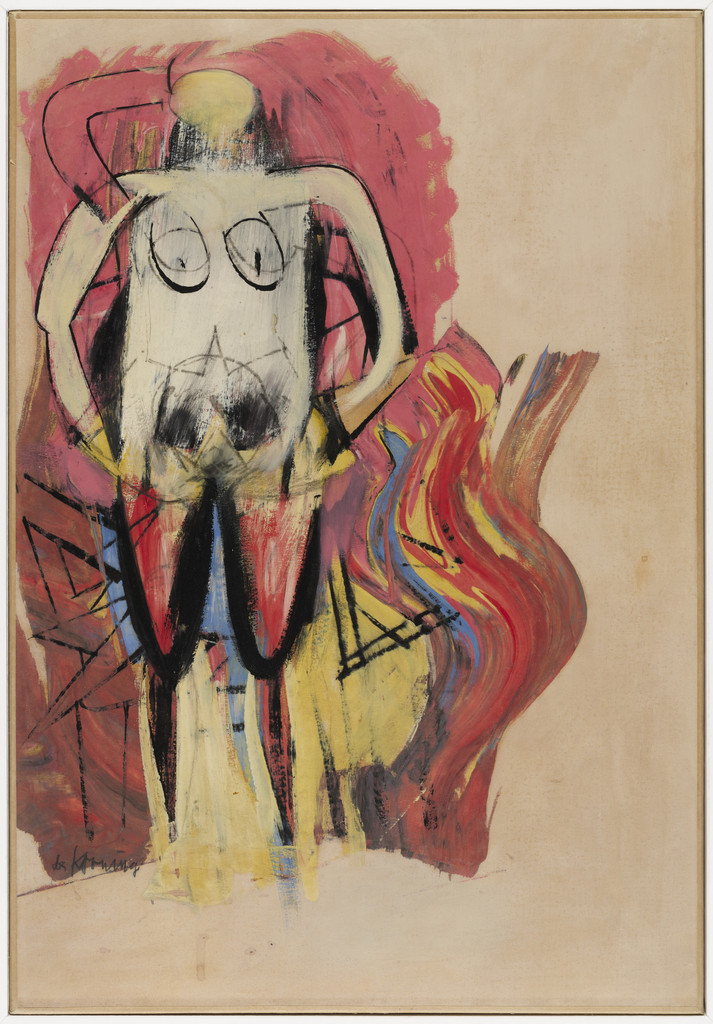
In the 1950s De Kooning followed a path of primitivisation and developed so-called “figurative abstractions”: a solitary female figure, under furious, pasty “blow-like” brushstrokes, turns into a painterly totem open to radical Freudian readings.
1951 · Auszeichnung
Logan Medal of the Arts