ART WIKI32.979 ausgestellt
KarteSammlungKünstlerMuseenAusstellungenJournal
Anmelden

ART WIKI

Wo das Meisterwerk hängt und wann man vorgelassen wird.

Sammlungen: Art Institute of Chicago, Cleveland Museum of Art, Eremitage, Getty Villa, Harvard Art Museums, Hirshhorn Museum and Sculpture Garden, J. Paul Getty Museum, Louvre, Metropolitan Museum of Art, Minneapolis Institute of Art, Museum of Modern Art, National Gallery of Art, National Museum of Asian Art, National Portrait Gallery, Puschkin-Museum, Rijksmuseum Amsterdam, Russisches Museum, Smithsonian American Art Museum, Statens Museum for Kunst, Tretjakow-Galerie, Victoria and Albert Museum, Whitney Museum of American Art, Staatskatalog des Museumsfonds Russlands (274 Museen), Europeana (19 Museen), Wikidata (6 Museen), Paris Musées (12 Museen) und Joconde, die Museumsdatenbank des französischen Kulturministeriums (495 Museen). Die Bilder gehören ihren Rechteinhabern.

Rubriken

  • Karte
  • Suche
  • Sammlung
  • Meisterwerke
  • Jetzt ausgestellt
  • Künstler

Mehr

  • Museen & Galerien
  • Ausstellungen
  • Journal
  • Woher die Daten stammen
  • Datenschutz & Cookies
StartseiteKarteKatalog
  1. Sammlung/
  2. Herzog Anton Ulrich-Museum/
  3. Die sechs Kriegsleute
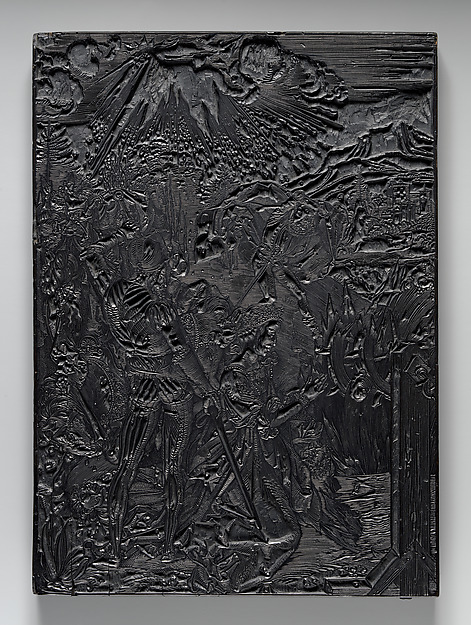
Die sechs Kriegsleute, Albrecht Dürer, 1491–1528
Albrecht Dürer, PorträtAlbrecht DürerDeutschland, 1471–1528

Die sechs Kriegsleute

1491–1528 · Print

Darf man es sehen?

Unbekannt

Herzog Anton Ulrich-Museum

Braunschweig, Deutschland

Der Besitzer ist bekannt; ob das Werk derzeit ausgestellt ist, nicht.

Unverändert seit
27. Sept. 2026
Quelle
Das Museum
Auf der KarteMuseumsseite

Angaben

1491–1528
14711528

Derweil im Leben von Albrecht Dürer

Das ganze Leben
  1. July 1494

    Marries Agnes Frey

    Soon after returning to Nuremberg the 23-year-old Dürer married Agnes Frey, daughter of a prominent brass worker and amateur harpist; the match had been arranged in his absence, and marriage was required to open a workshop of his own. They had no children, and his letters suggest the marriage was not a happy one.

  2. 1495

    Opens his own workshop

    Dürer opened his own workshop in Nuremberg, where over the next ten years he created much of his printmaking. His godfather, the publisher Anton Koberger, helped issue the first series; the city's crafts were governed by the Council rather than guilds, leaving him free to try new techniques and sell his own impressions.

  3. 1505

    Second journey to Italy

    Dürer set off for Italy again — perhaps not only to earn money but also to stop Marcantonio Raimondi from copying his prints. His stay in Venice is known from ten surviving letters to Pirckheimer.

  4. 1512

    Emperor Maximilian I becomes his chief patron

    From 1512 Emperor Maximilian I was Dürer's chief patron. For him Dürer and his workshop produced the Triumphal Arch, a giant woodcut 295 × 357 cm printed from 192 blocks and modelled on the triumphal arches of ancient Rome.

  5. July 1520

    Journey to the Netherlands with his wife

    To renew his imperial pension and win the patronage of the new emperor, Charles V, Dürer travelled with his wife and her maid down the Rhine via Cologne to Antwerp, where he was warmly received. He attended the coronation at Aachen and saw van Eyck's Ghent Altarpiece and Michelangelo's Madonna of Bruges.
Mehr von Albrecht Dürer

Alle Werke

Aus der Sammlung: Herzog Anton Ulrich-Museum

Museumsseite

Zum selben Thema · Der Soldat

Alle Werke zum Thema
  • 6. April 1528

    Died

  • Was es zeigt

    Der SoldatSoldatenlebenHauspferdAuf einem Pferd, Esel, Maultier, etc. reitenReiter(in)Streitwaffen (zum Schlagen, Stechen, Stoßen): HellebardeHellebardeKriegerLandsknechtLanzeOrientaleRiderTurban

    Im Katalog

    DruckgrafikRenaissance15. Jahrhundert

    Quellen

    • Herzog Anton Ulrich-Museum
    • Bild: Herzog Anton Ulrich-Museum — CC BY-NC-SA 4.0
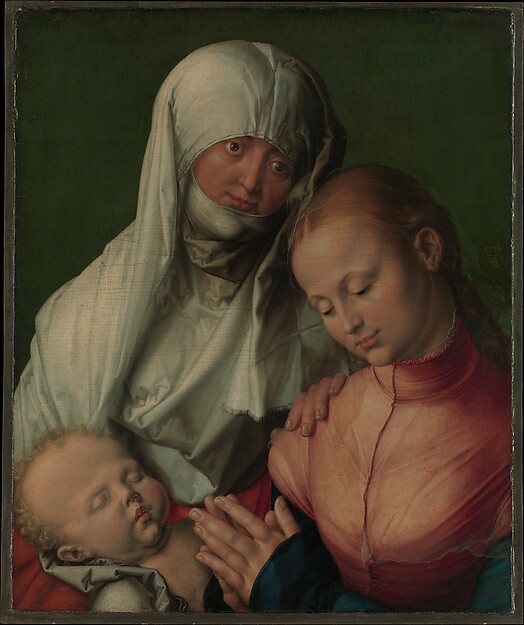
    Virgin and Child with Saint Anne, Albrecht Dürer, probably 1519

    Virgin and Child with Saint Anne

    probably 1519 · Metropolitan Museum of Art

    Madonna and Child [obverse], Albrecht Dürer, c. 1496/1499

    Haller Madonna

    c. 1496/1499 · National Gallery of Art

    Lot and His Daughters [reverse], Albrecht Dürer, c. 1496/1499

    Lot and His Daughters [reverse]

    c. 1496/1499 · National Gallery of Art

    The Martyrdom of Saint Catherine, Albrecht Dürer, ca. 1498

    The Martyrdom of Saint Catherine

    ca. 1498 · Metropolitan Museum of Art

    Nemesis (The Great Fortune), Albrecht Dürer, c. 1501/1502

    Nemesis (The Great Fortune)

    c. 1501/1502 · Cleveland Museum of Art

    Large Horse, Albrecht Dürer, 1505

    Large Horse

    1505 · Cleveland Museum of Art

    The Lamentation, Albrecht Dürer, 1507

    The Lamentation

    1507 · Cleveland Museum of Art

    The Virgin and Child on a Crescent with a Starry Crown, Albrecht Dürer, 1508

    The Virgin and Child on a Crescent with a Starry Crown

    1508 · Cleveland Museum of Art

    Portrait d'Adolphe de Vignacourt Grand Maître de Malthe, Caravaggio, 1704–1755

    Caravaggio

    Portrait d'Adolphe de Vignacourt Grand Maître de Malthe, 1704–1755

    Ecce Homo, Caravaggio, 1674–1684

    Caravaggio

    Ecce Homo, 1674–1684

    Heiliger Hieronymus, Caravaggio

    Caravaggio

    Heiliger Hieronymus

    Bildnis eines Mannes, Rembrandt, 1839–1850

    Rembrandt van Rijn

    Bildnis eines Mannes, 1839–1850

    Bildnis einer Frau, Rembrandt, 1839–1850

    Rembrandt van Rijn

    Bildnis einer Frau, 1839–1850

    Tobias und seine Frau, Rembrandt, 1773

    Rembrandt van Rijn

    Tobias und seine Frau, 1773

    Tobias und seine Frau, Rembrandt, 1773

    Rembrandt van Rijn

    Tobias und seine Frau, 1773

    Lot mit seinen Töchtern, Rembrandt, 1771

    Rembrandt van Rijn

    Lot mit seinen Töchtern, 1771

    Das Fräulein zu Pferd und der Landsknecht, Albrecht Dürer, 1496–1497

    Albrecht Dürer

    Das Fräulein zu Pferd und der Landsknecht, 1496–1497

    Herzog Anton Ulrich-Museum

    Der Tod und der Landsknecht, Albrecht Dürer, 1510

    Albrecht Dürer

    Der Tod und der Landsknecht, 1510

    Herzog Anton Ulrich-Museum

    Der Fahnenjunker, Albrecht Dürer, 1491–1528

    Albrecht Dürer

    Der Fahnenjunker, 1491–1528

    Herzog Anton Ulrich-Museum

    [Die Verspottung Christi; The Mocking of Christ; De bespotting van Christus], Anthony van Dyck, 1630–1641

    Anthony van Dyck

    [Die Verspottung Christi; The Mocking of Christ; De bespotting van Christus], 1630–1641

    Herzog Anton Ulrich-Museum

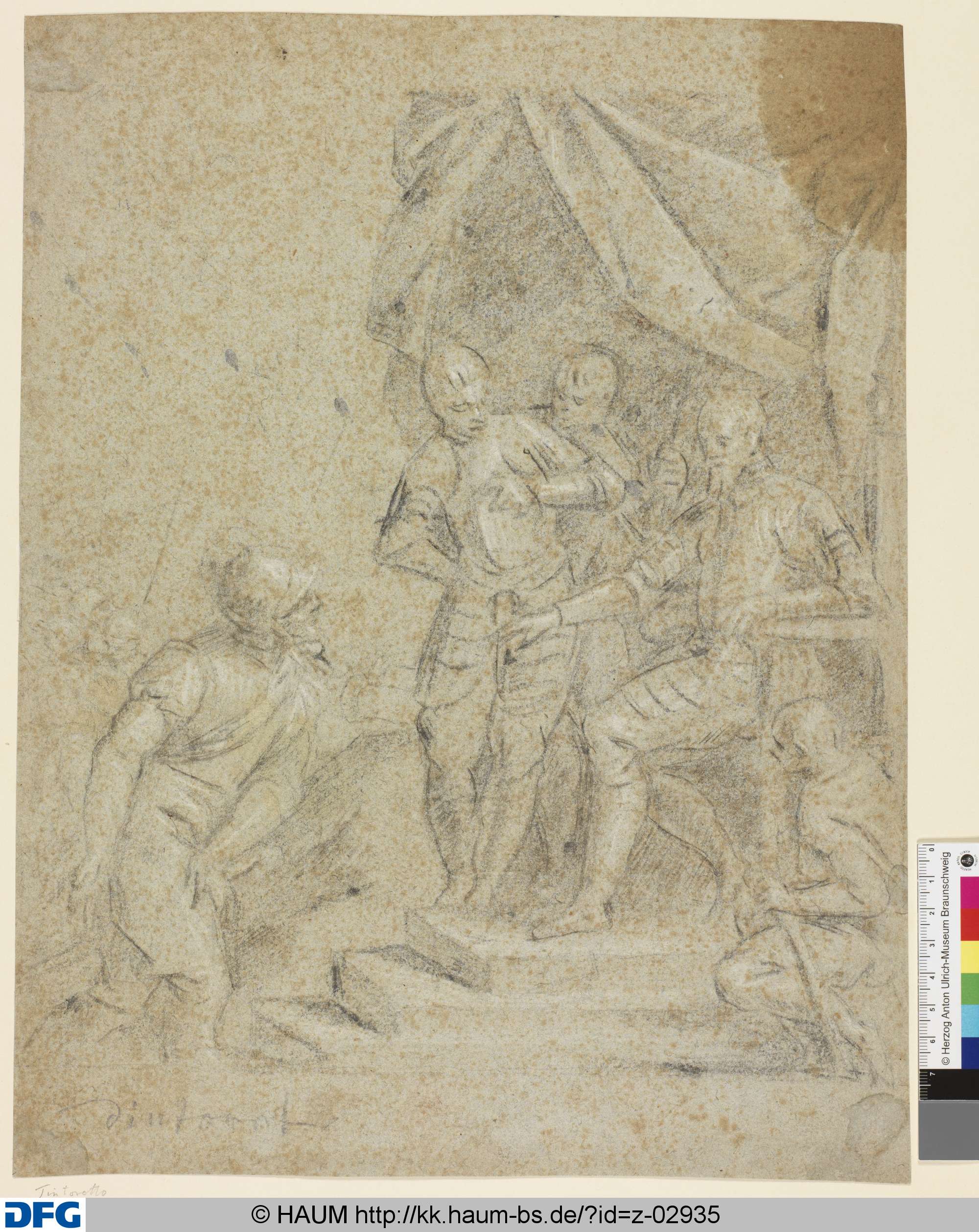
    Ein Krieger vor einem auf einem Thron sitzenden Feldherrn, Jacopo Tintoretto, 16th century

    Jacopo Tintoretto

    Ein Krieger vor einem auf einem Thron sitzenden Feldherrn, 16th century

    Herzog Anton Ulrich-Museum

    [Capriccio: Soldiers and a Youth in a Landscape; Soldaten und ein Kind in einer Landschaft], Giovanni Battista Tiepolo, 1740–1742

    Giovanni Battista Tiepolo

    [Capriccio: Soldiers and a Youth in a Landscape; Soldaten und ein Kind in einer Landschaft], 1740–1742

    Herzog Anton Ulrich-Museum

    Polycrates Sami Tyrannus, opibus, et felicitate inclytus, ab Orete Perfarum Satrapa captus, ac cruci affixus docuit, neminem ante obitum merito dici posse felicem, Salvator Rosa, 1661–1663

    Salvator Rosa

    Polycrates Sami Tyrannus, opibus, et felicitate inclytus, ab Orete Perfarum Satrapa captus, ac cruci affixus docuit, neminem ante obitum merito dici posse felicem, 1661–1663

    Herzog Anton Ulrich-Museum

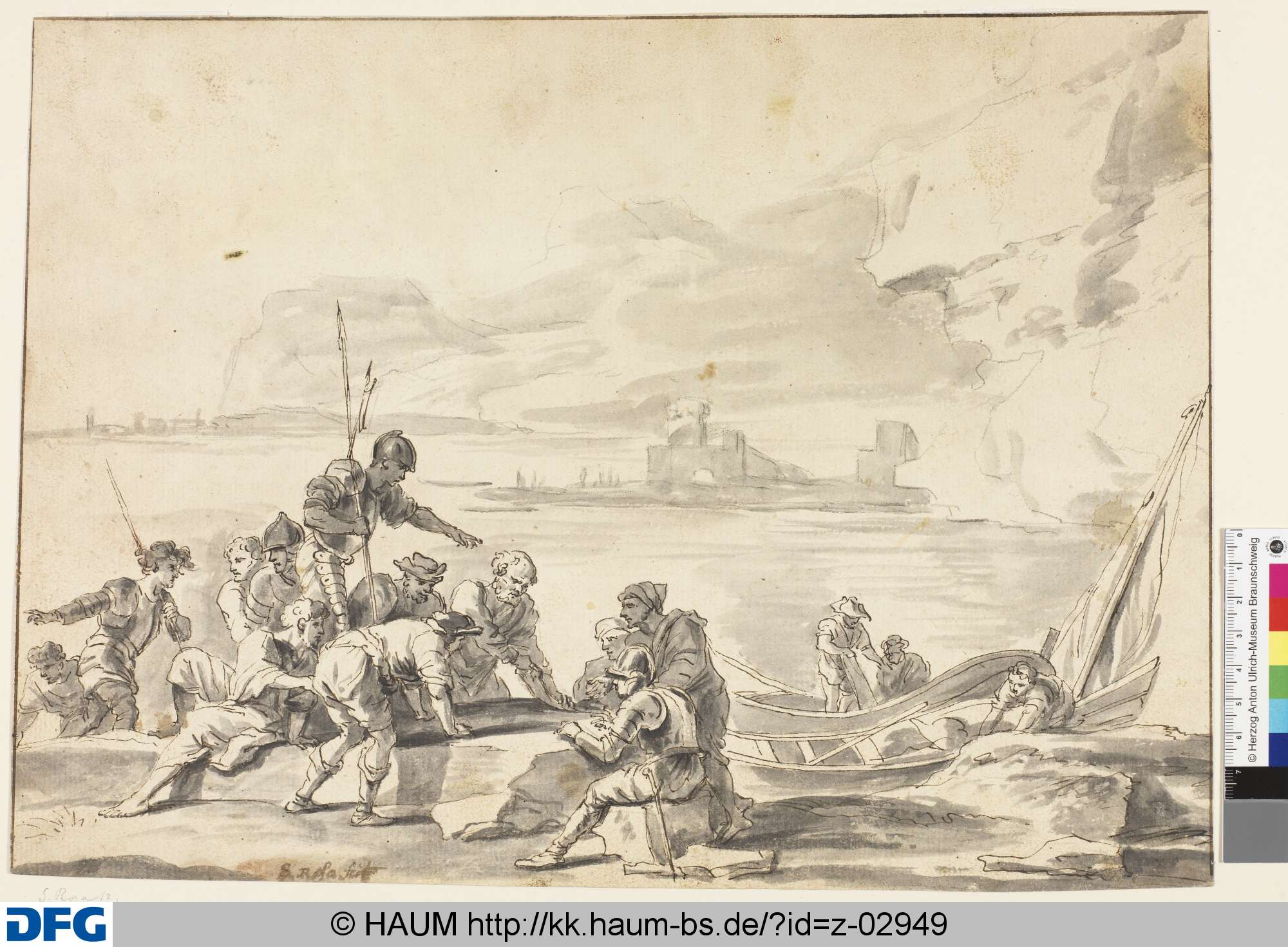
    Schiffer und Krieger an einer Küste, Salvator Rosa, 17th century

    Salvator Rosa

    Schiffer und Krieger an einer Küste, 17th century

    Herzog Anton Ulrich-Museum