 Otto DixDeutschland, 1891–1969
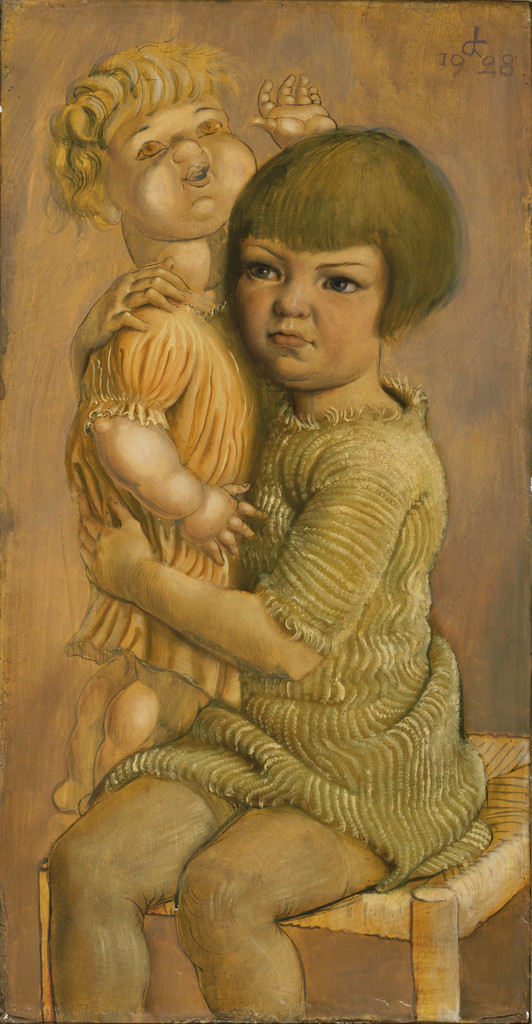
Child with Doll
Darf man es sehen?
Empfängt derzeit nicht

Museum of Modern Art
New York City, Vereinigte Staaten
Es gehört zur Sammlung, ist derzeit aber nicht ausgestellt.
- Geprüft
- Quelle
- Sammlungsdaten des Museums selbst
Angaben
- Inventarnummer
- 65.1935
Im Katalog
Quellen
- Museum of Modern Art: the museum's own open data · abgerufen vor 14 Tagen
- Bild: Museum of Modern Art — © the artist or rights holder
Derweil im Leben von Otto Dix
Das ganze Leben1920s
A ruthless chronicle of Weimar Germany
Like Grosz, Dix is extremely critical of contemporary German society, unsparingly depicting prostitution, violence, old age and death and often dwelling on Lustmord, or sexualized murder. His legless and disfigured veterans, a common sight on Berlin's streets in the 1920s, reveal the ugly side of war and the forgotten status of these men in German society.
1927
Son born: Ursus Dix
1927
A rare statement of method: the object comes first
In one of his few statements, published in 1927, Dix declares that the object is primary and that form is shaped by the object.
1928
Son born: Jan Dix
1928
Attacks on “Metropolis” in Dresden
When Metropolis is exhibited in Dresden for the first time, Bettina Feistel-Rohmeder, a founding member of the German Art Society, pillories both Dix personally and his depiction of German society in the society's art bulletin. The society had defined Dix as one of Germany's most 'degenerate' artists long before the Nazis took power.
1930 · Mitgliedschaft
Prussian Academy of Arts