Lee KrasnerVereinigte Staaten, 1908–1984
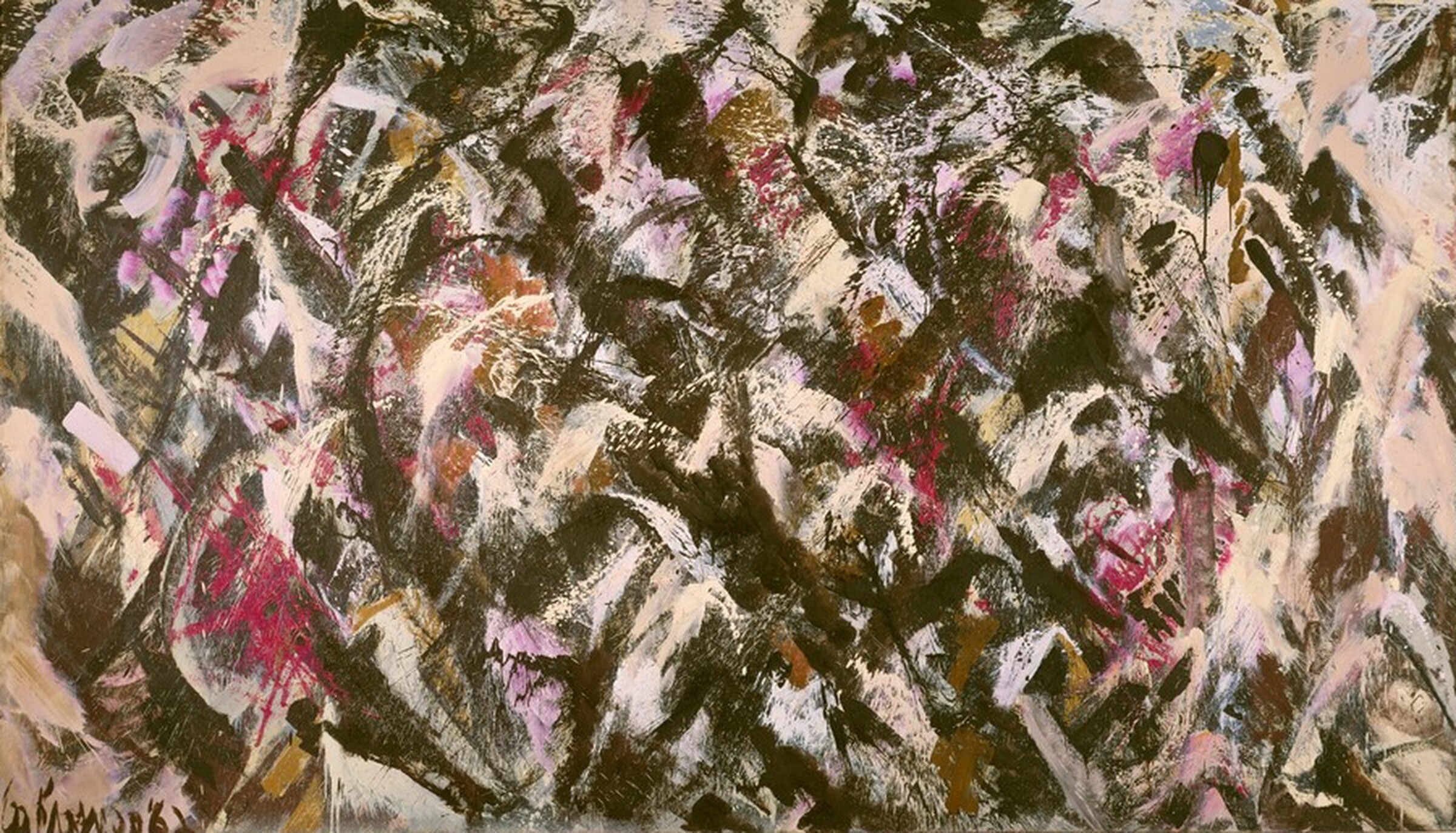
Black and White
Darf man es sehen?
Ja, es empfängt Besucher

Art Institute of Chicago
Saal124BChicago, Vereinigte Staaten
Öffentlich ausgestellt. Wer dafür bürgt, steht unten.
- Geprüft
- vor 6 Stunden
- Unverändert seit
- 28. Sept. 2026
- Quelle
- Sammlungsdaten des Museums selbst
Über das Werk
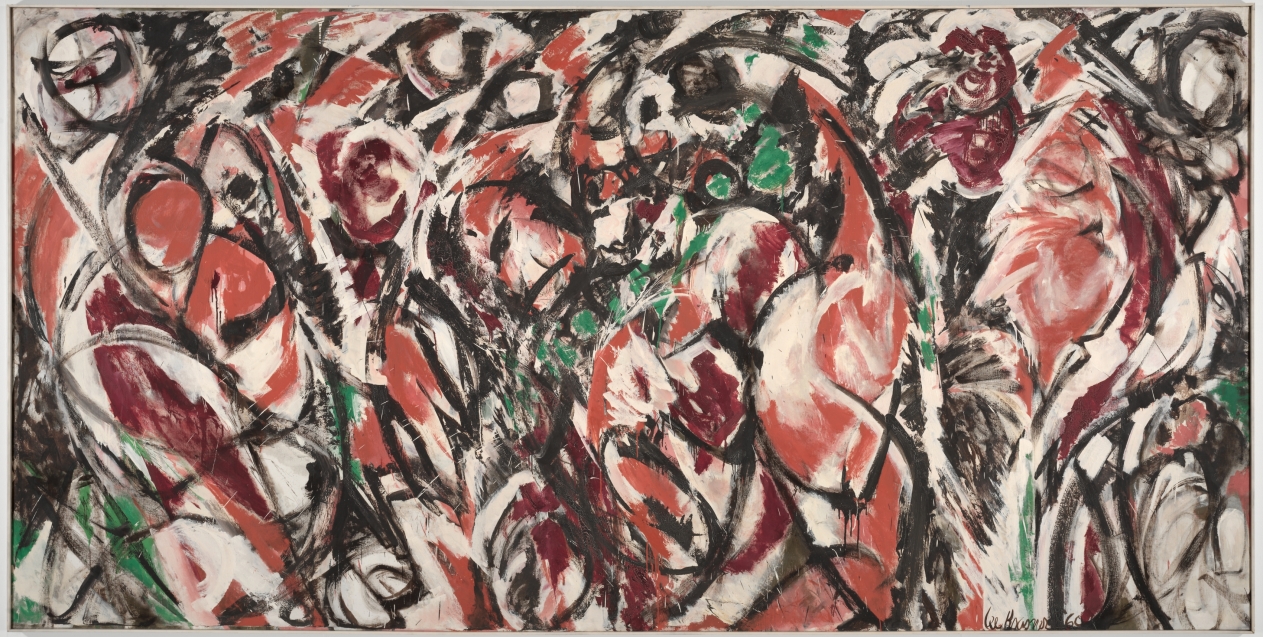
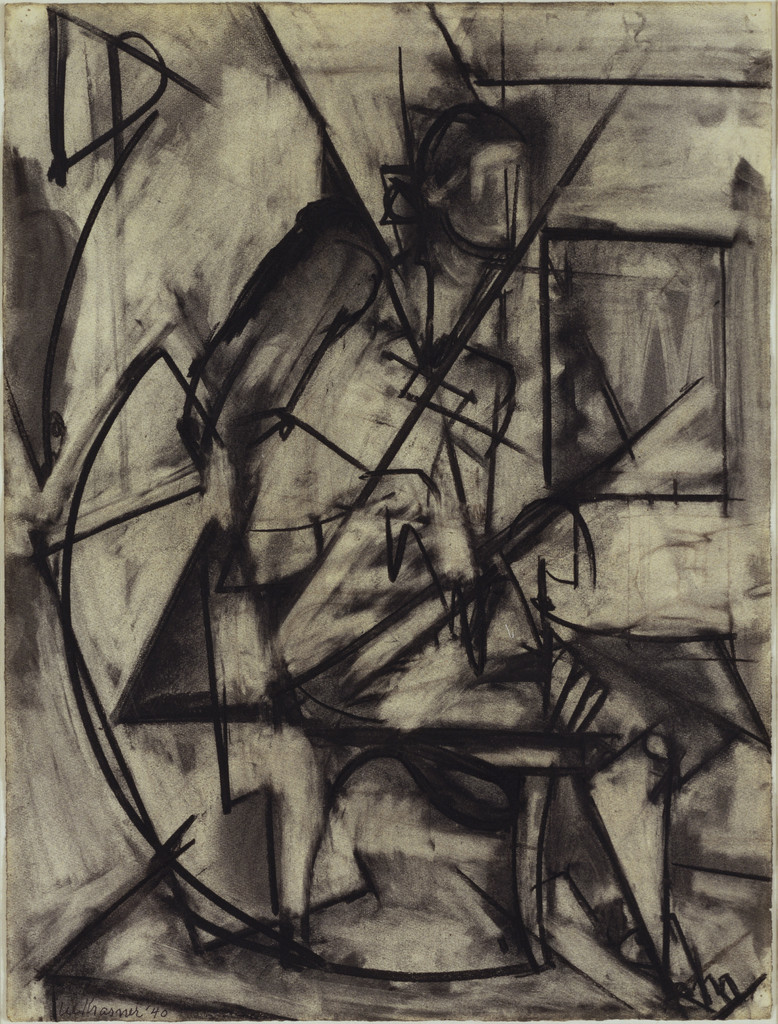
Lee Krasner’s pictures from the 1940s on were informed by her understanding of the Abstract Expressionist ideal: to infuse abstract, painterly forms with mysterious and significant content. The substantial body of work she created shows her sustained development toward a refined expression of this concept. Black and White is one of Krasner’s first and most important works in a group of early paper collages. The drawings that she disassembled to create these collages echo the work of her husband, Jackson Pollock, from the same period. According to the art historian Ellen Landau, however, it is difficult to determine who originated the strategy of cannibalizing previous works to create new ones. Throughout her career, Krasner employed the technique more consistently than Pollock.
Read on
In Black and White, Krasner not only appropriated her own discarded markings but also referred to Pollock’s early-1940s tactic of quoting Pablo Picasso’s studio subjects. She reversed the gender implications of Picasso’s prototypes by showing, at right, a female figure who may be a painter contemplating her works of art, or perhaps a woman looking in a mirror. The artist’s redeployment of studio scraps in a new context helped her, paradoxically, to mark out new aesthetic territory.
Art Institute of ChicagoCC BY 4.0
Angaben
- Inventarnummer
- 1994.245
What it shows
Im Katalog
Quellen
- Art Institute of Chicago: the museum's own open data · abgerufen vor 6 Tagen
- Bild: Art Institute of Chicago — © the artist or rights holder
Derweil im Leben von Lee Krasner
Das ganze Leben1940s–1950s
Signing “L.K.” instead of a name
She often does not sign her works at all, signs with the gender-neutral initials “L.K.”, or blends her signature into the painting so as not to emphasize that she is a woman and the wife of another painter.
October 1951
Solo exhibition at Betty Parsons Gallery
The show at Betty Parsons’s gallery — by one account her first solo exhibition, by another her first since 1945 — does not pay off commercially and the works sell poorly; Pollock moves to Sidney Janis, and Krasner follows him out of the Parsons gallery.
1955
Collages at the Stable Gallery
Eleanor Ward shows Krasner’s collages at the Stable Gallery in New York: they receive little public acclaim apart from a good review from Clement Greenberg; another account says the exhibition was a great success.