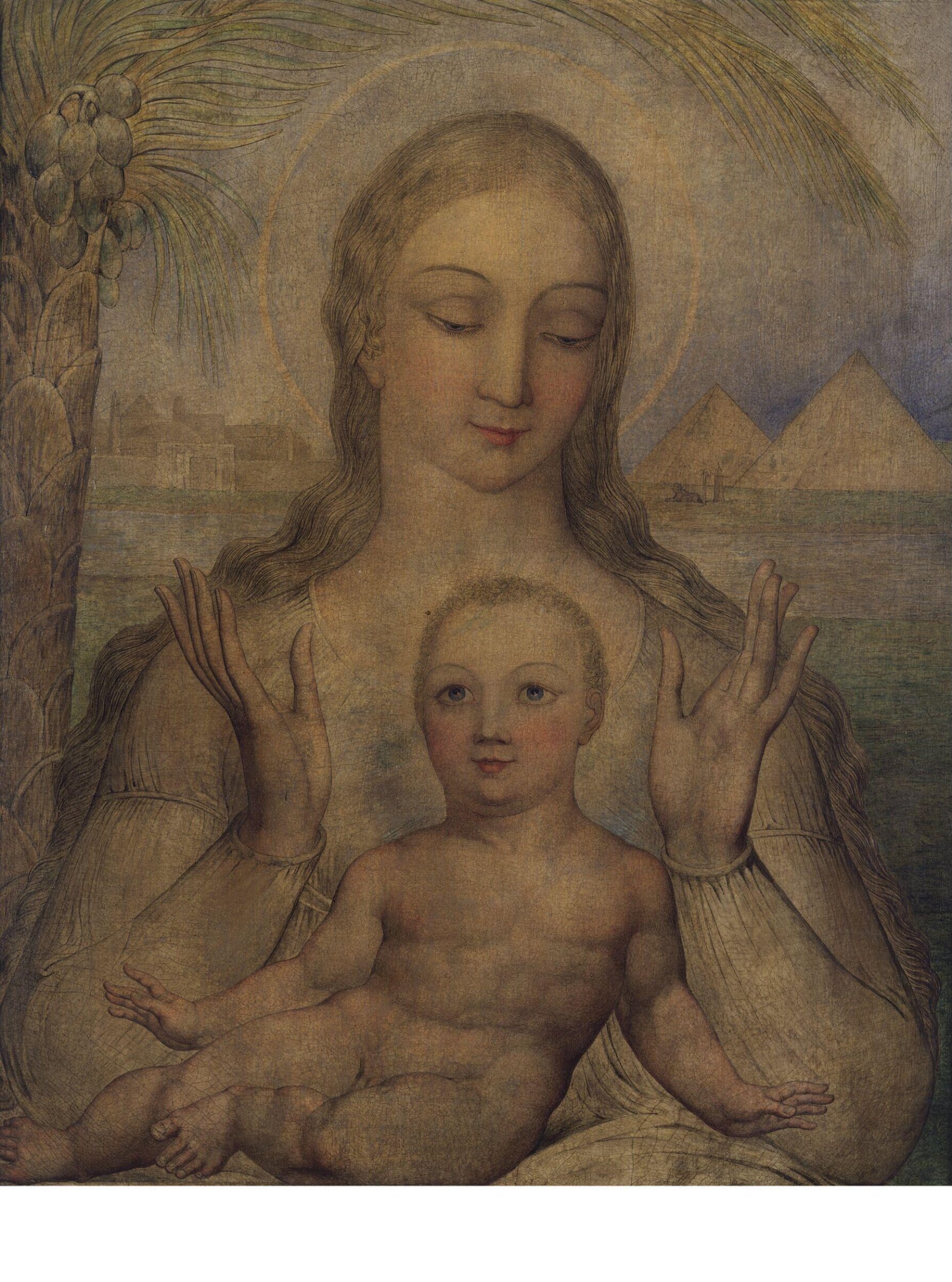
William BlakeVereinigtes Königreich, 1757–1827
Bathsheba at the Bath
Kann ich es sehen?
Unbekannt
Wo ist „Bathsheba at the Bath“ heute? Sammlung: Tate Gallery, City of Westminster. Ob es heute ausgestellt ist, ist unbekannt.
City of Westminster, Vereinigtes Königreich
Der Besitzer ist bekannt; ob das Werk derzeit ausgestellt ist, nicht.
- Unverändert seit
- Quelle
- Das Museum
Über das Gemälde
William Blakes Bathseba im Bad, ein Gemälde aus den 1790er Jahren in der Londoner Sammlung der Tate, zeigt David, der von oben rechts zusieht. Bathseba ist Urias Frau, die der König in der biblischen Episode vom Dach seines Palastes aus beobachtet. Blake fügte zwei Kinder hinzu, die in dieser Passage fehlen. Die kleine Temperaleinwand wurde von Thomas Butts in Auftrag gegeben und später auf Pappe aufgezogen.
Angaben
- Inventarnummer
- N03007
Im Katalog
Ausstellungen
Ob es heute ausgestellt ist, ist unbekannt
Tate Gallery · 13. Okt. 2026 — jetzt · Unbestätigt
Ob es ausgestellt war, ist unbekannt
National Gallery · 29. Sept. 2026 — 13. Okt. 2026 · Unbestätigt
Quellen
- Wikidata
- Bild: Tate Gallery — William Blake · Public domain · Wikimedia Commons
Im Leben von William Blake
Das ganze Leben1780–1808
Exhibits six times at the Royal Academy
Despite his antagonism towards Reynolds, Blake submitted works to the Royal Academy on six occasions between 1780 and 1808.
1785–1791 · Wohnort
Poland Street
1788
Invents relief etching
In 1788, aged 31, Blake invented relief etching, or “illuminated printing”: text and designs are drawn on a copper plate in acid-resistant ink and etched so that the protected areas stand in relief, and the printed pages are coloured by hand in watercolours. He used it for most of his well-known works, including “Songs of Innocence and of Experience”, “The Book of Thel”, “The Marriage of Heaven and Hell” and “Jerusalem”.
1791 · Wohnort
Hercules Buildings
1800
Moves to Felpham for his patron Hayley
In 1800 Blake moved to a cottage at Felpham, in Sussex, to take up a job illustrating the works of William Hayley, a minor poet.
September 1800 – September 1803 · Wirkungsort
Felpham