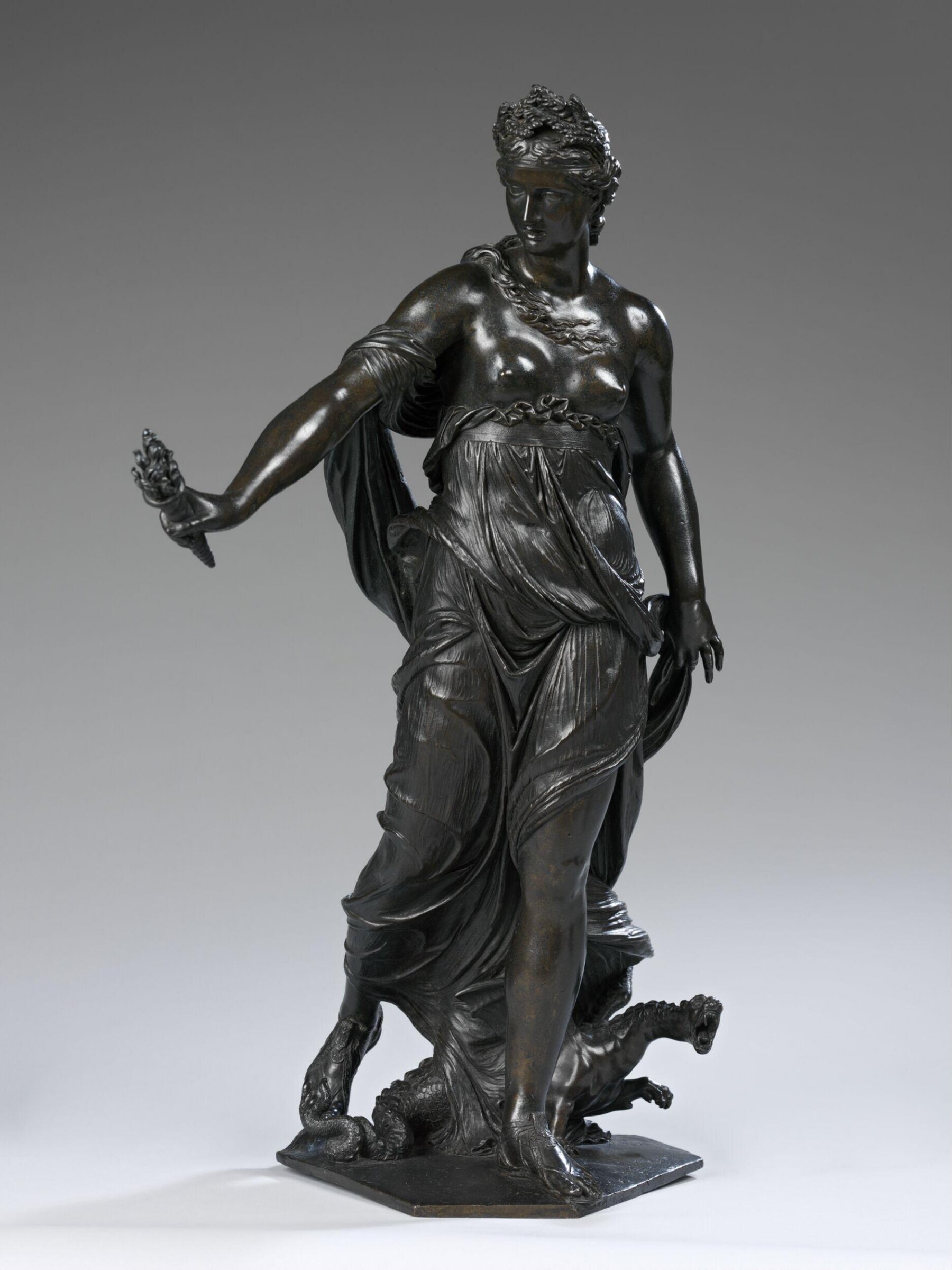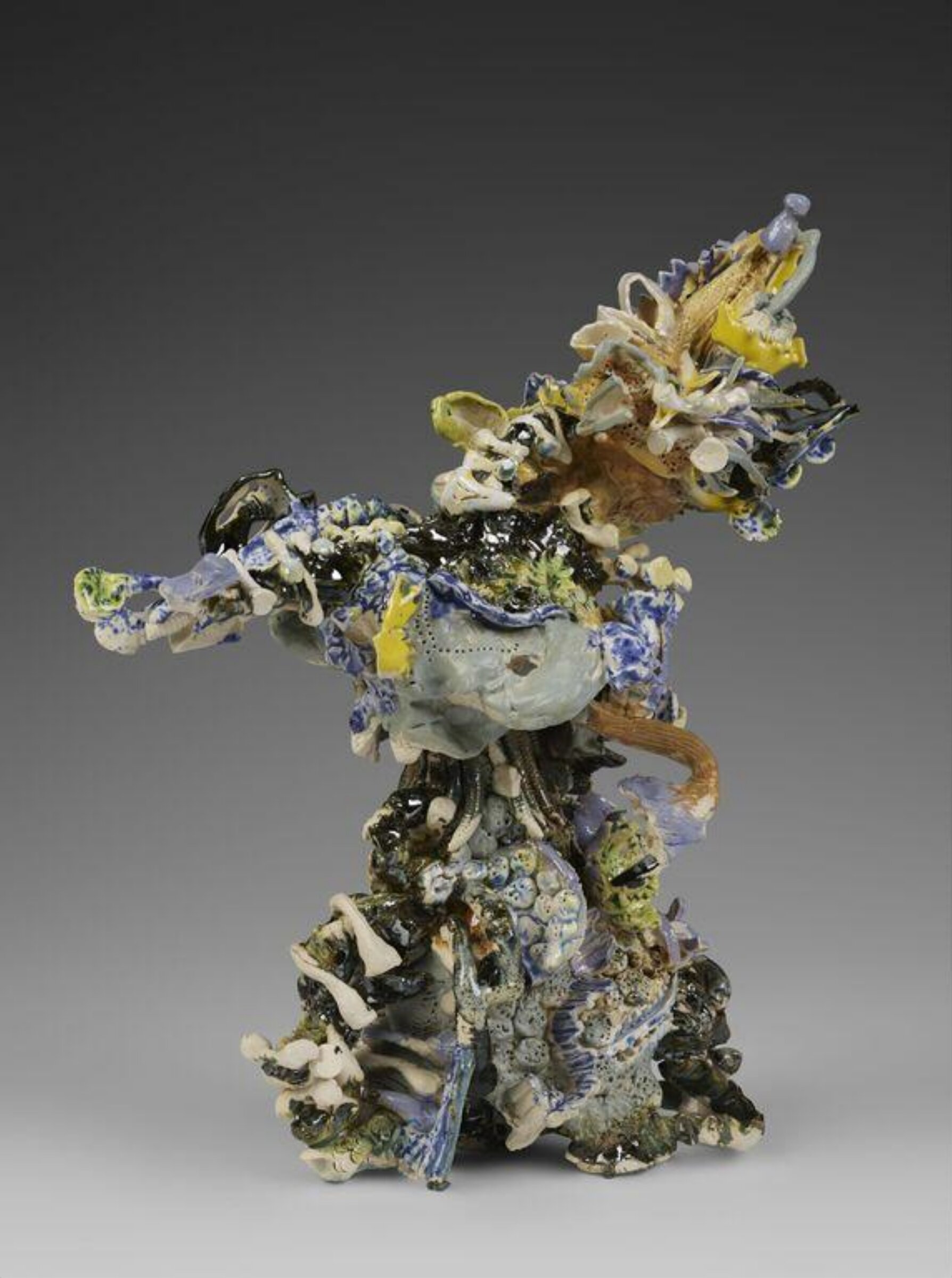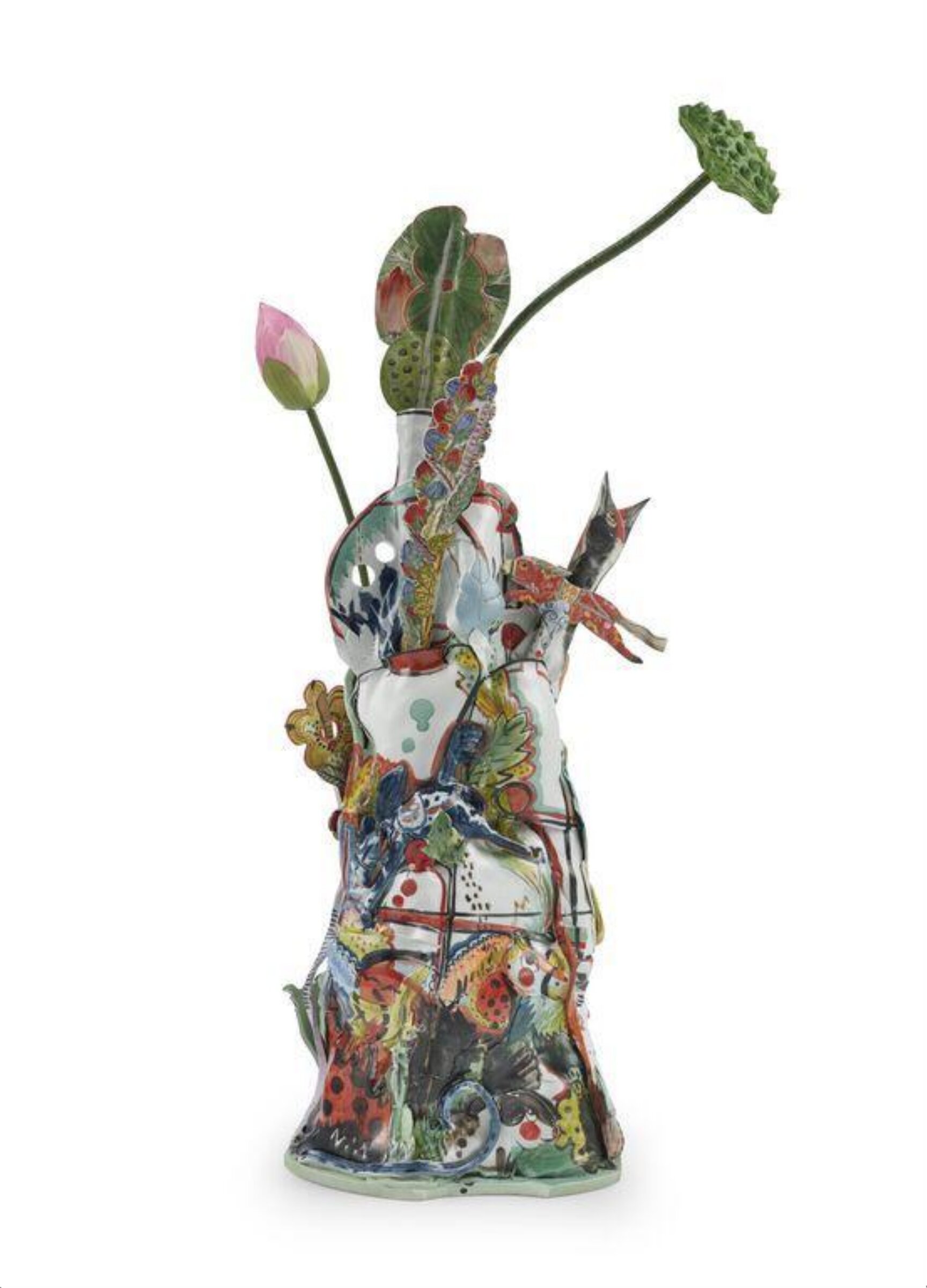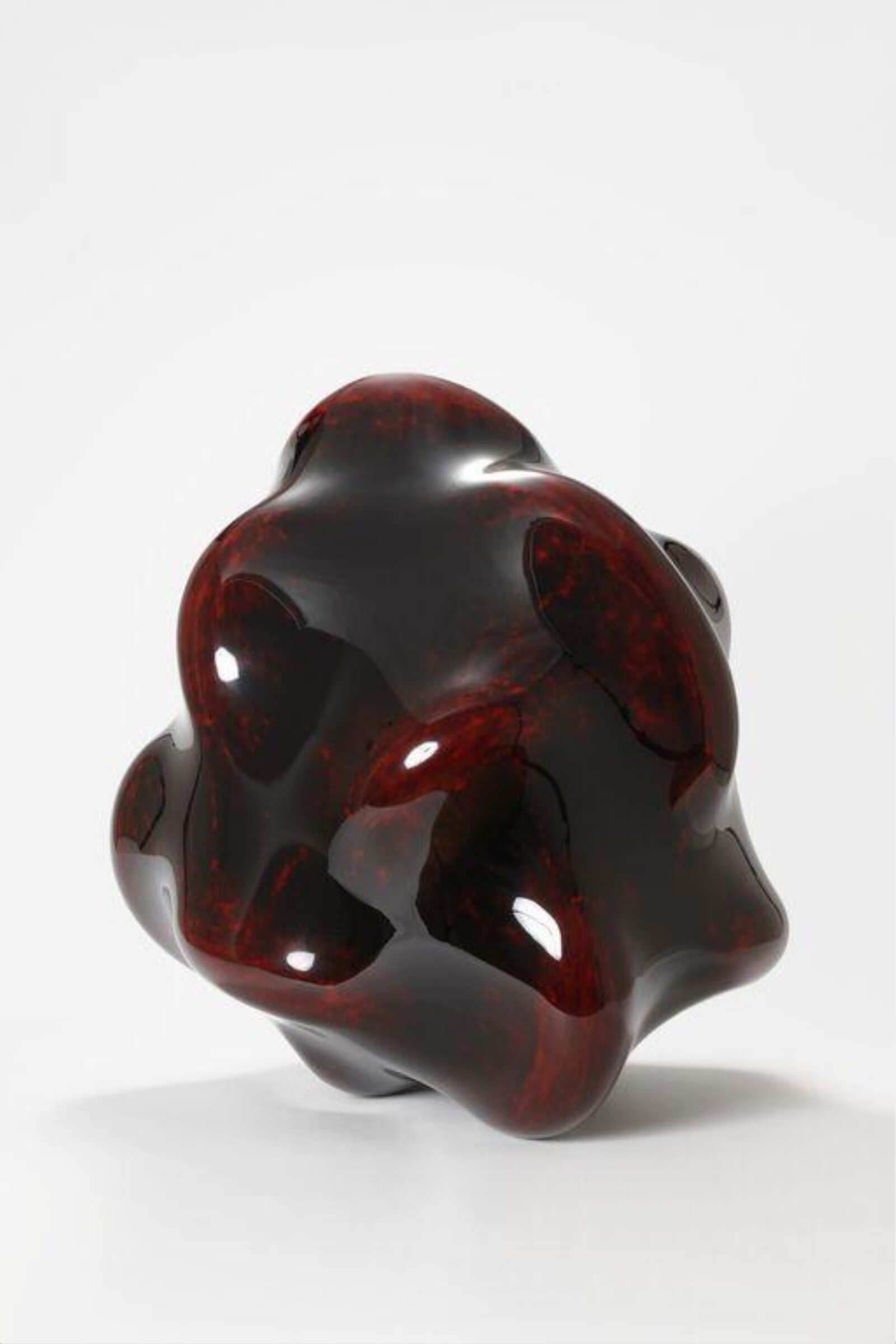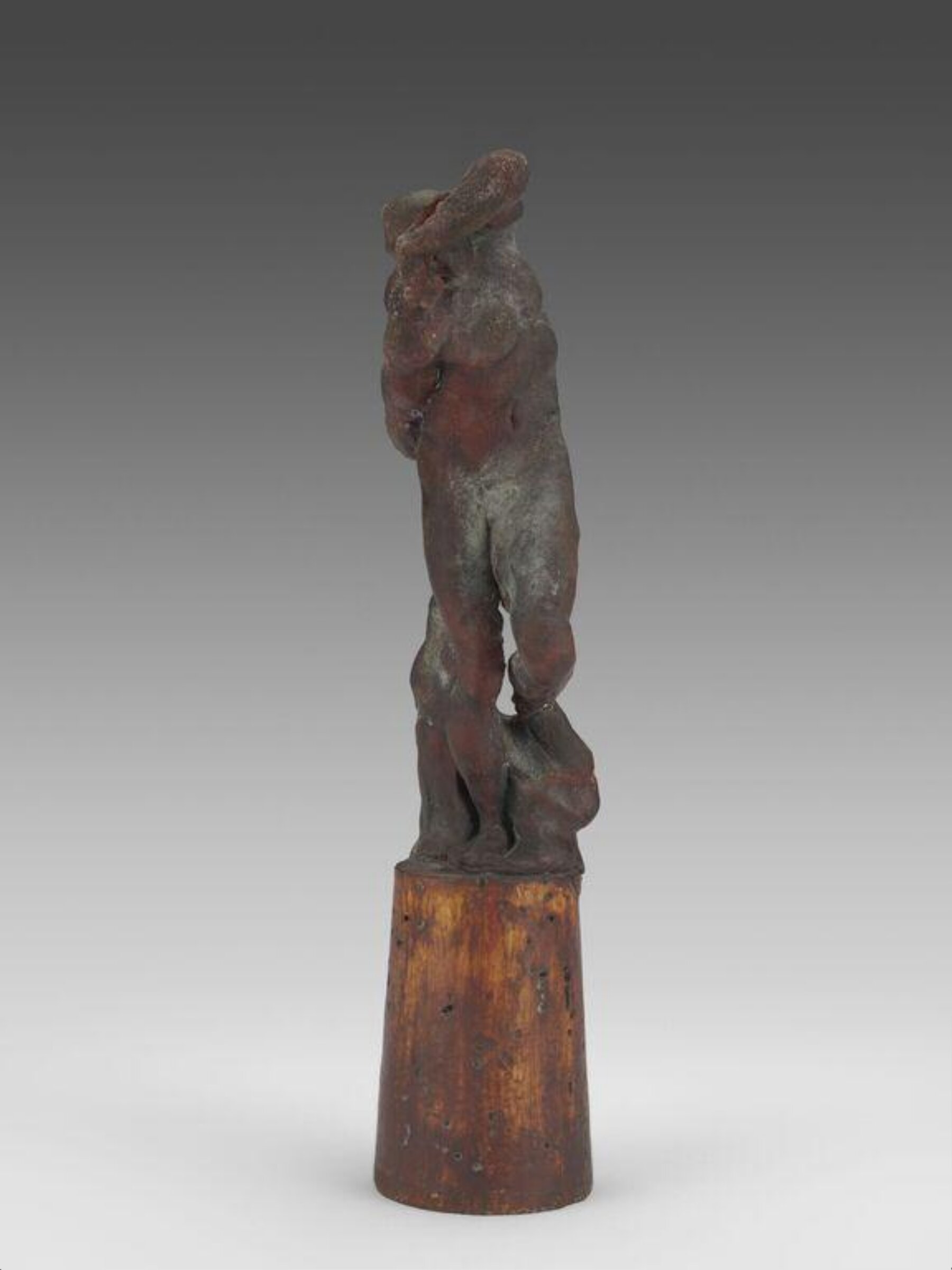
after Michel Anguier
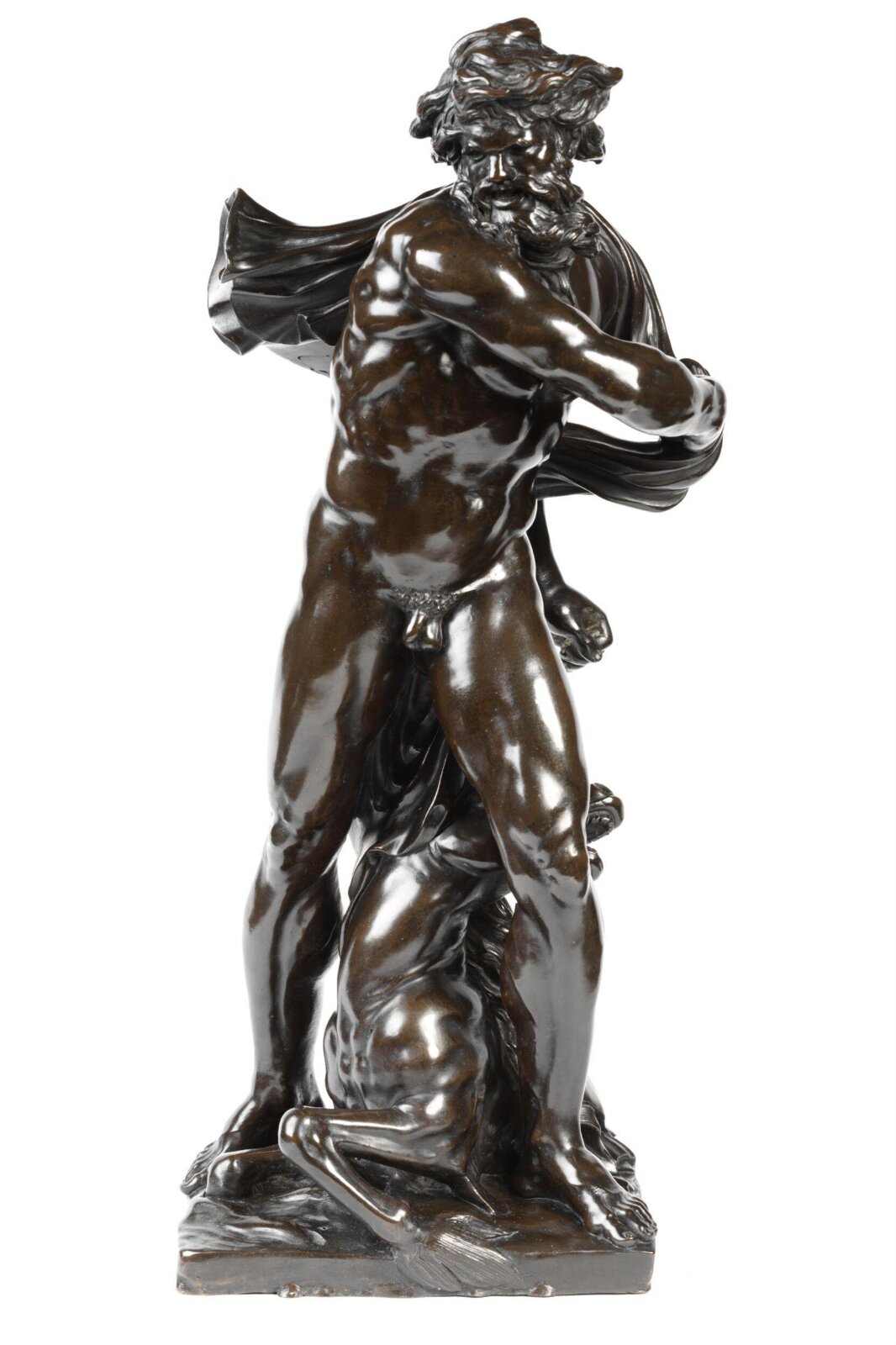
Agitated Neptune
Darf man es sehen?
Ja, es empfängt Besucher

Victoria and Albert Museum
London, Vereinigtes Königreich
SaalEurope 1600-1815, Room 5, The Friends of the V&A Gallery
Öffentlich ausgestellt. Wer dafür bürgt, steht unten.
- Geprüft
- Unverändert seit
- Quelle
- Das Museum
Über die Skulptur
This vibrant statuette of Neptune derives from a model that formed part of a set of six images of gods and goddesses commissioned from Michel Anguier in 1652. In 1690, they were described by Guillet de Saint-Georges, the first historian of the French Royal Academy of Painting and Sculpture, with the evocative titles of ‘a thundering Jupiter, a jealous Juno, an agitated Neptune, a tranquil Amphitrite, a melancholy Pluto, … and a weeping Ceres’. They were created as pairs to represent the elements of air (Jupiter and Juno), water (Neptune and Amphritite) and earth (Pluto and Ceres, for which see inv. no. 85-1865), with the fourth element of fire lacking. A Mars also mentioned by Saint-Georges did not form part of the group.
Weiterlesen
Michel Anguier (1612/14-1686) was apprenticed to his father, Honoré, a woodworker in the French town of Eu, before moving to Paris to join the workshop of Simon Guillain in around 1629-33. He was one of a number of artists who moved to Rome, where he spent ten years from 1641, assisting the leading sculptors of the day, Gianlorenzo Bernini and Alessandro Algardi. The god of the sea is shown striding forward, and, like Bernini’s Neptune and Triton (also in the V&A, inv, no. A.18-1950), which must have been its inspiration, appears to represent the so-called ‘Quos Ego’ [‘Whom I’] from Virgil’s Aeneid. During the war between the Trojans and Greeks, the goddess Juno used the god of the winds to stir up a storm to kill the retreating Trojans. Neptune, angered by this intervention, calmed the waves by brandishing his trident and issuing the unfinished threat ‘Winds, do you dare, without my intent, to mix earth with sky, and cause such trouble, now? You whom I – ! ... But it’s better to calm the running waves:
you’ll answer to me later for this misfortune, with a different punishment.’ Neptune’s chariot was drawn by hippocamps or sea-horses, one of which writhes between his legs.
The early versions of these bronzes, possibly cast in the 1660s or 70s, incorporated hexagonal bases, and Neptune’s genitals were covered with flowing drapery, closer to Bernini’s marble. This version, with the square base and exposed genitals, suggests that it is a subsequent cast of around 1670-90 or possibly later, when the model had been adjusted. The surface was probably repatinated in the 19th century.
Anguier received the commission for this series of gods and goddesses after returning to Paris in 1651. In his later years, he lectured at the Académie Royale on a variety of subjects, notably including different expressions of anger (1675) and depicting gods through their temperaments (1676). He was not known as a bronze maker, and it is possible that he turned to a specialist founder to assist with reproducing his models as his large-scale commissions declined.
Victoria and Albert Museum
Angaben
- Inventarnummer
- A.206-1946
Was es zeigt
Im Katalog
Quellen
- Victoria and Albert Museum
- Bild: Victoria and Albert Museum — © Victoria and Albert Museum, London