 Thomas BanksVereinigtes Königreich, 1735–1805
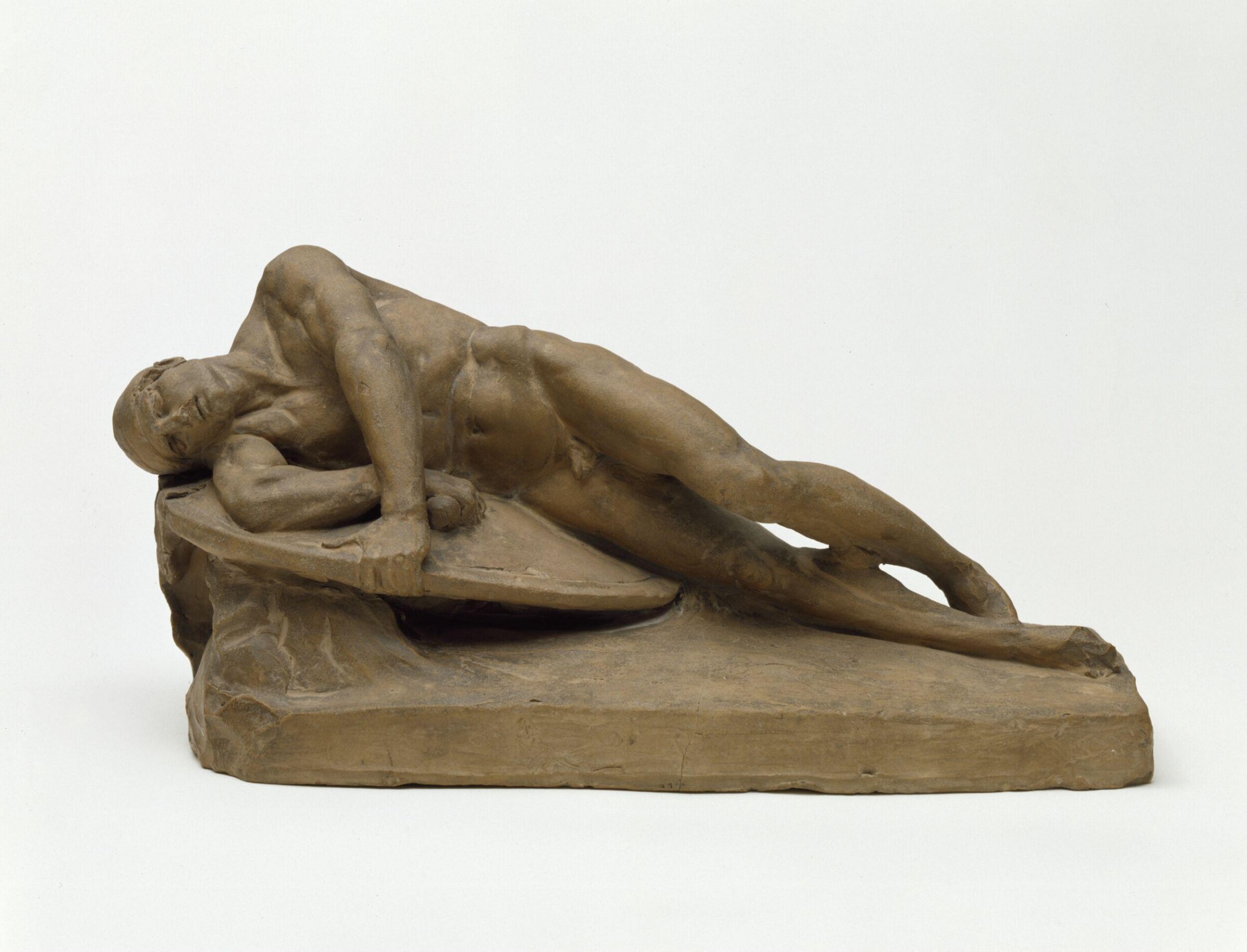
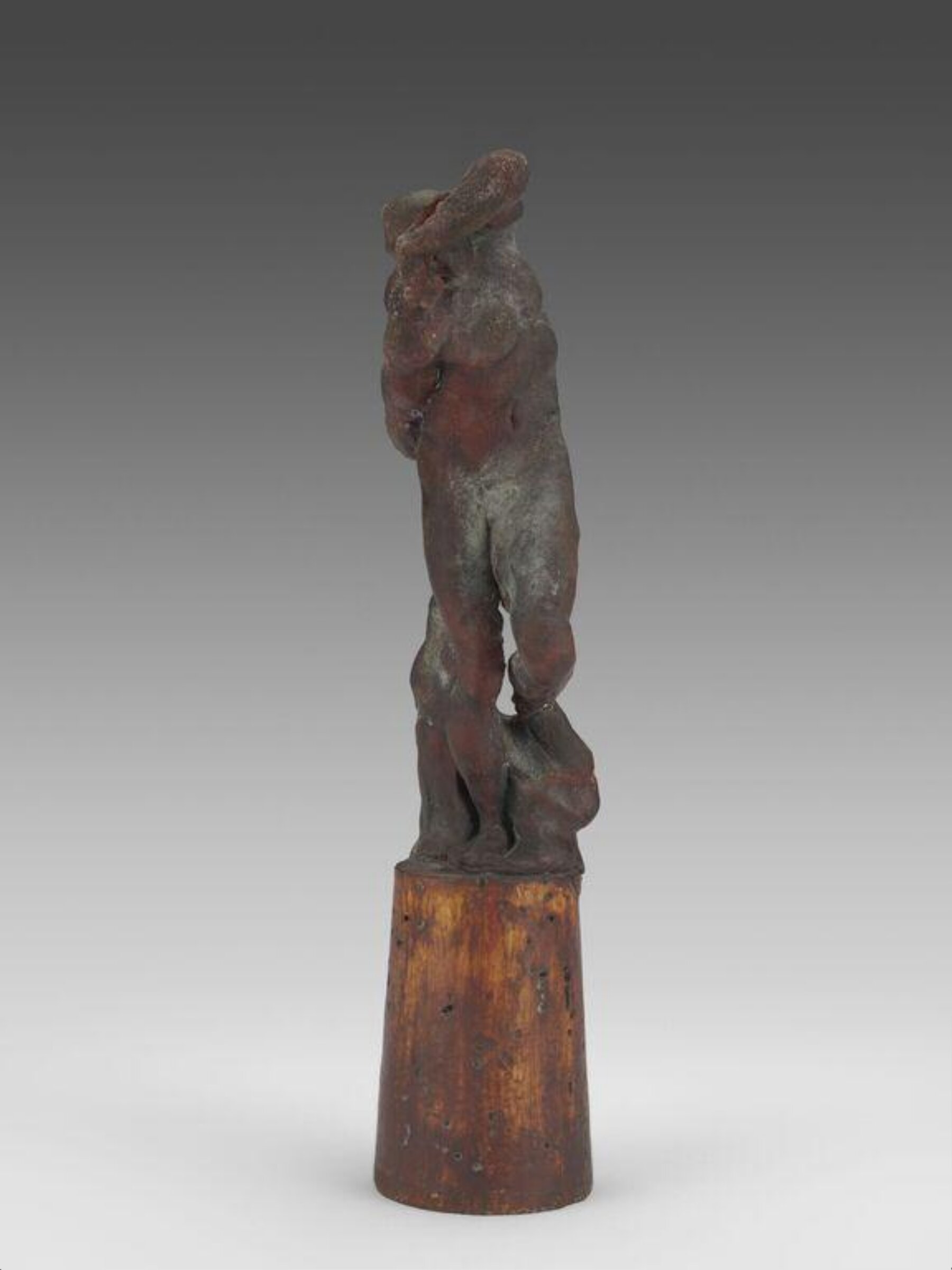
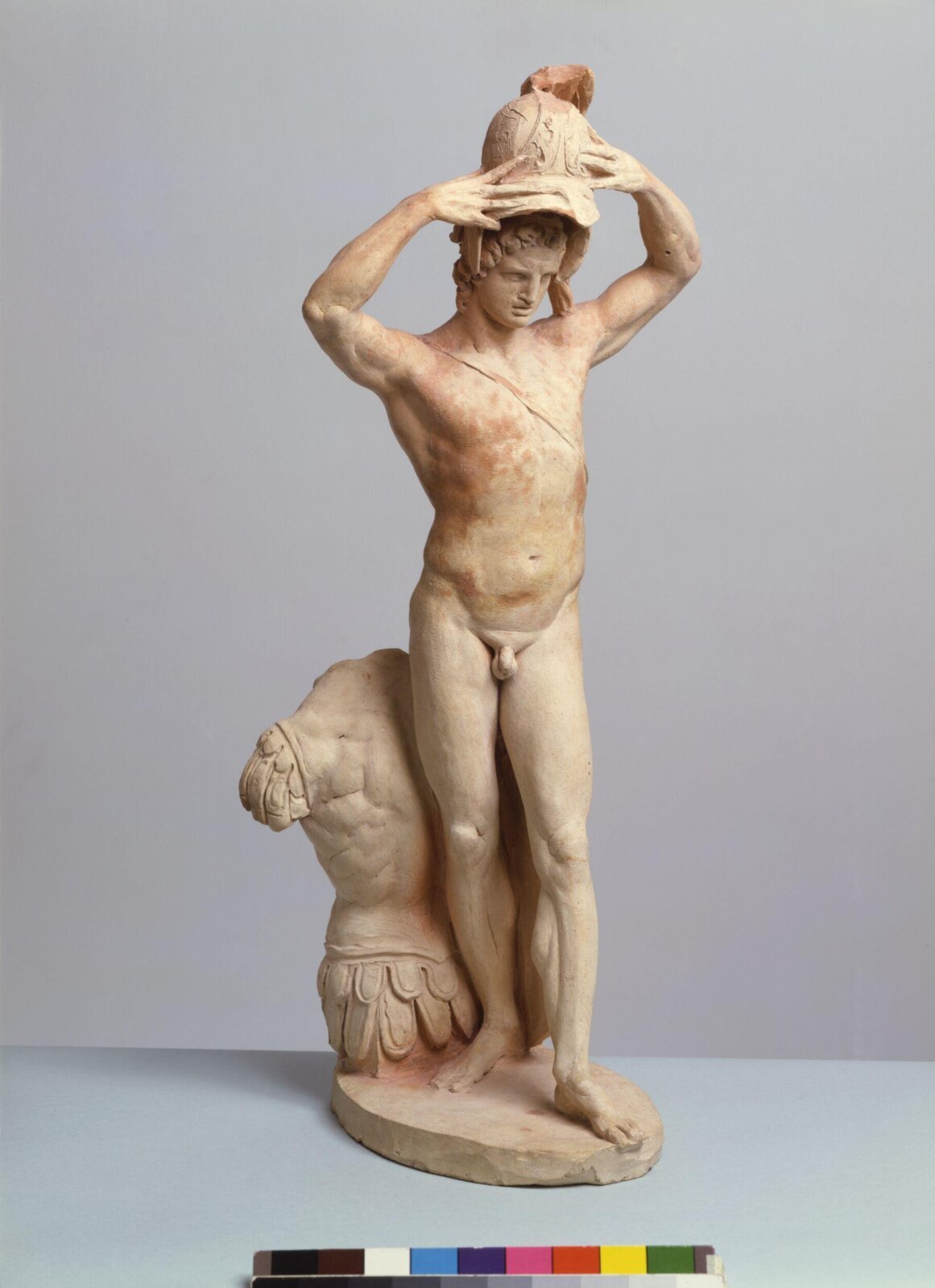
Achilles Arming
Darf man es sehen?
Ja, es empfängt Besucher

Victoria and Albert Museum
London, Vereinigtes Königreich
SaalSculpture, Room 22, The Dorothy and Michael Hintze Galleries
Öffentlich ausgestellt. Wer dafür bürgt, steht unten.
- Geprüft
- Unverändert seit
- Quelle
- Sammlungsdaten des Museums selbst
About the sculpture
Achilles, the doomed hero of Homer's Greek epic The Iliad, seems to have been a particular favourite of Thomas Banks. When it was acquired by the V&A in 1955, this terracotta model for a bronze or full-size marble had been broken into many pieces; it was conserved shortly after its acquisition. A label beneath the base had a defaced inscription in 19th-century handwriting recording Banks as the sculptor. However, recently it has been suggested that Achilles arming is in fact by the Swedish sculptor Johan Tobias Sergell (1740-1814). They were acquainted: Sergell spent the years 1767-1778 in Rome; Banks was there from 1772 to 1779. A version of this model in bronze - unsigned, but with the figure wearing a fig leaf - was recorded in a private collection in 1984 (V&A departmental records).
Read on
But what appears to be a life-size version - shown among other sculptures in an oil sketch of about 1846 by John Partridge (1790-1872) entitled The Fine Arts Commissioners in 1846 - is probably an invention by Partridge made in order to represent Banks more prominently in Partridge's imaginary collection of great works of art.
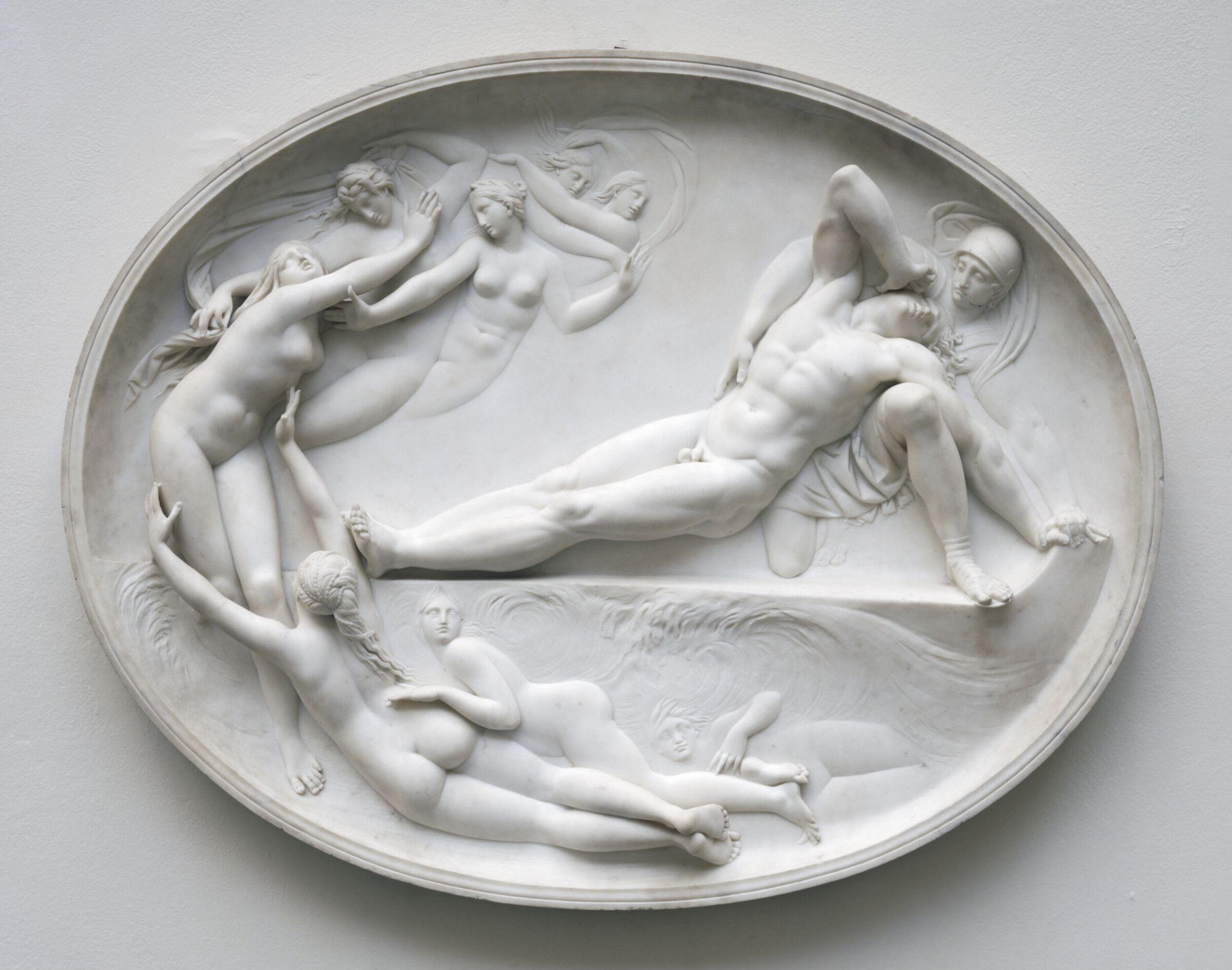
Thomas Banks (1735-1805) was apprenticed to a London mason, but also spent time working alongside the sculptor Peter Scheemakers (1691-1781). He enrolled in the life classes held at the St Martin's Lane Academy, and later at the Royal Academy Schools. In 1772 he became the first sculptor to win the Royal Academy's three-year travelling stipend, and went with his wife to Rome, where he eventually spent seven years. He specialised in ideal works, most of which were executed in Rome for British patrons, although he continued to produce similar work after his return to London. He was made a Royal Academician in 1786. Banks was one of the most original British Neo-classical sculptors, who dedicated his work to the antique spirit rather than to the fashionable classical style alone.. He tried to establish a market for modern gallery sculpture , which was particular for most patrons at the time preferred restored antique marbles, replicas, pastiches, busts and memorials.
Victoria and Albert Museum
Angaben
- Inventarnummer
- A.22:1, 2-1955
What it shows
Im Katalog
Quellen
- Victoria and Albert Museum: the museum's own open data · abgerufen vor 10 Tagen
- Bild: Victoria and Albert Museum — © Victoria and Albert Museum, London