 Henry MooreEngland, 1898–1986
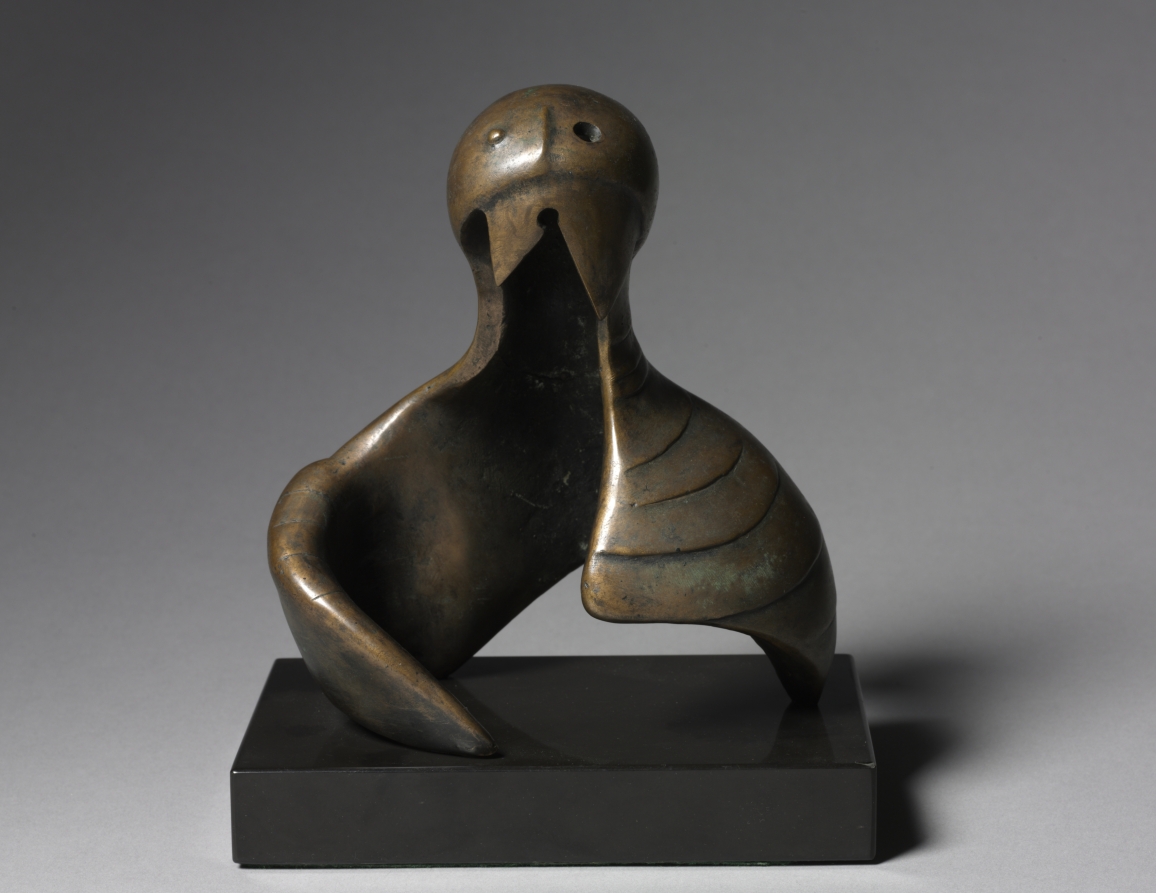
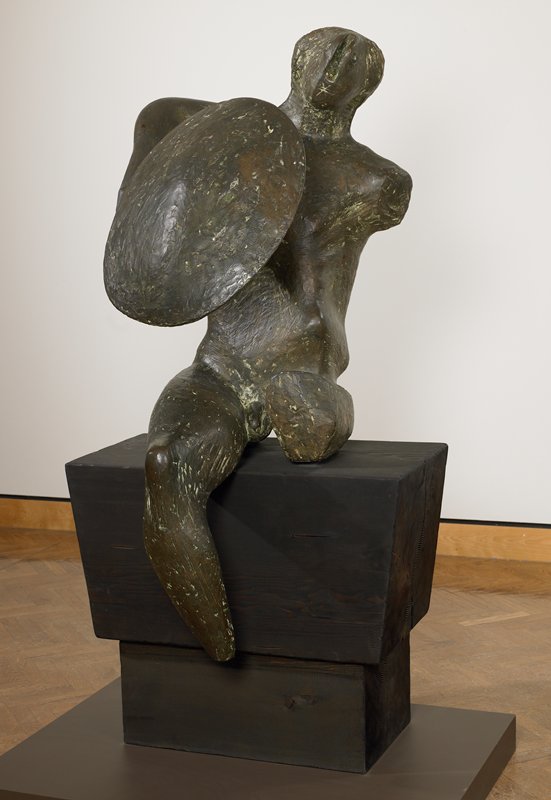
Warrior with Shield
Må man se det?
Ja, det tager imod

Minneapolis Institute of Art
SalG371Minneapolis, USA
Udstillet for publikum. Hvem der står inde for det, står nedenfor.
- Kontrolleret
- for 19 timer siden
- Uændret siden
- 25. sep. 2026
- Kilde
- Museets egne samlingsdata
About the sculpture
Henry Moore’s Warrior with Shield is neither standing nor fallen. His left arm and leg have been severed, rendering him unable to stand; however he is not yet defeated. The Warrior’s remaining arm thrusts a shield upward, as if to reflect a blow. The scoring on the bronze surface of the sculpture is reminiscent of scars or wounds, and the jagged, uneven stumps where limbs used to extend help to portray a body under an extreme amount of pain and exertion. Moore’s Warrior reverberates with the agonies of a soldier’s brutalized, mutilated body yet with equal force shows the valor and persistence to fight to the end. The intimacy of the form of Warrior with Shield resonates with both the heroism and the tragedy of combat.
Minneapolis Institute of Art
Oplysninger
- Inventarnummer
- 54.22
I kataloget
Kilder
- Minneapolis Institute of Art: the museum's own open data · hentet for 5 dage siden
- Billede: Minneapolis Institute of Art — © The Henry Moore Foundation. All Rights Reserved, DACS 2014 / www.henry-moore.org
Imens i livet hos Henry Moore
Hele livet1940–1986
A bomb in Hampstead: the move to Hoglands
In September 1940 bomb shrapnel hit the Moores’ Hampstead home and they left London for Hoglands, a farmhouse in the hamlet of Perry Green near Much Hadham in Hertfordshire. It remained Moore’s home and workshop for the rest of his life; though he grew wealthy he never felt the need to move to larger premises.
1951
Turns down a knighthood
In 1951 Moore declined a knighthood, feeling that it would make him seem an establishment figure and might cut him off from fellow artists with similar aims. He later accepted the Order of the Companions of Honour (1955) and the Order of Merit (1963).
1951
“Reclining Figure: Festival” at the Festival of Britain
At the 1951 Festival of Britain Moore exhibited Reclining Figure: Festival, a plaster typical of his later manner: an abstract female figure intercut with voids.
1952
“Geometry of Fear” against Moore’s ideals
At the 1952 Venice Biennale eight new British sculptors showed their Geometry of Fear works as a direct contrast to Moore’s ideals of endurance and continuity; his large bronze Double Standing Figure stood outside the British pavilion, in sharp contrast to the rougher, more angular works inside.
1953
The São Paulo Biennale prize
In 1953 Moore received an international prize at the São Paulo Biennale, following his Venice prize of 1948.
16. juli 1955 – 18. september 1955
Exhibition: documenta