Ellen LesperanceUSA
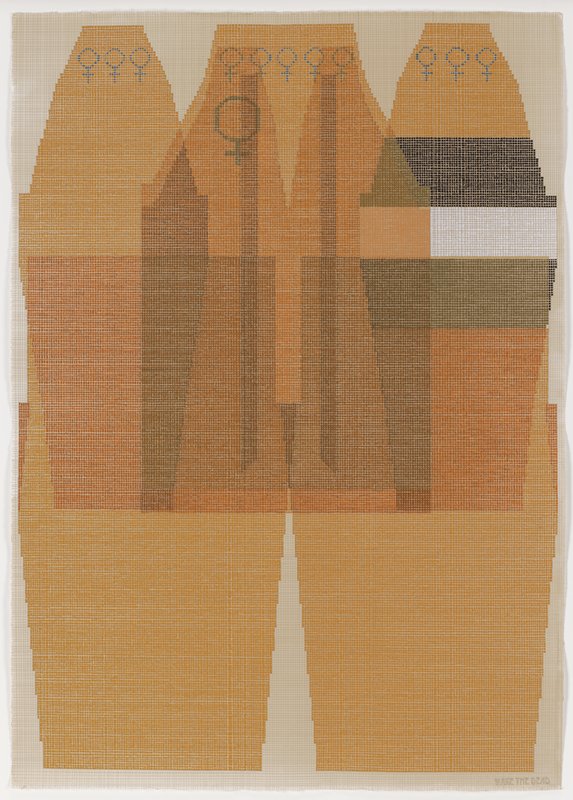
Wake the Dead
Må man se det?
Tager ikke imod for tiden

Minneapolis Institute of Art
Minneapolis, USA
Det hører til samlingen, men er ikke udstillet for tiden.
- Kontrolleret
- i forgårs
- Uændret siden
- 25. sep. 2026
- Kilde
- Museets egne samlingsdata
About the painting
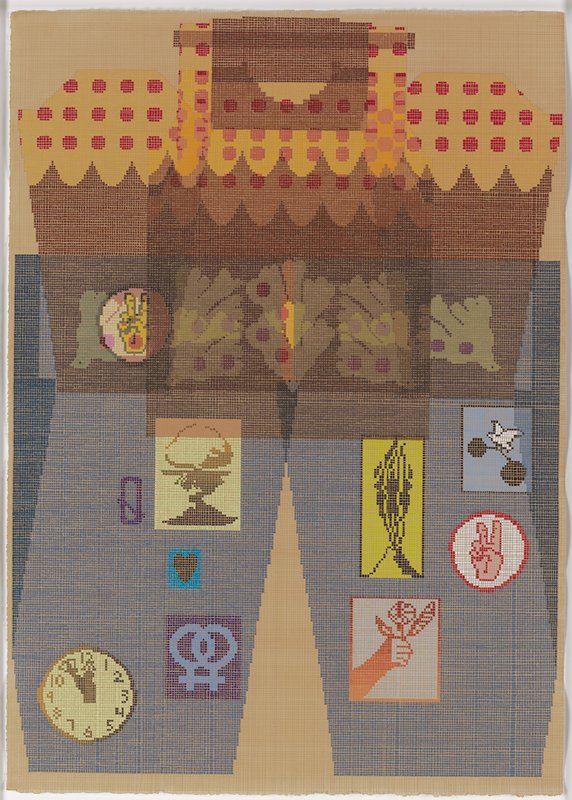
Wake the Dead by Ellen Lesperance represents acts of translation in relation to clothing’s form and ornamentation, pressing images of historical garments—and the values encoded within them—through the interpretive interface of the grid. Using knitting as a way to describe the female subject, Lesperance divorces it from the mainly male, Western figure painting tradition. She employs gridded formats associated with the applied arts and domestic crafts as a means of transformation across time and dimension.
Read on
Wake the Dead offers a clear view of Lesperance’s interest in recreating and paying homage to the female figure in two- and three-dimensional form. The column-like forms in the painting that represent the panels of the garment take on totemic qualities. Geometries and mark-making in the lineages of Anni Albers and Hanne Darboven are layered to invoke the protesters’ presence. The mourning arm band and title Wake the Dead point to the work of deceased women activists that cleared a path for later generations to act, and to the need that many protesters felt to invoke a spiritual energy in order to bolster courageous acts on earth.
Minneapolis Institute of Art
Oplysninger
- Inventarnummer
- 2020.10.2a, b
I kataloget
Kilder
- Minneapolis Institute of Art: the museum's own open data · hentet for 5 dage siden
- Billede: Minneapolis Institute of Art — © Ellen Lesperance