 Paul GauguinFrankrig, 1848–1903
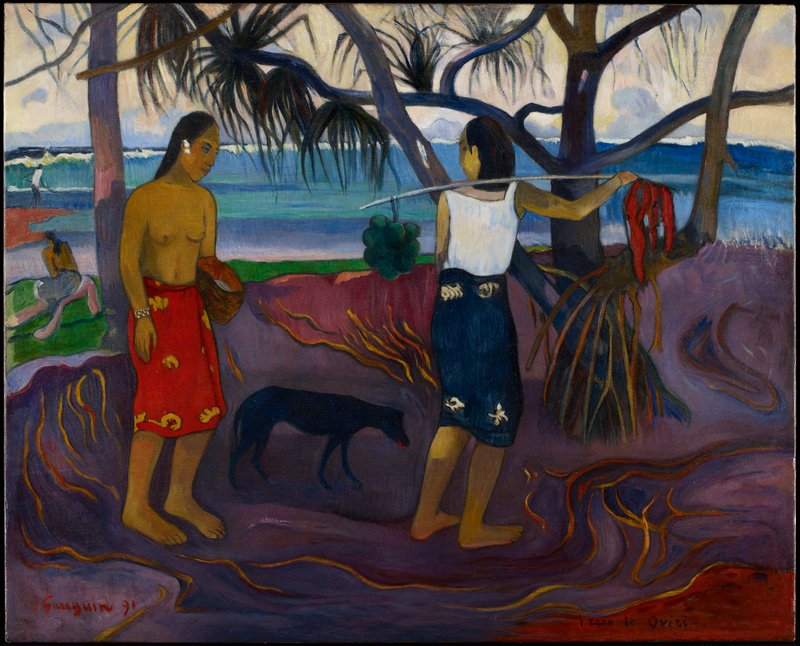
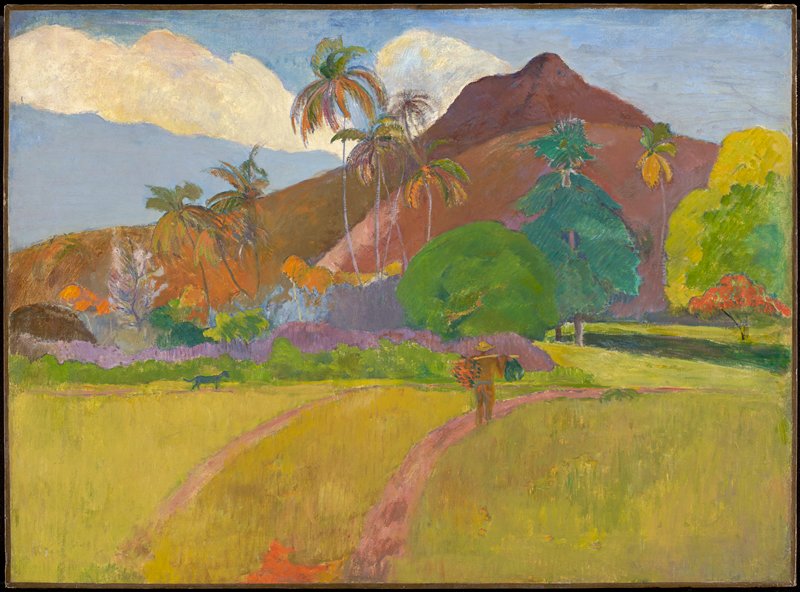
Tahitian Landscape
Kan det ses?
Ja, udstillet nu
Hvor er »Tahitian Landscape« i dag? Minneapolis Institute of Art, G355, Minneapolis. Ja, udstillet nu. Kontrolleret 29. september 2026.

Minneapolis, USA
Udstillet for publikum.
- Kontrolleret
- Uændret siden
- Kilde
- Museet
Om maleriet
Paul Gauguin went to Tahiti in 1891 in search of new, exotic motifs, but also to escape European civilization, which he felt was artificial and spiritually bankrupt. This picture, one of the first he painted in the South Seas, exhibits the artist's characteristic post-Impressionist style. In it, Gauguin used sinuous contours and intense colors to express the joy and serenity inspired by the lush tropical site.
Tahiti would become Gauguin's home for most of the last twelve years of his life. He once said of his Tahitian paintings that he had been eager to suggest a luxurious and untamed nature, a tropical sun that sets aglow everything around it...the equivalent of the grandeur, depth, and mystery of Tahiti when it must be expressed in one square meter of canvas.
Minneapolis Institute of Art
Oplysninger
- Inventarnummer
- 49.10
I kataloget
Kilder
- Minneapolis Institute of Art
- Billede: Minneapolis Institute of Art — public domain
Imens i livet hos Paul Gauguin
Hele livet1870s–1891 · Virkested
Paris
1886–1891 · Virkested
Pont-Aven
1891
Successful Auction at the Hôtel Drouot
A successful auction of paintings at the Hôtel Drouot in Paris in February 1891, aided by a glowing review from Octave Mirbeau, together with a banquet and a benefit concert, provided the funds for the journey to Tahiti.
1 April 1891
Departure for Tahiti
On 1 April 1891, after a final visit to his wife and children in Copenhagen, Gauguin sailed for Tahiti, intending to escape European civilization and "everything that is artificial and conventional." He spent his first three months in Papeete, then set up a studio in a bamboo hut at Mataiea.
1891–1901 · Virkested
Tahiti
1893
Return to France
In August 1893 Gauguin returned to France, where he continued painting Tahitian subjects such as Mahana no atua and Nave nave moe; he rented an apartment on rue Vercingétorix on the edge of Montparnasse and held a weekly salon, cultivating an exotic image.




![Pair of Wooden Shoes (Sabots) [left], Paul Gauguin, 1889/1890](https://api.nga.gov/iiif/44a731a9-e900-4898-a282-01034fcaa6ca/full/!2400,2400/0/default.jpg)