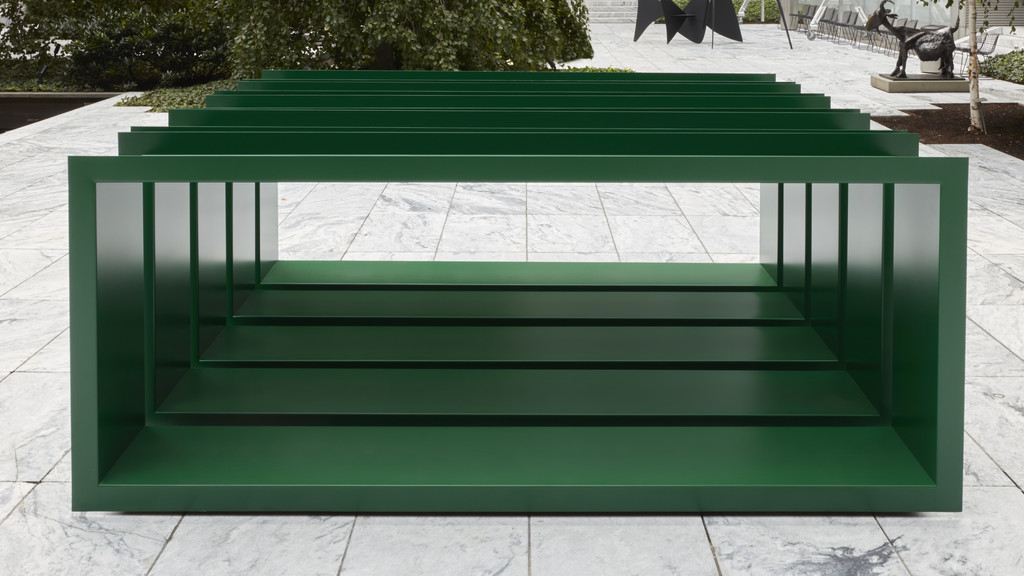
In 1970 Judd designs his first furniture — a bed and a sink — for the Spring Street building. Later, in Marfa, prompted by his dissatisfaction with what was commercially available there, he adds chairs, beds, shelves, desks and tables, at first making them himself from rough lumberyard pine; in 1993 he stresses that the scale and configuration of art cannot be transposed into furniture and architecture, which must be functional.
early 1970s
Annual trips to Baja California
In the early 1970s Judd begins to make annual trips to Baja California with his family. The clean, empty desert affects him deeply, and his strong attachment to the land stays with him for the rest of his life.
early 1970s
Switches to unpainted plywood
In the early 1970s Judd starts using unpainted plywood, which he embraces for its durable structural qualities: it lets him enlarge his works without bending or buckling. Plywood had been a staple of his art before, but never unpainted.
1971
Rents a house in Marfa, Texas
In 1971 Judd rents a house in Marfa, Texas; he will later buy numerous buildings there and acquire more than 32,000 acres (130 km²) of ranch land, together known as Ayala de Chinati.
1972
Peter Ballantine becomes his main plywood fabricator
In 1972 Judd appoints Peter Ballantine, a former student of the Whitney Independent Study Program, as the primary fabricator of his plywood works.