 Mikhail Vrubel1856–1910
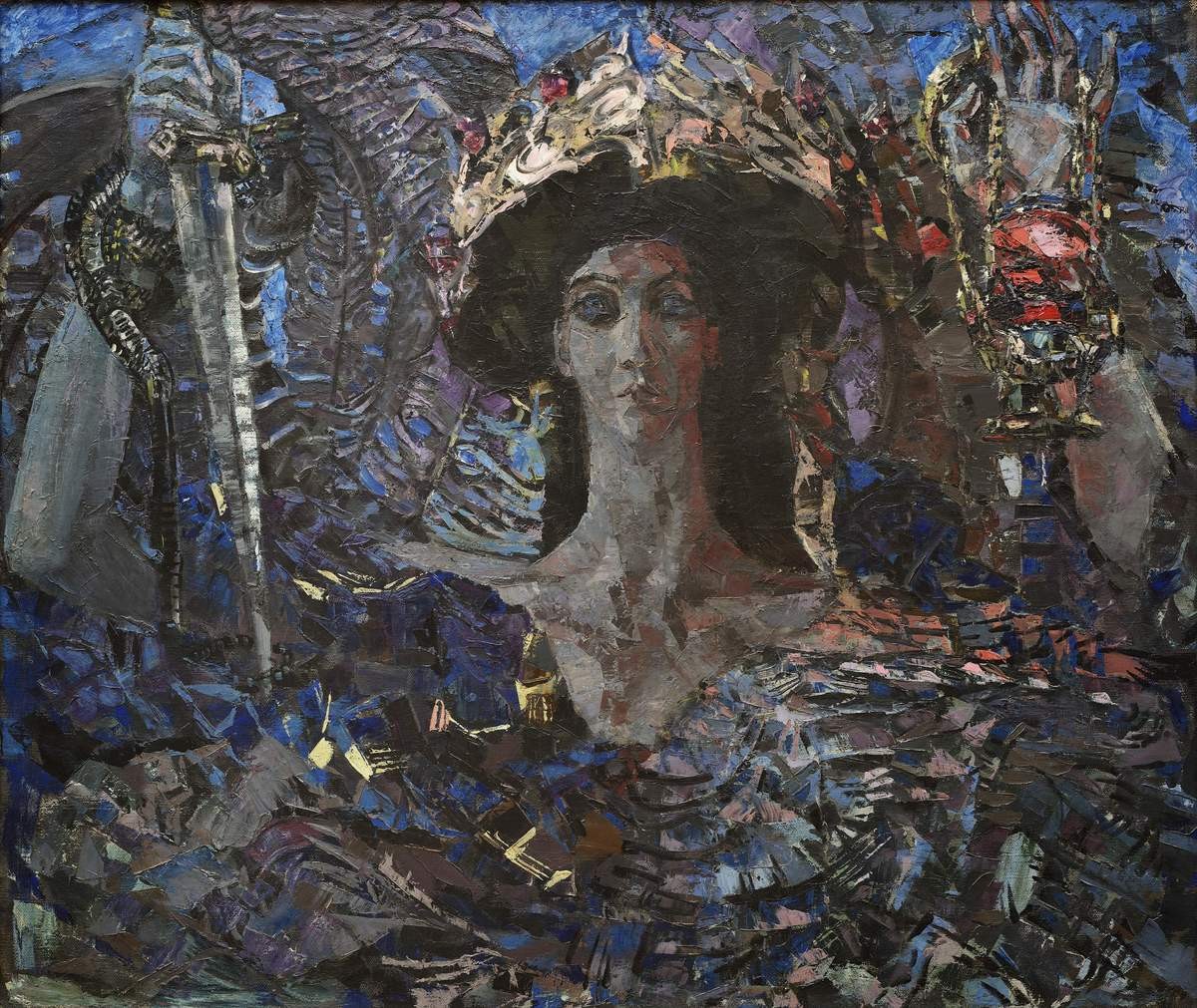
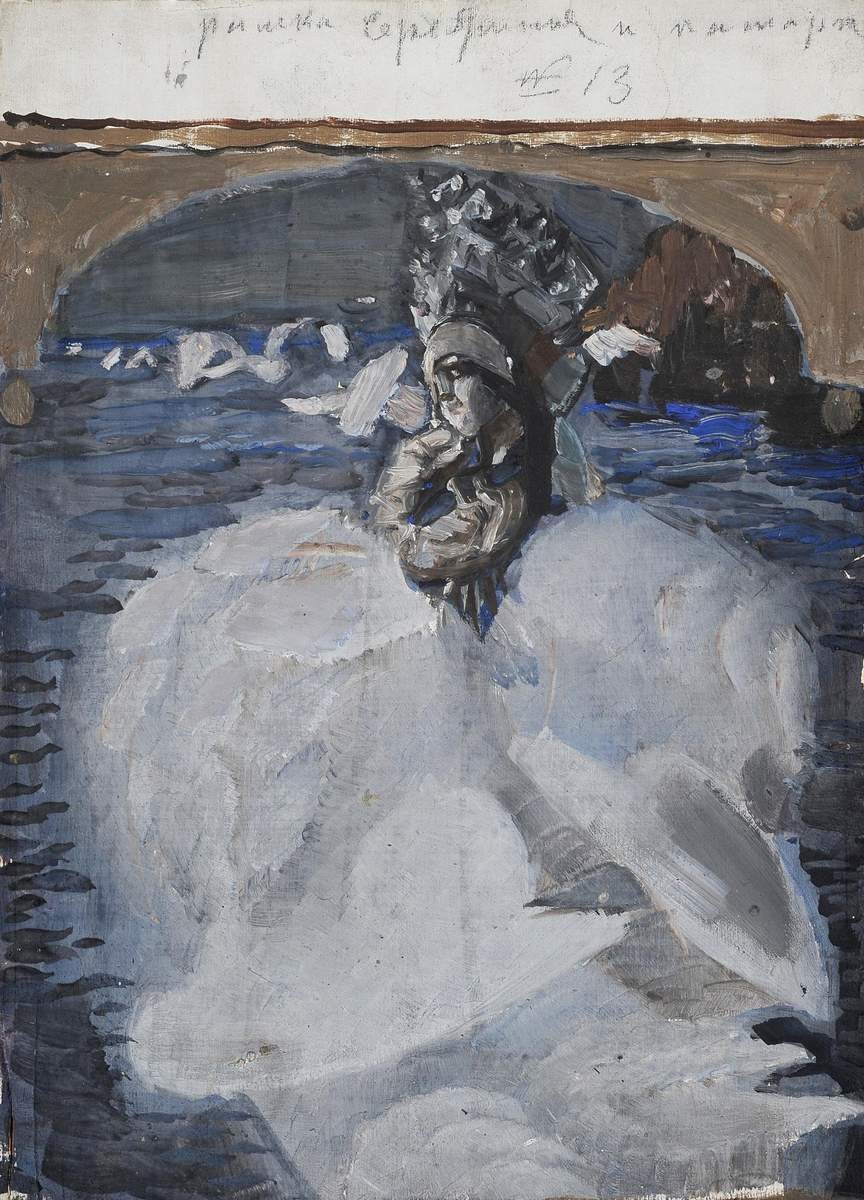
Царевна-Лебедь
Kan det ses?
Ukendt
Hvor er »Царевна-Лебедь« i dag? Samling: Det Russiske Museum, Sankt Petersborg. Ukendt.

Sankt Petersborg, Rusland
Ejeren er kendt; om værket er udstillet i dag, vides ikke.
- Uændret siden
- Kilde
- Museet
Om maleriet
Med museets ord — på russisk
Эскиз одноименной картины (1900, ГТГ).
Свойственные работам мастера экспрессивное переживание состояний природы, ноты трагического одиночества, «тоска духа» делали их актуальными в атмосфере конца века. В искусстве Врубеля утвердился образ тоскливо-меланхолической красоты: « Царевна-Лебедь », « Сирень » (оба — 1900, ГТГ) и другие.
Læs videre
Ранний русский символизм был в значительной мере «литературным», поскольку произведения имеют сравнительно развернутый сюжет. Картины с литературной основой менее всего были иллюстрациями. Наряду со стремлением передать «душу» произведения, «дух» эпохи, в них всегда ощутимо эмоциональное, часто остро субъективное переживание увлекшего мотива. « Царевна -Лебедь » Врубеля, увиденная сквозь призму переживаний человека «конца столетия», сплавила впечатления автора от сказки Пушкина и оперы Римского-Корсакова. Владимир Круглов. Гениальный мастер Михаил Врубель // Михаил Врубель. К 165-летию со дня рождения. СПб, 2022. С.12.
Строфы «Сказки о царе Салтане» А. С. Пушкина и музыкальные образы одно-именной оперы Н. А. Римского-Корсакова в равной мере были инспираторами замысла эскизов полотна « Царевна-Лебедь » (1900) и панно « Тридцать три богатыря » (1901). Оба являют пример натуралистической пермутации. В их основе — волнующий символистов мотив чародейной метаморфозы. Так лебедь превращается в прекрасную девушку, одинокую, тоскующую о любви, об иной, полной гармонии и счастья жизни. Запечатлен момент, когда загадочно-таинственная, встревоженная предчувствиями героиня уже сочетает в себе черты обоих состояний. Работа интересна поиском типажа, ясной композицией и отдает ледяным холодом одиночества. Владимир Круглов. Наследие Михаила Врубеля в Русском музее // Михаил Врубель. СПб, 2006. С. 21.
Одноименный вариант — ГТГ (1900, дерево, масло), одноименные варианты — ГРМ (1900, дерево, масло), частное собрание, Москва (1890-е, картон, масло).
Det Russiske Museum
Oplysninger
- Inventarnummer
- Ж-1828
Hvad det viser
I kataloget
Kilder
- Det Russiske Museum
- Billede: Det Russiske Museum — © State Russian Museum
Imens i livet hos Mikhail Vrubel
Hele livetsummer 1898
First symptoms of illness
During a summer stay in Ukraine the first symptoms of his future illness appeared: his migraines grew so severe that he took phenacetin in huge quantities — up to 25 grains or more, according to his sister-in-law. A previously unknown irritability set in too, especially when someone disagreed with his opinion of a work of art.
1898
“Morning” at Diaghilev’s exhibition
In St Petersburg Ilya Repin advised Vrubel not to destroy his panel “Morning”, which a client had turned down, but to show it at an exhibition. So the canvas went into Sergei Diaghilev’s exhibition of Russian and Finnish artists at the museum of the Stieglitz School.
summer 1900
A gold medal at the Paris World’s Fair
In midsummer the Vrubels learned that he had won a gold medal at the Exposition Universelle for the fireplace “Volga Svyatoslavich and Mikula Selyaninovich”; his ceramics and majolica were shown in the Handicrafts Pavilion. Serov won the Grand Prix that year, and Korovin and Malyavin gold medals.
1 September 1901
Birth of his son Savva
Nadezhda Zabela-Vrubel gave birth to a son, Savva — a sturdy baby with a cleft lip; for his sake she left the stage for a time, and the family’s keep fell entirely on Vrubel. In the thick of his work on the “Demon” the artist painted a large watercolour portrait of his six-month-old son in a pram.
1902
Bekhterev’s diagnosis
In St Petersburg Vrubel went on repainting the “Demon” without pause, ruining it in his friends’ view, and his family took him to the psychiatrist Vladimir Bekhterev, who diagnosed “incurable progressive paralysis” — tertiary syphilis; the artist himself was told nothing. In Moscow, although the collector Vladimir von Meck bought the painting for 3,000 roubles, he grew worse still: he drank and squandered money, and his wife and son tried to take refuge from him with relatives in Ryazan.
April 1902
First hospitalisation
In early April, with symptoms of acute mental disorder, Vrubel was admitted to F. A. Savey-Mogilevich’s private clinic; until August his condition was so grave that even his wife and sister were not allowed to see him. In September he was moved to Vladimir Serbsky’s clinic at Moscow University, and Serbsky confirmed the diagnosis, establishing that the infection dated back to 1892.