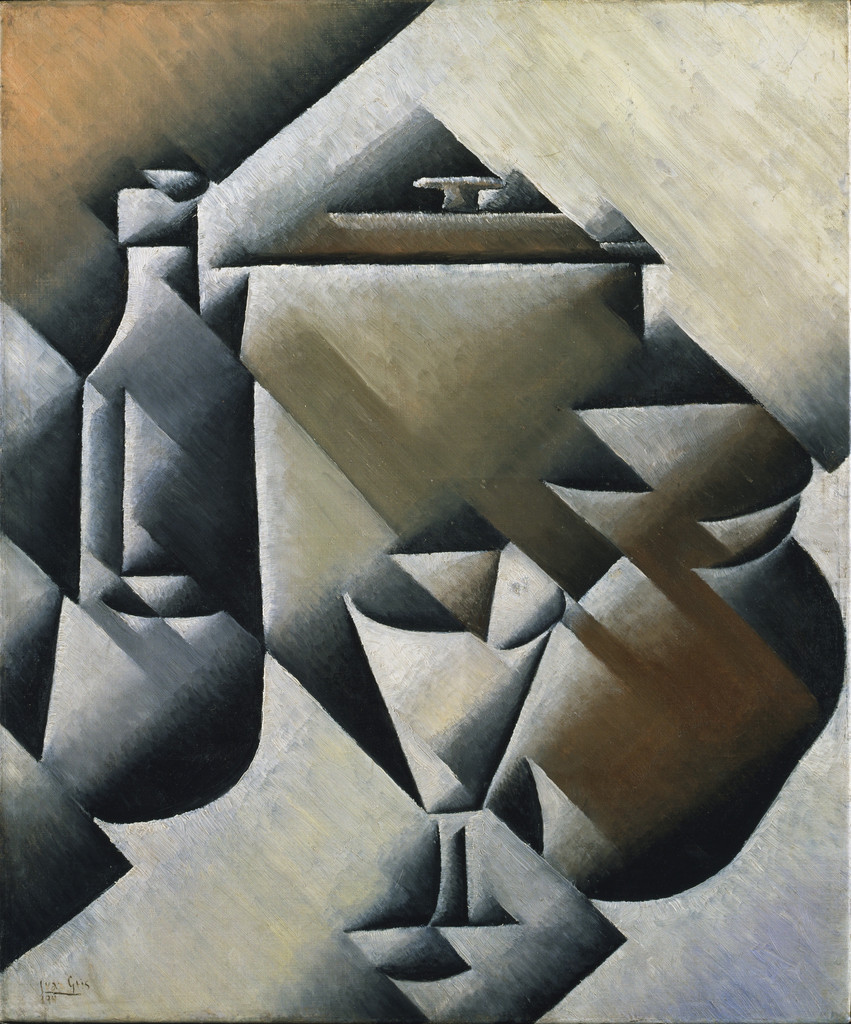
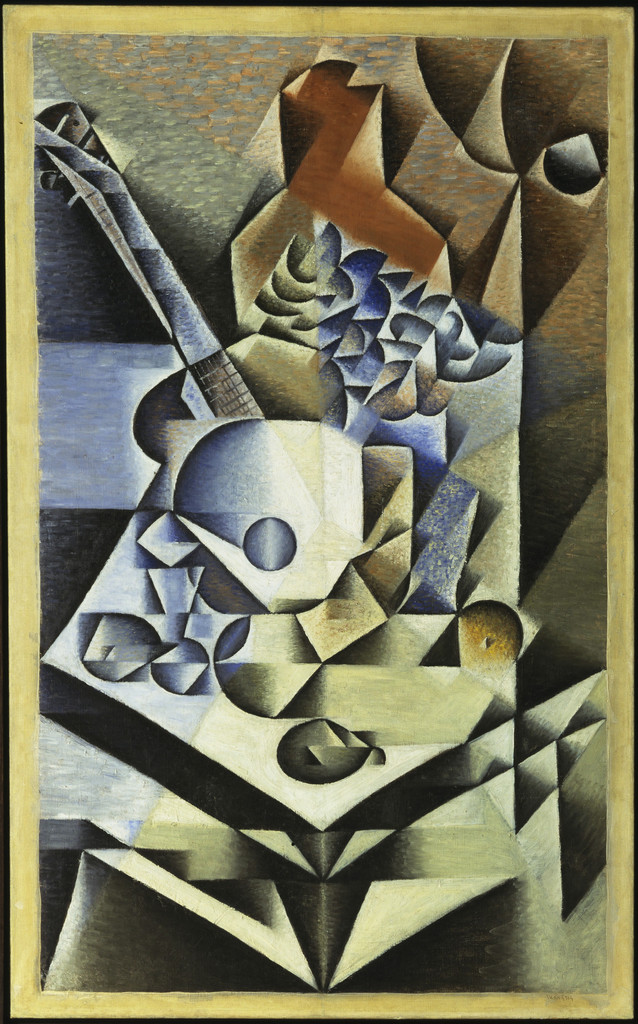
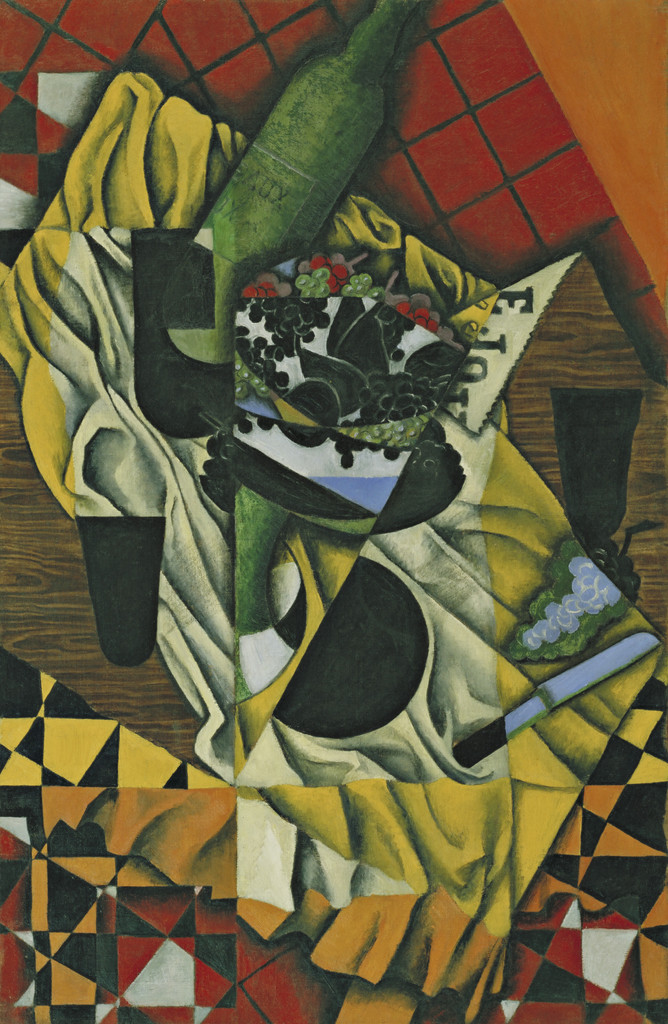
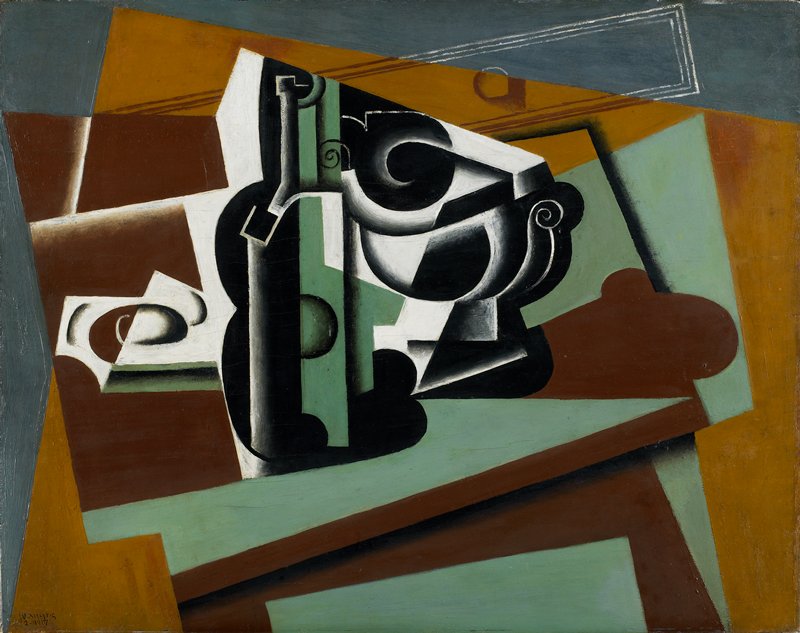
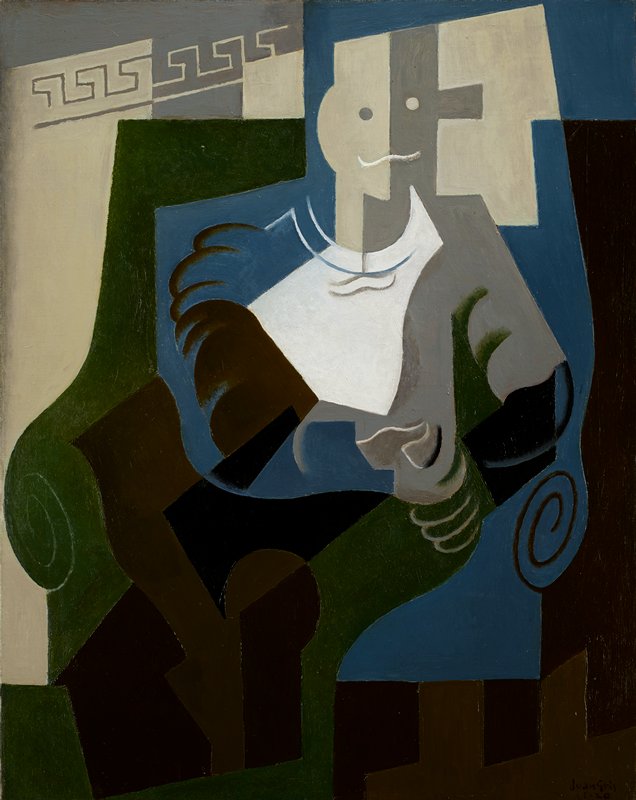
Juan GrisSpanien, 1887–1927
The Sunblind
Må man se det?
Ukendt: museet holder tæt

National Gallery
London, Storbritannien
Ejeren er kendt. Om det er udstillet i dag, siger museet ikke, og at gætte har vi ikke lært.
- Uændret siden
- 29. sep. 2026
- Kilde
- Museets egne samlingsdata
Oplysninger
- Inventarnummer
- NG5747
Kilder
- Wikidata · hentet for 5 dage siden
- Billede: National Gallery — Juan Gris · Public domain · Wikimedia Commons
Imens i livet hos Juan Gris
Hele livet1910s–1920s
The pupil Picasso “wished away”
Gris regarded Picasso as a teacher, but according to Gertrude Stein in The Autobiography of Alice B. Toklas, Picasso treated him with undisguised irritation: Gris was the only person Picasso wished away. At first Gris was spoken of only as Picasso’s follower, but when he became an independent artist and one of the leaders of Cubism, Picasso grew jealous.
1912
A contract with Daniel-Henry Kahnweiler
That same year he signed a contract that gave Daniel-Henry Kahnweiler exclusive rights to his work.
1912
Shows of 1912: Barcelona, Berlin, Rouen, Paris
In 1912 he exhibited at the Exposició d’art cubista at the Galeries Dalmau in Barcelona, the first declared group exhibition of Cubism anywhere; at the Der Sturm gallery in Berlin; at the Salon de la Société Normande de Peinture Moderne in Rouen; and at the Salon de la Section d’Or in Paris, where he showed with the painters of the Puteaux Group.
1912
Debut at the Salon des Indépendants: “Hommage à Pablo Picasso”
In 1912 he exhibited for the first time, at the Salon des Indépendants, with a painting entitled Hommage à Pablo Picasso.
1912
Meets Josette Herpin
In 1912 Gris met Charlotte Augusta Fernande Herpin (1894–1983), known as Josette. In late 1913 or early 1914 they began living together at the Bateau-Lavoir, where they stayed until 1922; Josette became his second companion and unofficial wife.
1913–1918
From Analytical to Synthetic Cubism
At first Gris painted in the style of Analytical Cubism, a term he himself later coined; after 1913 he converted to Synthetic Cubism, making extensive use of papier collé, or collage, an evolution that ran through 1914–1918. Unlike Picasso and Braque, whose Cubist works were practically monochromatic, he painted in bright harmonious colours in daring, novel combinations, in the manner of his friend Matisse.