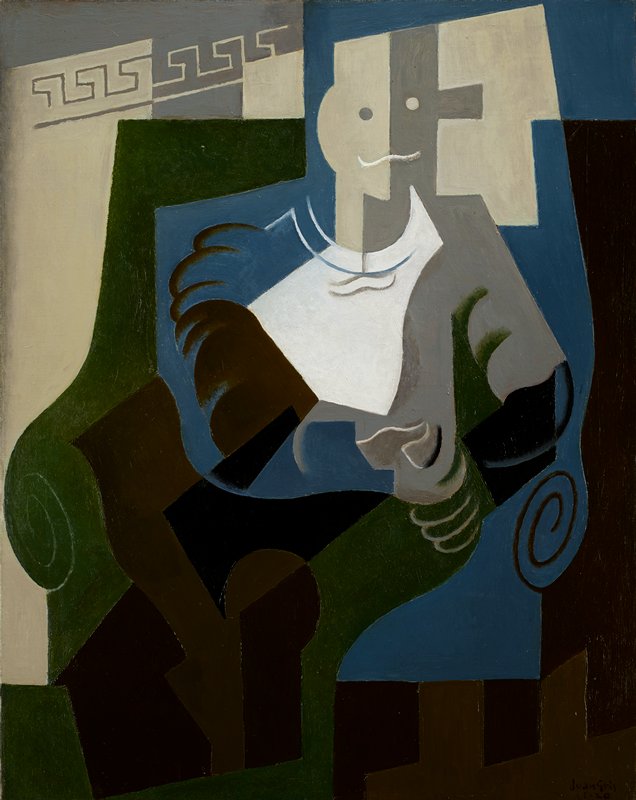
Seated Harlequin
Om maleriet
Harlequin is a character in the Commedia dell’arte, a form of Italian theater in which masked actors perform broad, humorous sketches. Most figures in commedia are based on social stereotypes of 1500s Italy. Harlequin is a mischievous servant dressed in a diamond-patterned costume who vies against the clown character Pierrot for the love of Colombina, a servant girl.
Gris and other modern artists—including Picasso—commonly used Harlequin and other Commedia dell’arte figures as subject matter. The layered meanings of Harlequin fit well with the Cubist configuration of the figure from different viewpoints, where no one fixed perspective is shown.
Conservation of this picture was made possible by a generous contribution from Al and Dena Naylor through the Art Champions program.
Minneapolis Institute of Art

Oplysninger
- Inventarnummer
- 58.33
Imens i livet hos Juan Gris
Hele livet1910s–1920s
The pupil Picasso “wished away”
Gris regarded Picasso as a teacher, but according to Gertrude Stein in The Autobiography of Alice B. Toklas, Picasso treated him with undisguised irritation: Gris was the only person Picasso wished away. At first Gris was spoken of only as Picasso’s follower, but when he became an independent artist and one of the leaders of Cubism, Picasso grew jealous.
1913–1918
From Analytical to Synthetic Cubism
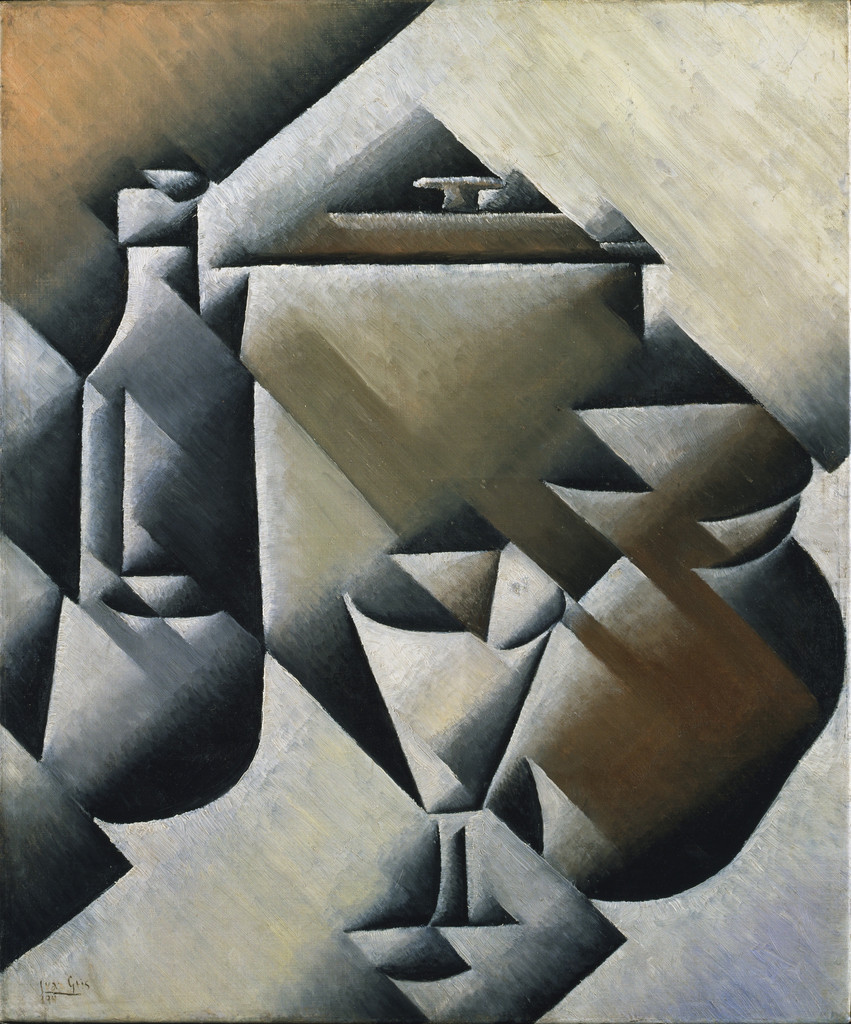
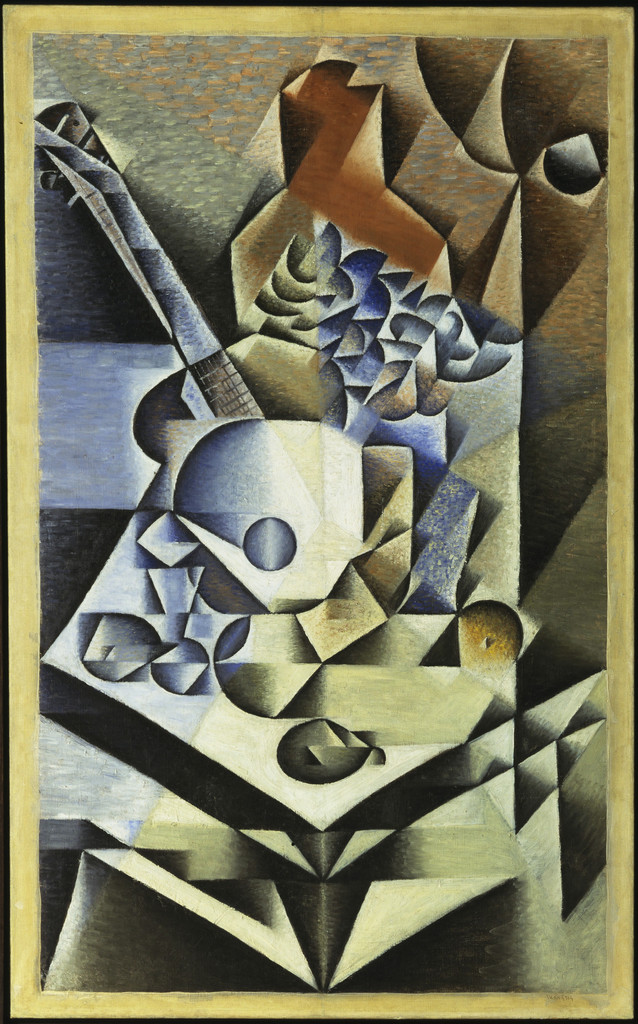
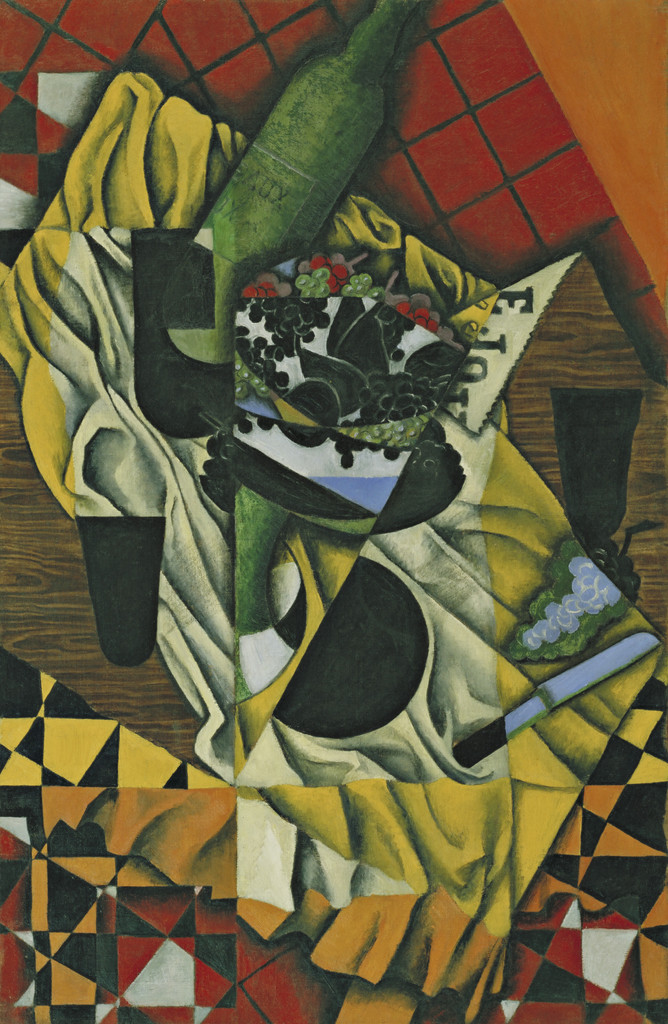
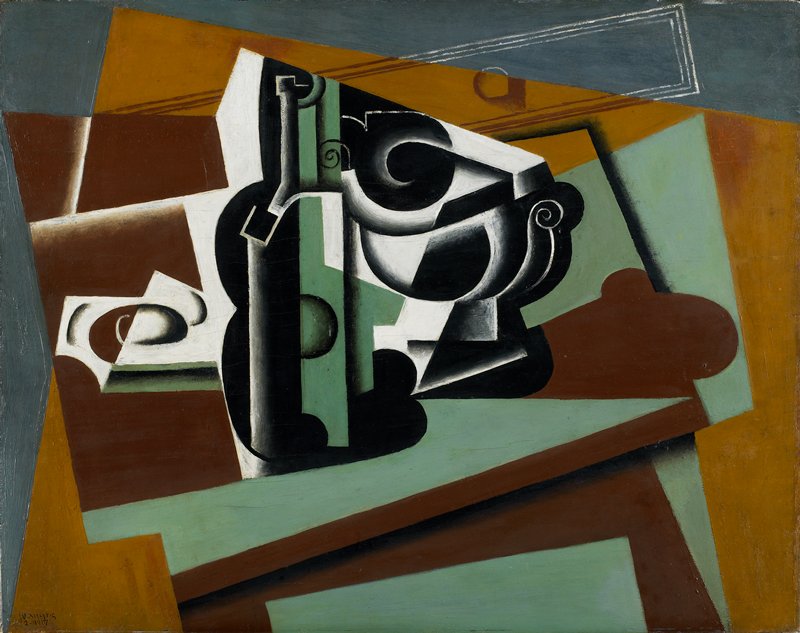
At first Gris painted in the style of Analytical Cubism, a term he himself later coined; after 1913 he converted to Synthetic Cubism, making extensive use of papier collé, or collage, an evolution that ran through 1914–1918. Unlike Picasso and Braque, whose Cubist works were practically monochromatic, he painted in bright harmonious colours in daring, novel combinations, in the manner of his friend Matisse.
1919
His first solo exhibition, in Paris
Gris’s first solo exhibition took place in Paris in 1919.
1919–1920
Critics begin to write about “synthetic” Cubism
In 1919 and particularly 1920, artists and critics began to write conspicuously about this “synthetic” approach and to assert its importance in the overall scheme of advanced Cubism.
1922–1924
Working with Diaghilev and the Ballets Russes
From 1922 to 1924 he worked with Sergei Diaghilev and his ballet company; in 1924 he designed sets and costumes for the Ballets Russes.