 James Jacques Joseph TissotFrankrig, 1836–1902
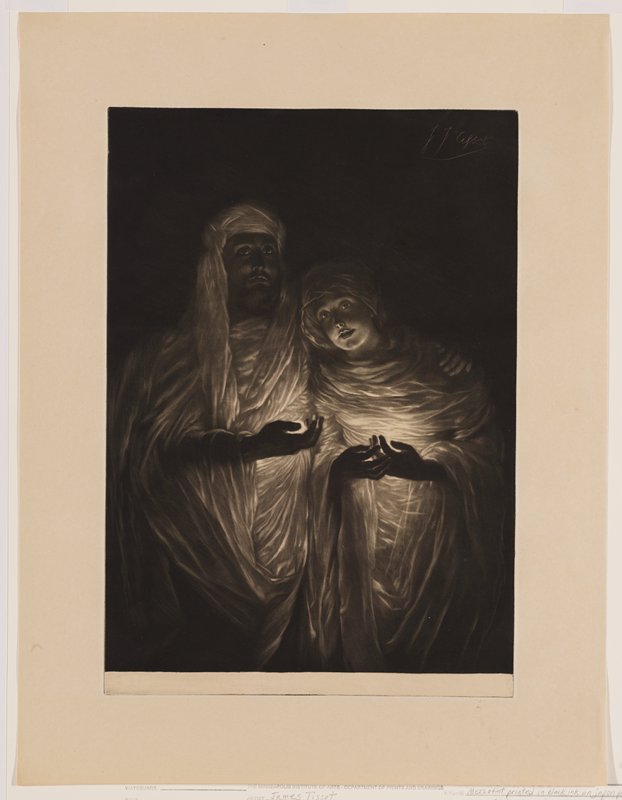
The Apparition
Må man se det?
Tager ikke imod for tiden

Minneapolis Institute of Art
Minneapolis, USA
Det hører til samlingen, men er ikke udstillet for tiden.
- Kontrolleret
- Uændret siden
- Kilde
- Museets egne samlingsdata
Om værket
James J. Tissot was a French painter and printmaker, who spent much of his adult life in London. He was particularly well known for his images of fashionable women in elaborate outfits going about their daily lives. About 1875, he and a widow named Kathleen Newton became lovers, an attachment that endured until her death from tuberculosis in 1882. Her death hit Tissot hard. He had already lost his beloved brother a few years earlier, an event that led him to an interest in the occult. With the death of Kathleen, his interest in spiritualism only became more acute.
Read on
On May 20, 1885, Tissot participated in a séance at the home of Albert Besnard—quite possibly around the same table seen in Mia’s John Singer Sargent painting, The Birthday Party. A witness recalled that Kathleen and her spirit guide, at first faint, gradually became more distinct. He also reported that Tissot said that he felt her lips on his forehead and the caress of a kiss touch his face. Tissot first documented his experience in a now-lost painting. He then translated the image into the print medium of mezzotint, as seen here. Tissot took up mezzotint late in his printmaking career and seems to have reserved it primarily for subjects with personal meaning.
Minneapolis Institute of Art
Oplysninger
- Inventarnummer
- 2016.106.1
I kataloget
Kilder
- Minneapolis Institute of Art: the museum's own open data · hentet for 7 dage siden
- Billede: Minneapolis Institute of Art — public domain
Imens i livet hos James Jacques Joseph Tissot
Hele livet1885
A vision at Saint-Sulpice
Having completed “The Woman of Paris”, in 1885 Tissot experienced a religious vision at the Church of Saint-Sulpice, returned to his Catholic faith and devoted the rest of his life to paintings of biblical events, turning from modern life to traditional narrative.
1885
“Fifteen Paintings on the Woman of Paris”
The last major exhibition of this period was the 15-painting series “The Woman of Paris” at the Galerie Sedelmeyer: unlike his London society scenes, it showed women of many classes and occupations, with the unexpected angles and framing of Japanese prints. “The Shop Girl” returned to his themes of desire and gender.
1886
First journey to the Middle East
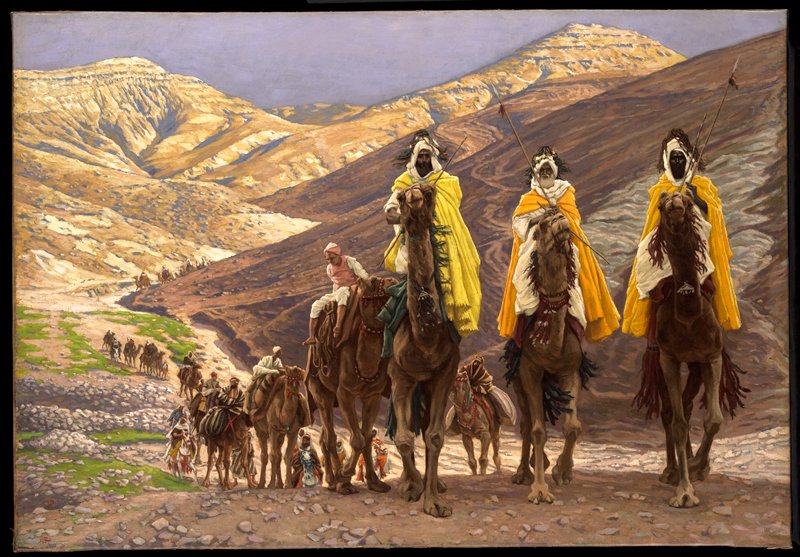
In 1886, and again in 1889 and 1896, Tissot travelled to the Middle East to study its landscapes and cultures; this “considerable archaeological exactitude” set his biblical series apart from the religious art of his contemporaries. The project ran to seven hundred watercolours on the life of Jesus and the Old Testament.