 Théodore GéricaultFrankrig, 1791–1824
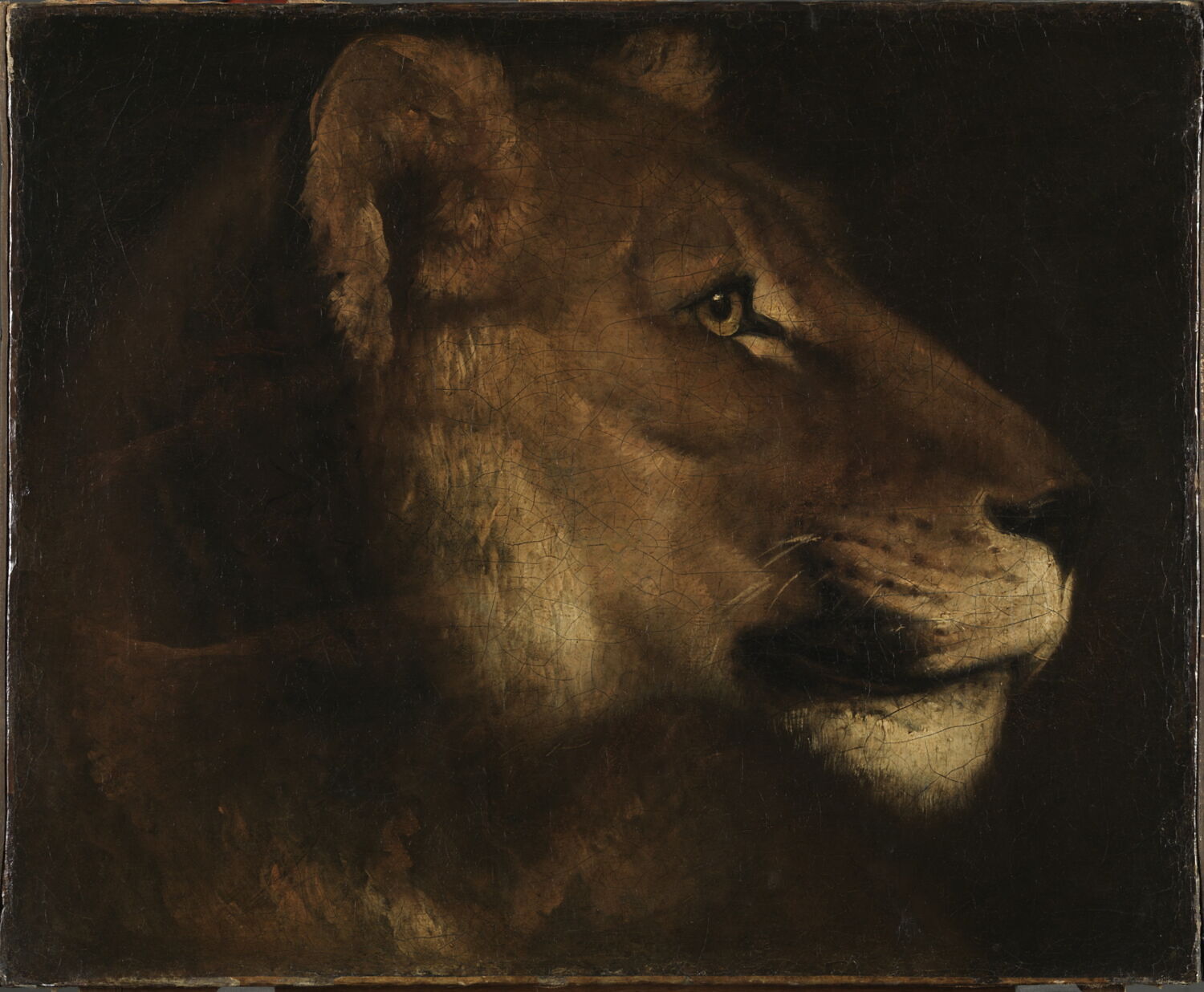
Tête de lionne
Må man se det?
Ja, det tager imod

Udstillet for publikum.
- Kontrolleret
- Uændret siden
- Kilde
- Museet
Oplysninger
- Inventarnummer
- MNR 137
I kataloget
Kilder
- Louvre
- Billede: Louvre — © 2012 GrandPalaisRmn (musée du Louvre) / Philippe Fuzeau
Imens i livet hos Théodore Géricault
Hele livet1816–1817
Naples and Rome: the shock of Michelangelo
Géricault visited Naples, drawing the landscapes and people, but spent most of his time in Rome. The frescoes of the Sistine Chapel shook him: Michelangelo's monumentality of form inspired his pen drawings, such as “Man Felling a Bull”, among the most interesting made in Rome.
autumn 1817
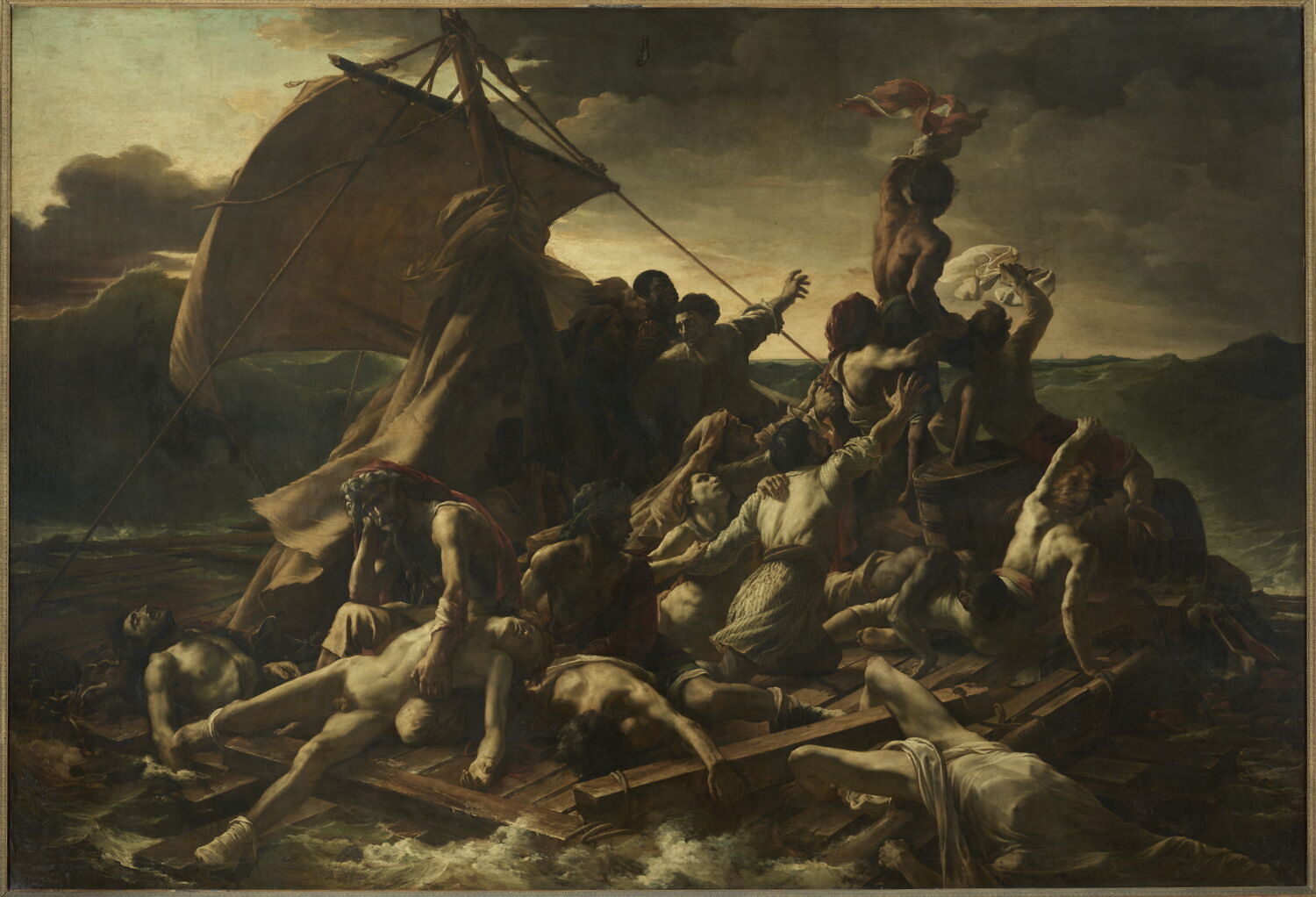
The book on the wreck of the Méduse reaches Géricault
In the autumn of 1817 the book “The Wreck of the Frigate Medusa” appeared, in which the eyewitnesses, the geographer-engineer Alexandre Corréard and the physician Henri Savigny, described the thirteen-day drift of the raft after the ship ran aground off the coast of Mauritania. The book reached Géricault, who saw in it the subject for the large painting he had long dreamed of.
1817–1818
Investigating the disaster: survivors, a model raft, morgues
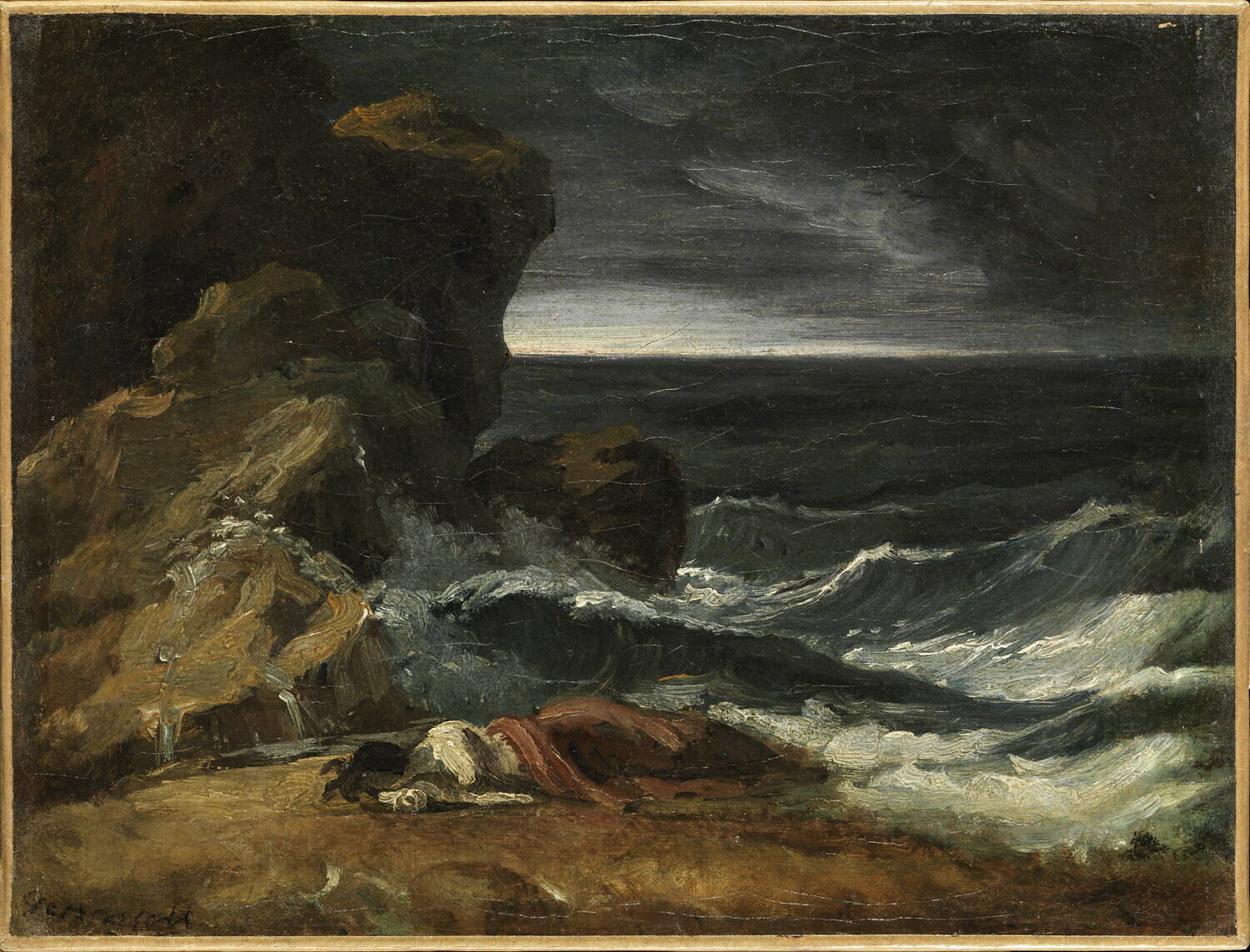
Géricault re-created the event by studying the available materials and meeting witnesses: he got to know Corréard and Savigny, a carpenter from the Méduse made a scale model of the raft for him, and the artist modelled wax figures himself. He visited hospital morgues, drawing dead heads, emaciated bodies and severed limbs, and the preparation ended with a trip to Le Havre, where he painted studies of sea and sky.
1819
“The Raft of the Medusa” sparks a political controversy at the Salon
When first exhibited at the Paris Salon of 1819, “The Raft of the Medusa” ignited political controversy: it indicted a corrupt establishment, in which the captain had left the crew and passengers to die, but also dramatized the eternal struggle of man against nature.
12 June – 30 December 1820
London: 50,000 visitors and 20,000 francs
The entrepreneur Bullock exhibited “The Raft of the Medusa” in London from 12 June to 30 December 1820; about 50,000 people saw it, critics called it a masterpiece, and its author was compared to Michelangelo and Caravaggio. Géricault was entitled to a third of the ticket receipts and received 20,000 francs.
1821–1824
Illness and falls from horses after his return from England
After returning to Paris from England Géricault was often ill, and his condition was made worse by several falls during horseback rides.