 Georges SeuratFrankrig, 1859–1891
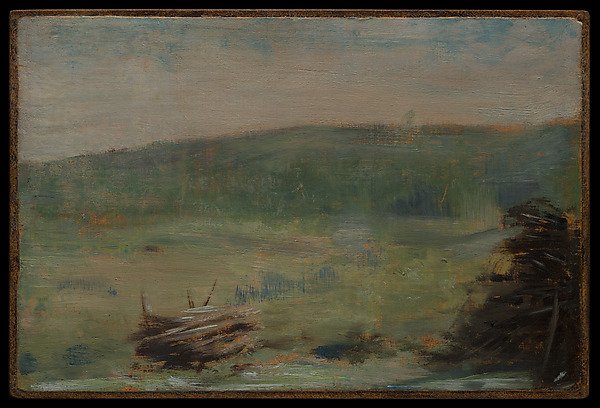
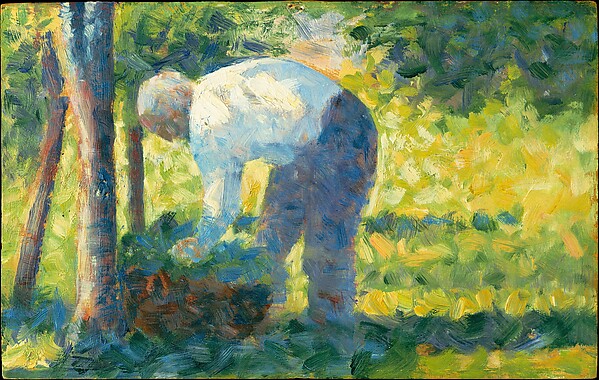
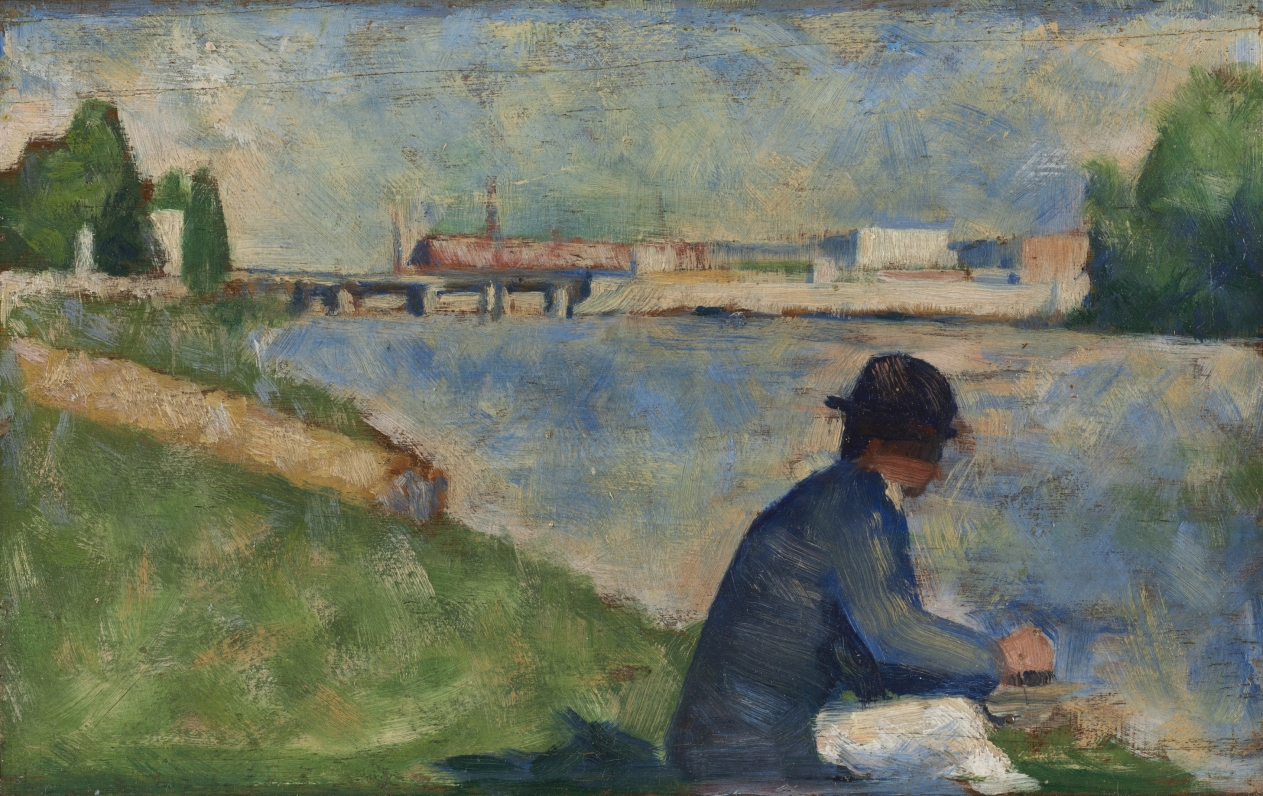
Study for "Bathers at Asnières"
Kan det ses?
Ikke udstillet lige nu
Hvor er »Study for "Bathers at Asnières"« i dag? Samling: The Cleveland Museum of Art, Cleveland. Ikke udstillet lige nu. Kontrolleret 29. september 2026.

Cleveland, USA
Det hører til samlingen, men er ikke udstillet for tiden.
- Kontrolleret
- Uændret siden
- Kilde
- Museet
Om maleriet
This oil sketch is one of many preparatory studies Seurat made for his monumental painting Bathers at Asnières (1883-84), depicting men leisurely bathing in the Seine near an industrial suburb of Paris. Seurat borrowed the brilliant colors of Impressionism to suggest outdoor light, but added structure by emphasizing basic geometric shapes and firm outlines. As a leader of the movement to reform Impressionism, his style became known as Neo-Impressionism.
The Cleveland Museum of Art
Oplysninger
- Inventarnummer
- 1958.51
I kataloget
Kilder
- The Cleveland Museum of Art
- Billede: The Cleveland Museum of Art — Museum open access
Imens i livet hos Georges Seurat
Hele livet1 May – 20 June 1883
First exhibited work: the portrait of Aman-Jean at the Salon
Seurat's first exhibited work is a Conté crayon drawing of Edmond Aman-Jean shown at the Paris Salon of 1883; from that year until his death he exhibits at the Salon, the Salon des Indépendants, Les XX in Brussels and other shows.
1884
Meeting Paul Signac
At the first exhibition of the Groupe des Artistes Indépendants Seurat meets Paul Signac, a future follower of pointillism; Signac later wrote that “Bathers” is painted in broad flat strokes and looks less bright than the Impressionists' canvases, but that the systematic separation of light, shade and local colour gives it harmony.
15 May – 30 June 1884
The Salon rejects “Bathers”: a debut at the Indépendants
The official Salon rejects “Bathers at Asnières”, and Seurat shows the painting instead at the Groupe des Artistes Indépendants, which runs from 15 May to 30 June 1884 — his debut as a painter.
1886
Nine works, the public's mockery and the critics' defence
At the last Impressionist exhibition Seurat presents nine works; the critics R. Marx and Félix Fénéon write favourable reviews, but the public ridicules the “pictures painted in dots”, and the Swiss critic Émile Hennequin finds them grey and poor in light. The Impressionists are sceptical: when Pissarro says that “La Grande Jatte” is very interesting, Degas replies that he would have noticed, but it is so large; Seurat himself blames the hall for being too dark and cramped to give the picture the necessary distance.
15 May – 15 June 1886
“La Grande Jatte” is first shown at the eighth Impressionist exhibition
“A Sunday Afternoon on the Island of La Grande Jatte” is shown to the public for the first time at the eighth Impressionist exhibition, held from 15 May to 15 June 1886. The painting will initiate Neo-Impressionism and alter the direction of modern art.
19 September 1886
Fénéon names “Neo-Impressionism” and defends Seurat
Félix Fénéon, who gives the new movement the name “Neo-Impressionism”, defends the artist in an article for the Belgian paper “L'Art Moderne” of 19 September 1886: here, he argues, no virtuosity of brushwork or impasto is needed, but the eye must be quick, sharp and perceptive.