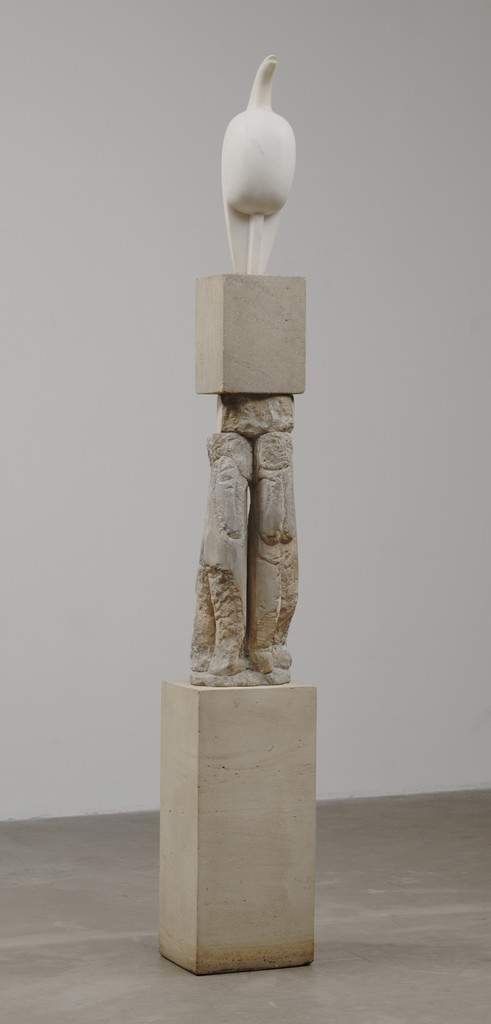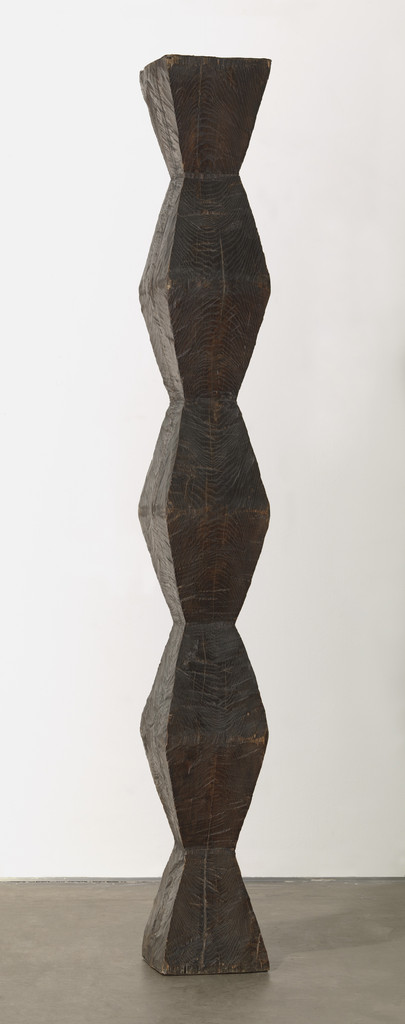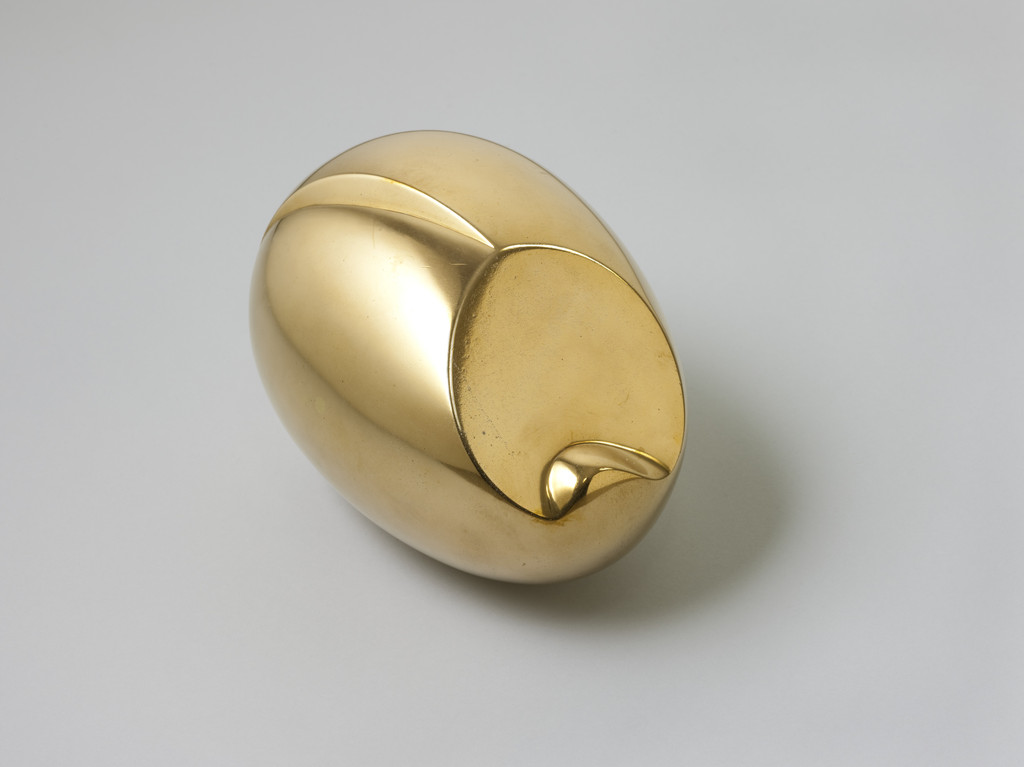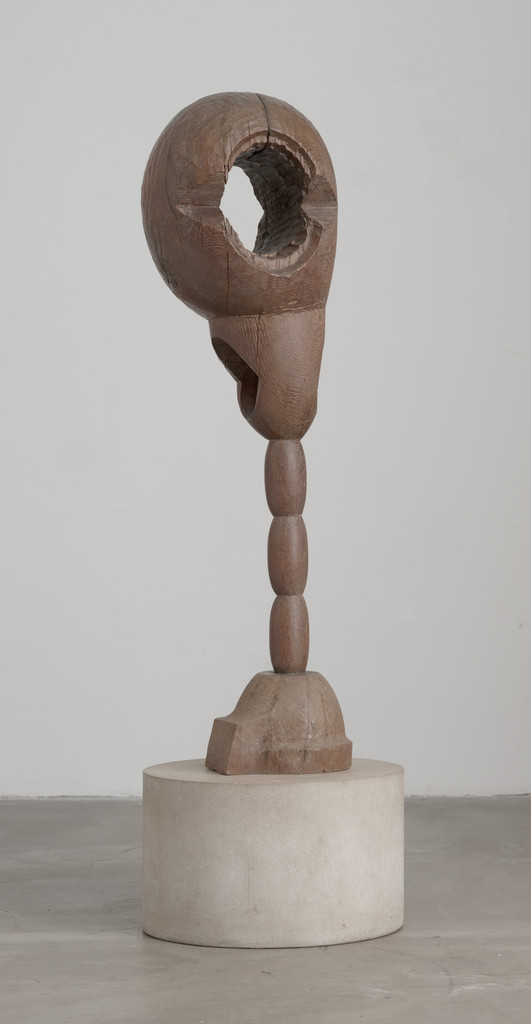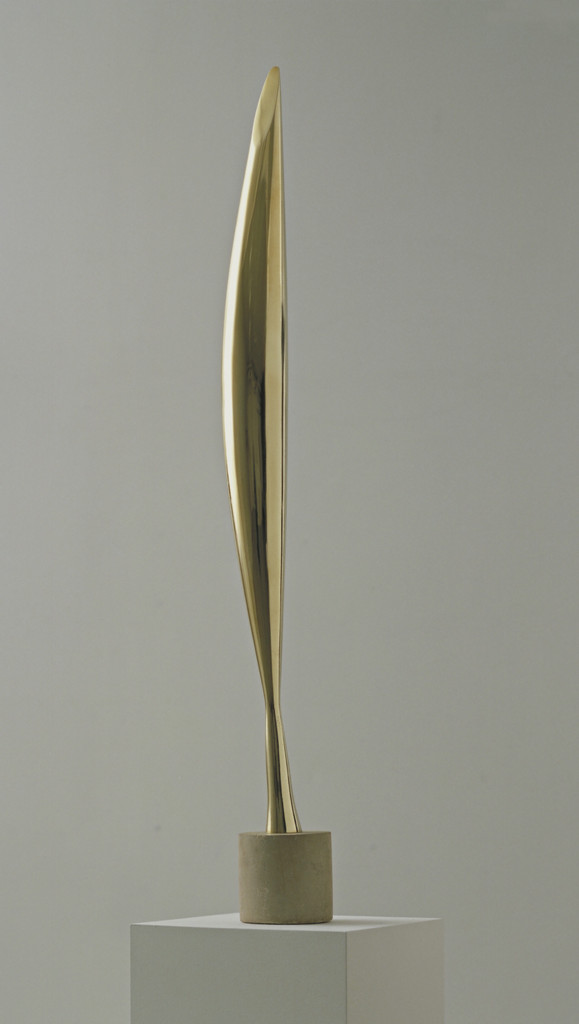
 Constantin BrancusiRumænien, 1876–1957
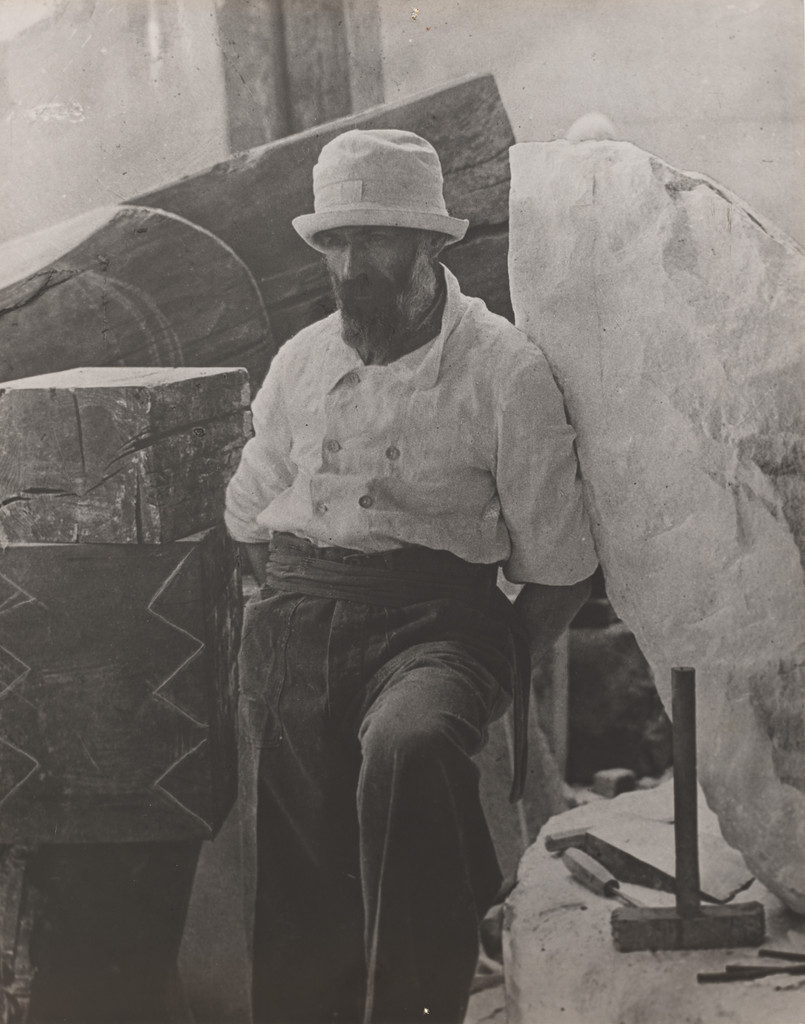
Self-portrait in the studio
Må man se det?
Tager ikke imod for tiden

New York City, USA
Det hører til samlingen, men er ikke udstillet for tiden.
- Kontrolleret
- Kilde
- Museet
Oplysninger
- Inventarnummer
- 1116.1979
I kataloget
Kilder
- Museum of Modern Art
- Billede: Museum of Modern Art — © the artist or rights holder
Imens i livet hos Constantin Brancusi
Hele livet1910s
“Mobile groups”: rearranging the sculptures
During the 1910s Brâncuși arranges sculptures and pedestals in changing compositions that he calls “mobile groups”: he moves the works and watches how each change alters the space around them. When he sells a sculpture he often puts a plaster version in the same position, and by the 1920s the studio is also an exhibition space whose arrangement forms part of the work.
1919
Meeting Erik Satie
The writer Henri-Pierre Roché brings the composer Erik Satie, exactly ten years older than Brâncuși, to his studio together with Marcel Duchamp, beginning a friendship that lasts from 1919 to 1925. After dinner Brâncuși plays the violin for his guest, and Satie, in Roché’s words, teaches him verbal fencing, self-belief and clarity of thought.
1920
“Princess X” excluded from the Salon des Indépendants
In January 1920 the organizers of the Salon des Indépendants exclude “Princess X” (1915–1916) because they regard its shape as phallic. Fernand Léger and other friends of Brâncuși protest, the sculpture is returned to the exhibition, and the dispute leads to the manifesto “Pour l’indépendance de l’art”, signed by more than seventy artists and writers; Erik Satie signed the protest petition on 25 February 1920.
1921
Man Ray and the darkroom
Brâncuși, who has photographed his work since the 1910s, meets Man Ray in 1921, who helps him buy equipment, set up a darkroom and improve his developing methods. He photographs the sculptures under changing light, alters his framing and documents the relationships between the works and the surrounding space; he also films his studio and sculptures mounted on rotating bases.
September 1921
A Brâncuși issue of “The Little Review”
In September 1921 the American magazine “The Little Review” publishes an issue devoted to Brâncuși, with an essay by Ezra Pound and 24 photographic plates showing sculptures and views of the studio.
after 1924
Duchamp and Roché buy 29 of Quinn’s sculptures
After John Quinn’s death in 1924, Duchamp and Henri-Pierre Roché buy 29 sculptures from his estate at Brâncuși’s request: the sculptor fears that selling all the works at once would lower their prices, and the friends offer them gradually to other collectors. Shortly before, in October 1923, Quinn had spent about two weeks in Paris and visited Brâncuși.