 Armand GuillauminFrankrig, 1841–1927
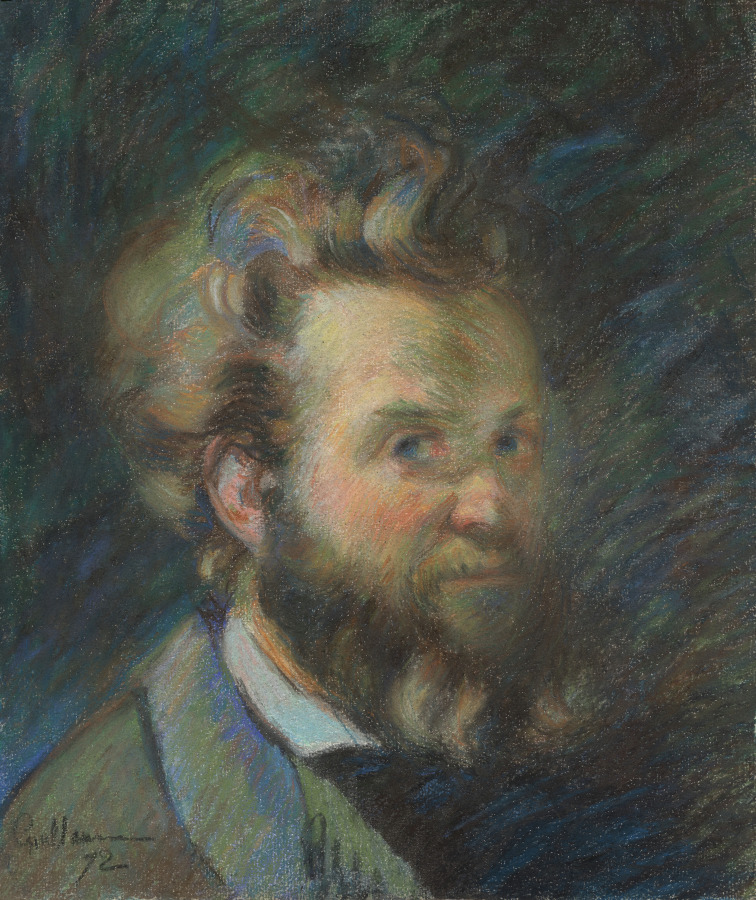
Self-Portrait
Må man se det?
Tager ikke imod for tiden

The Cleveland Museum of Art
Cleveland, USA
Det hører til samlingen, men er ikke udstillet for tiden.
- Kontrolleret
- i forgårs
- Uændret siden
- 19. aug. 2026
- Kilde
- Museets egne samlingsdata
Om værket
This self-portrait is one of several that Armand Guillaumin created as a young artist during the early 1870s. Around this time, he worked closely with Camille Pissarro and Paul Cézanne, experimenting alongside them with vivid layers of color. Here, Guillaumin juxtaposed dark, dull tones with bright blue and orange to create unexpected optical blends. He meets the viewer's gaze directly, suggesting his intense focus at a period when such experimentation was just beginning to coalesce into the Impressionist movement.
The Cleveland Museum of Art
Oplysninger
- Inventarnummer
- 2020.129
I kataloget
Kilder
- The Cleveland Museum of Art: the museum's own open data · hentet for 5 dage siden
- Billede: The Cleveland Museum of Art — Museum open access
Imens i livet hos Armand Guillaumin
Hele livet1870s
Painting alongside Pissarro and Cézanne
In the 1870s the three friends — Guillaumin, Pissarro and Cézanne — often paint in each other's company; for a time the studios of Guillaumin and Cézanne on the Île Saint-Louis in Paris are next door to each other.
1872
Back at work; visits to Pissarro in Pontoise
Forced to return to his job, he keeps painting and often visits Pissarro in Pontoise; in September Pissarro writes to Antoine Guillemet that Guillaumin has just spent several days with them — painting by day and ditch-digging in the evening — and admires his courage.
1873
Cézanne portrays him in an etching
In 1873 Cézanne makes the only etchings of his career; one of them depicts Guillaumin.
1874
The first Impressionist exhibition
Shows three landscapes at the first Impressionist exhibition, among them “Sunset at Ivry”, whose motif echoes Monet's “Impression, Sunrise”; he is a member of the Société anonyme des artistes peintres, sculpteurs et graveurs from the start. He later takes part in the exhibitions of 1877, 1880, 1881, 1882 and 1886 (other accounts say in all but the second, of 1876).