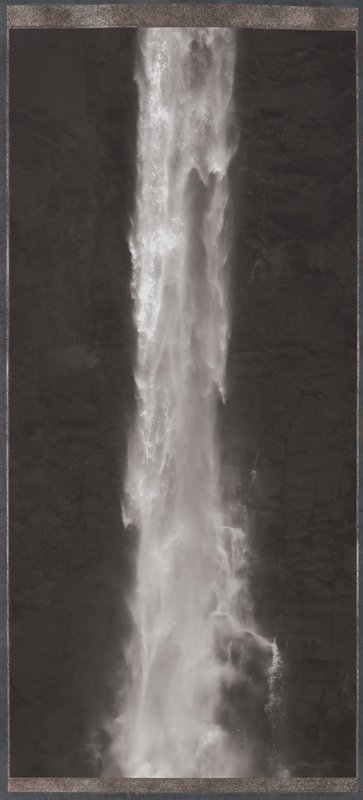
Muda TomohiroJapan
Nachi Falls
Må man se det?
Tager ikke imod for tiden

Minneapolis Institute of Art
Minneapolis, USA
Det hører til samlingen, men er ikke udstillet for tiden.
- Kontrolleret
- Uændret siden
- Kilde
- Museets egne samlingsdata
Om værket
Muda Tomohiro has spent much of his thirty-year career photographing sites sacred to Buddhism. He began in the Himalayas in the 1980s and in the 1990s produced major series based on sacred Buddhist sites in China and Indonesia. In the mid-2000s he turned his attention closer to home, to Japan’s Kii Peninsula (where he was born) and, more specifically to the peninsula’s sacred Kumano region. This black-and-white photograph of a cataract is immediately recognizable as that region’s Nachi Waterfall, which has been worshipped since prehistory as the physical manifestation of a Shinto god, or kami. Since the arrival of Buddhism in the 600s, Nachi, Japan’s tallest waterfall, and the surrounding Kumano region have formed the backdrop for a singular fusion of Shinto and Buddhist practices, with Nachi waterfall imagined as the physical manifestation and paradisiacal abode of the bodhisattva Avalokiteshvara. Nachi waterfall and nearby Kumano Nachi Grand Shrine are one of three syncretic temple-shrine complexes in Kumano and are among the most sacred sites in all of Japan.
Minneapolis Institute of Art
Oplysninger
- Inventarnummer
- 2019.86
I kataloget
Kilder
- Minneapolis Institute of Art: the museum's own open data · hentet for 7 dage siden
- Billede: Minneapolis Institute of Art — © Muda Tomohiro







