ART WIKI32.963 udstillet
KortSamlingKunstnereMuseerUdstillingerJournal
Log ind

ART WIKI

Hvor mesterværket hænger, og hvornår man bliver lukket ind.

Samlinger: Art Institute of Chicago, Det Russiske Museum, Eremitagen, Getty Villa, Harvard Art Museums, Hirshhorn Museum and Sculpture Garden, J. Paul Getty Museum, Louvre, Metropolitan Museum of Art, Minneapolis Institute of Art, Museum of Modern Art, National Gallery of Art, National Museum of Asian Art, National Portrait Gallery (Smithsonian), Pusjkinmuseet, Rijksmuseum Amsterdam, Smithsonian American Art Museum, Statens Museum for Kunst, The Cleveland Museum of Art, Tretjakovgalleriet, Victoria and Albert Museum, Whitney Museum of American Art, Ruslands statskatalog over museumsfonden (274 museer), Europeana (19 museer), Wikidata (6 museer), Paris Musées (12 museer) og Joconde, det franske kulturministeriums museumsdatabase (495 museer). Billederne tilhører deres rettighedshavere.

Afsnit

  • Kort
  • Søgning
  • Samling
  • Mesterværker
  • Udstillet nu
  • Kunstnere

Mere

  • Museer & gallerier
  • Udstillinger
  • Journal
  • Hvor data kommer fra
  • Privatliv & cookies
ForsideKortKatalog
  1. Samling/
  2. The Cleveland Museum of Art/
  3. Morning
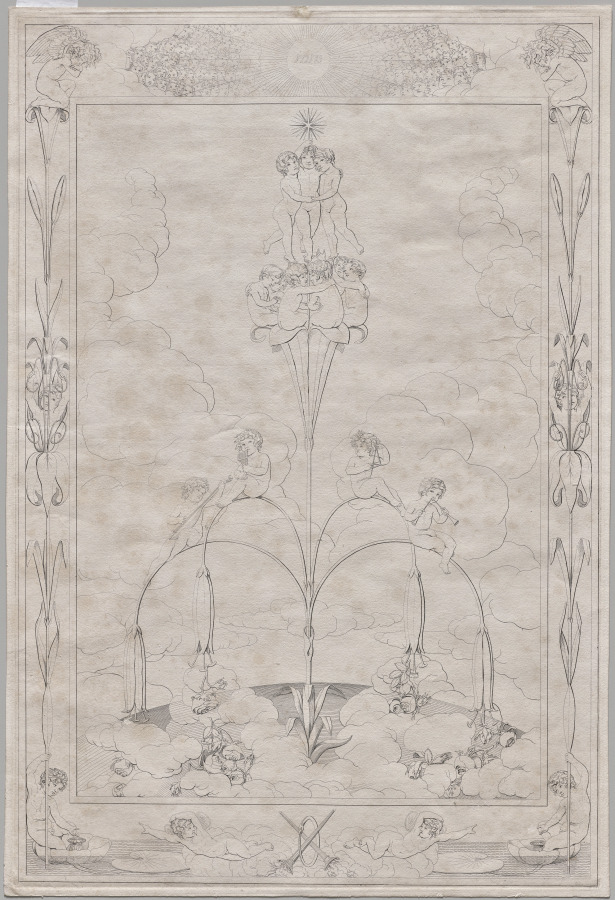
Morning, Philipp Otto Runge, 1803–5
Philipp Otto Runge, portrætPhilipp Otto RungeTyskland, 1777–1810

Morning

1803–5 · Print

Må man se det?

Tager ikke imod for tiden

The Cleveland Museum of Art

Cleveland, USA

Det hører til samlingen, men er ikke udstillet for tiden.

Kontrolleret
for 3 dage siden
Uændret siden
19. aug. 2026
Kilde
Museet
På kortetMuseets side

Om værket

Phillip Otto Runge’s large-scale, four-part print series, Tageszeiten (Times of Day), is a landmark of German Romantic printmaking, capturing the “new art” promoted by Runge and his contemporary, Caspar David Friedrich, one rooted in a more personal and spiritual response to nature. Runge presents allegories of nature as a means to understand God and the sublime on earth. His four-part series represents not only the four times of day but also the seasons and the stages of human life, while contrasting eternal time with human time through various literary and religious references. Viewing the series from Morning to Night, seedlings emerge from the earth, bloom, decay, and die. Young spirits or children are born, mature, and grow old, eventually entering a sleep reminiscent of death.

Læs videre

A female figure appearing in two scenes, possibly Mother Nature, inspires abundance and then embraces its decline, suggesting nature’s continuity despite human mortality. In each plate, Runge contrasts eternal time with human time, or spirituality with physicality, by contrasting the iconography in the borders with that in the centers.

The Cleveland Museum of Art

Oplysninger

1803–5 · 26 år gammel
17771810
Inventarnummer
2024.2.1

I kataloget

GrafikRaderingKlassicismeRomantikken1800-talletTyskland

Kilder

  • The Cleveland Museum of Art
  • Billede: The Cleveland Museum of Art — Museum open access

Imens i livet hos Philipp Otto Runge

Hele livet
  1. 1798–1801

    Studies at the Royal Academy in Copenhagen

    Having decided to become an artist, Runge studies at the Copenhagen Academy under Jens Juel and Nicolai Abildgaard with the financial support of his brother Daniel; Caspar David Friedrich had studied there shortly before him. He draws from the nude and studies anatomy, geometry and perspective. Some accounts date the start of his studies to 1799.

  2. 1801

    Meets Pauline Bassenge

    In Dresden Runge meets the sixteen-year-old Pauline Bassenge, his future wife.

  3. 1801–1804

    The Dresden Academy and the circle of Romantics

    In 1801 Runge moves to Dresden and studies at the Academy under Anton Graff until 1804. He grows close to the “Dresden Romantics” — Caspar David Friedrich, Johann Gottfried Quistorp and Ludwig Tieck; Tieck introduces him to the mystical treatises of Jakob Böhme and to the ideas of Novalis.

  4. 14 – 19 November 1803

    Meets Goethe in Weimar

    On a trip to Weimar Runge meets Goethe at the house of Christian Gottlob von Voigt and visits the poet with Ludwig Tieck on 17 and 18 November; they discuss art and natural philosophy at length. It is the start of a friendly and working relationship based on their shared interest in color and art.

  5. 3. april 1804

    Married: Pauline Runge

  6. 3 April 1804

    Marries Pauline Bassenge

    On 3 April 1804 Runge marries Pauline Susanne Bassenge (1785–1881) in Dresden and soon moves back to Hamburg with her; they have four children.
Mere af Philipp Otto Runge

Alle værker
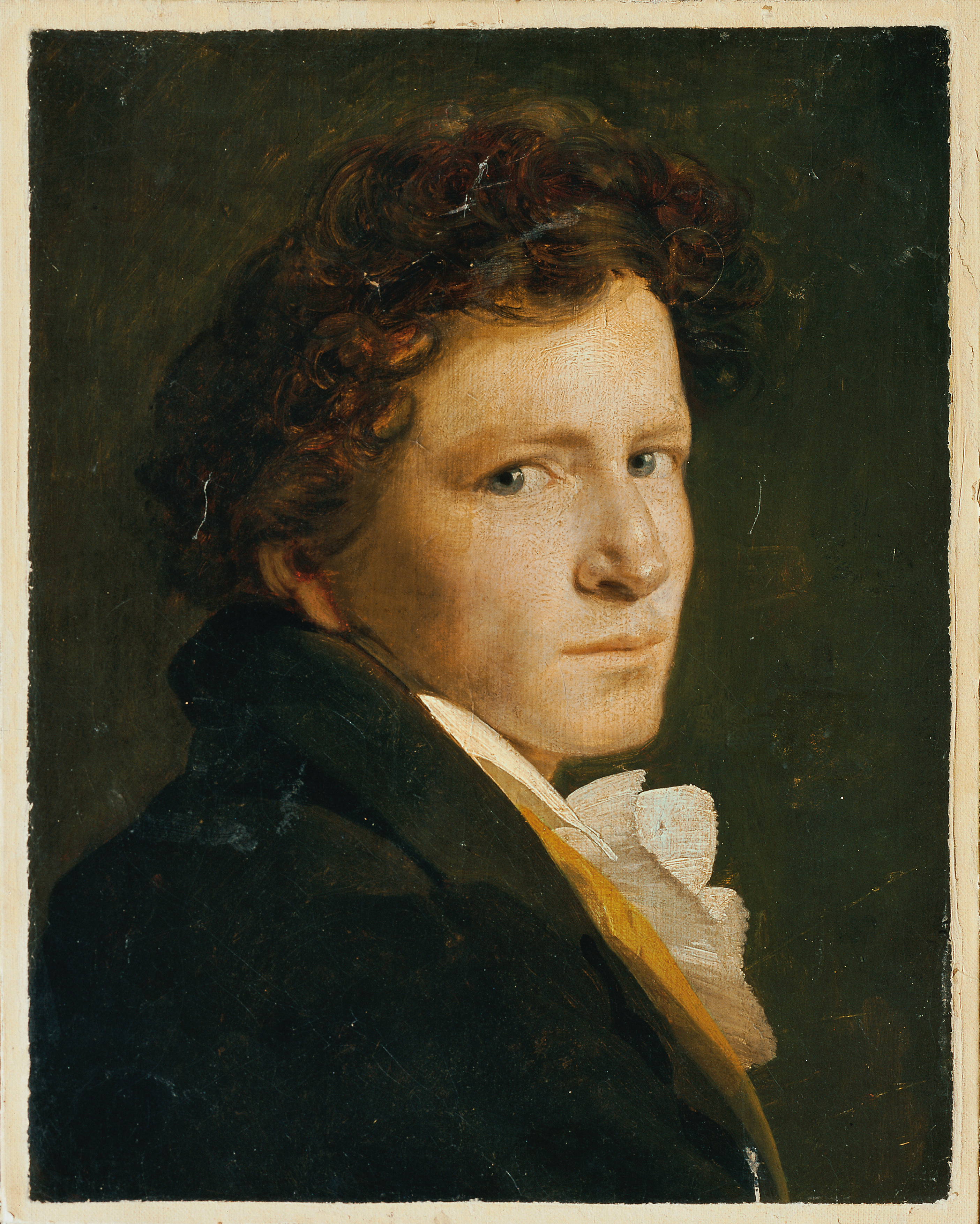
Brustbild eines jungen Mannes, Philipp Otto Runge

Brustbild eines jungen Mannes

Österreichische Galerie Belvedere

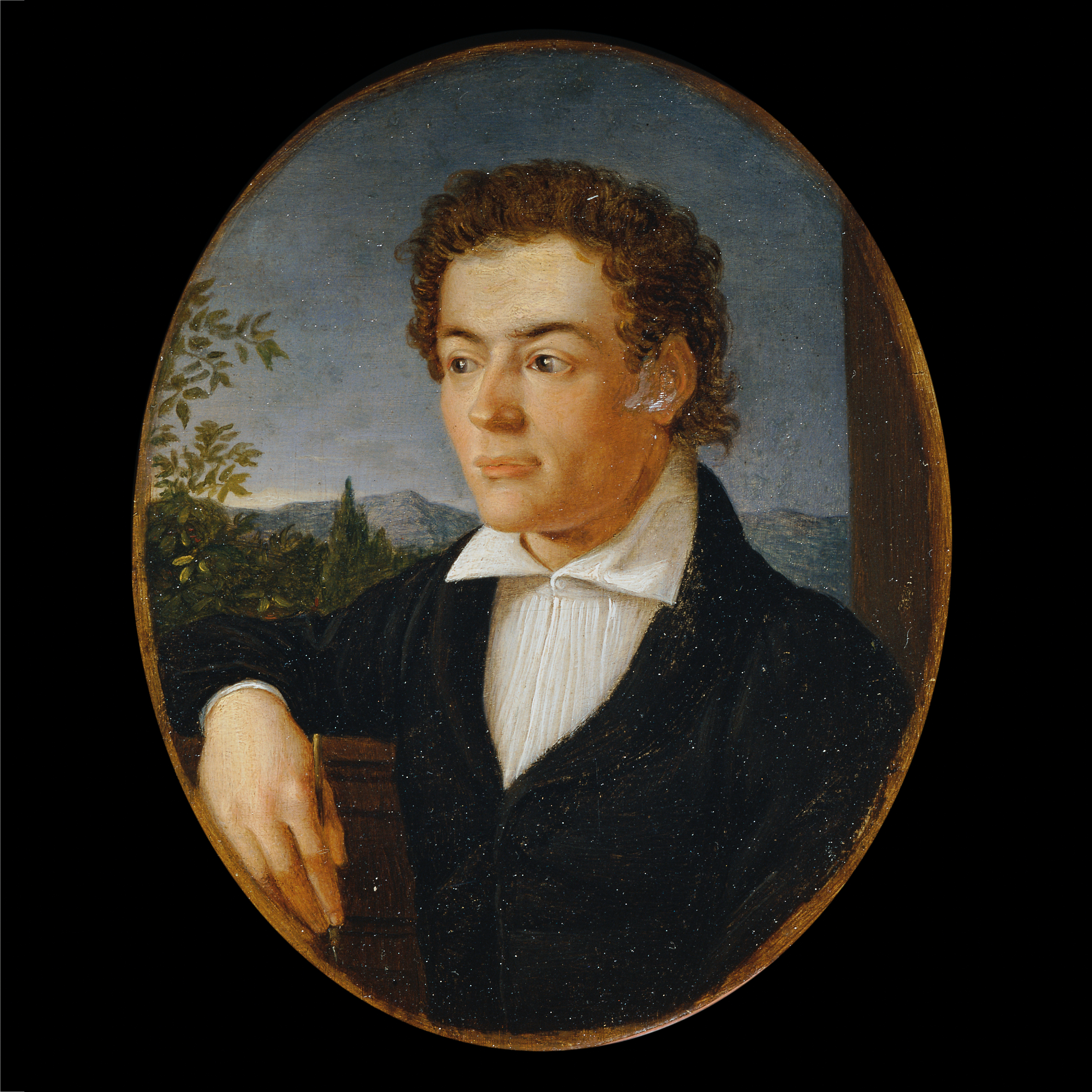
Brustbild eines jungen Mannes vor einer Abendlandschaft, Philipp Otto Runge

Brustbild eines jungen Mannes vor einer Abendlandschaft

Österreichische Galerie Belvedere

Porträtkopf eines Herrn, angeblich des Künstlers Bruder Daniel, Philipp Otto Runge

Porträtkopf eines Herrn, angeblich des Künstlers Bruder Daniel

Kupferstich-Kabinett Dresden

Kind mit Wickenblüte, Philipp Otto Runge

Kind mit Wickenblüte

Österreichische Galerie Belvedere

Brustbild eines jungen Mannes schräg nach rechts, wahrscheinlich fälschlich als Bildnis des Schwagers des Malers Friedrich Overbeck bezeichnet, Philipp Otto Runge

Brustbild eines jungen Mannes schräg nach rechts, wahrscheinlich fälschlich als Bildnis des Schwagers des Malers Friedrich Overbeck bezeichnet

Kupferstich-Kabinett Dresden

Kopf einer älteren Dame in weißer Haube, wahrscheinlich fälschlich als Bildnis der Mutter des Malers Friedrich Overbeck bezeichnet, Philipp Otto Runge

Kopf einer älteren Dame in weißer Haube, wahrscheinlich fälschlich als Bildnis der Mutter des Malers Friedrich Overbeck bezeichnet

Kupferstich-Kabinett Dresden

Poppy, Philipp Otto Runge, about 1800–1803

Poppy

about 1800–1803 · Ikke udstillet · J. Paul Getty Museum

Die vier Tageszeiten: Nacht, Philipp Otto Runge, 1802–1807

Die vier Tageszeiten: Nacht

1802–1807 · Albertina

Naboer på The Cleveland Museum of Art

Museets side
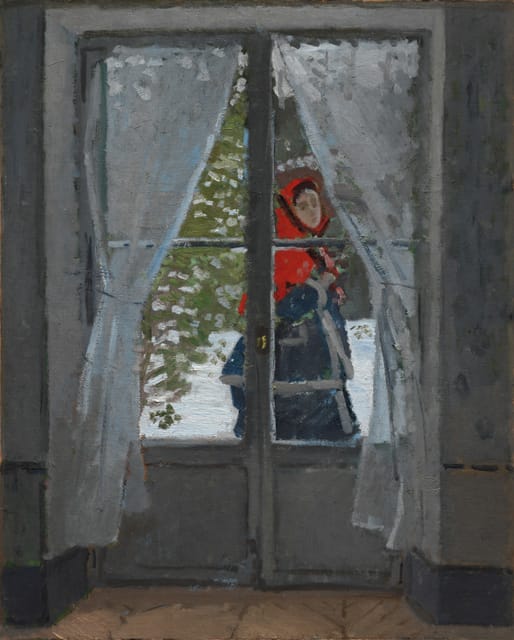
The Red Kerchief, Claude Monet, c. 1868–73

Claude Monet

The Red Kerchief, c. 1868–73

Melencolia I, Albrecht Dürer, 1514

Albrecht Dürer

Melencolia I, 1514

The Virgin and Child with the Pear, Albrecht Dürer, 1511

Albrecht Dürer

The Virgin and Child with the Pear, 1511

The Nativity, Albrecht Dürer, probably c. 1509/1510

Albrecht Dürer

The Nativity, probably c. 1509/1510

The Virgin and Child on a Crescent with a Starry Crown, Albrecht Dürer, 1508

Albrecht Dürer

The Virgin and Child on a Crescent with a Starry Crown, 1508

The Lamentation, Albrecht Dürer, 1507

Albrecht Dürer

The Lamentation, 1507

Large Horse, Albrecht Dürer, 1505

Albrecht Dürer

Large Horse, 1505

Nemesis (The Great Fortune), Albrecht Dürer, c. 1501/1502

Albrecht Dürer

Nemesis (The Great Fortune), c. 1501/1502