 Julia Margaret CameronStorbritannien, 1815–1879
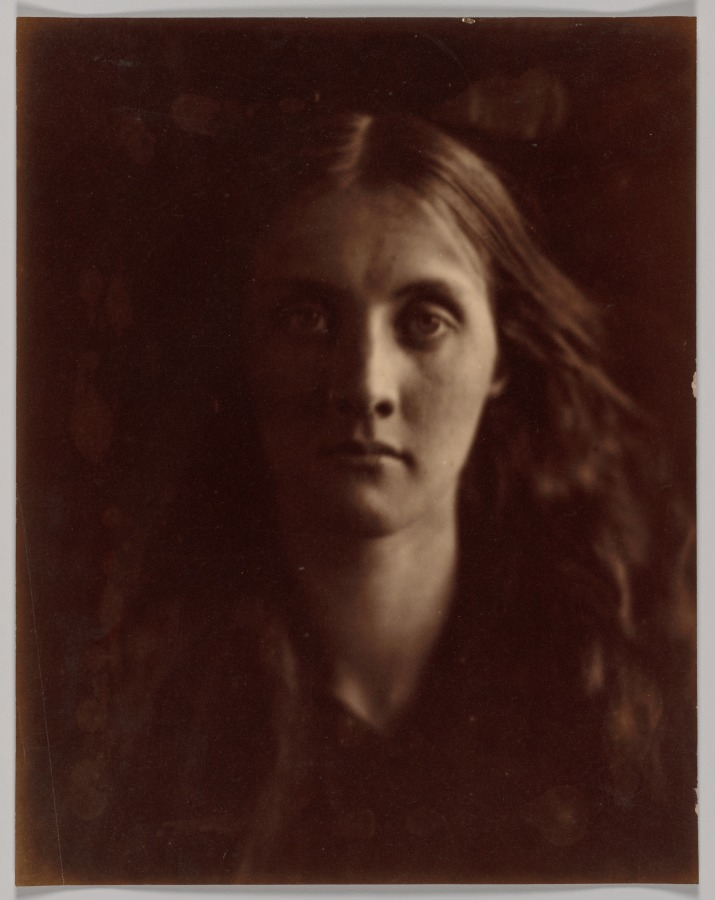
Julia Jackson
Må man se det?
Tager ikke imod for tiden

The Cleveland Museum of Art
Cleveland, USA
Det hører til samlingen, men er ikke udstillet for tiden.
- Kontrolleret
- Uændret siden
- Kilde
- Museets egne samlingsdata
Om værket
One of the greatest portrait photographers of the Victorian period, Julia Margaret Cameron produced haunting images that transcended physical description, mirroring the inner lives of her subjects. This photograph depicts Julia Jackson, Cameron’s beloved niece, namesake, and goddaughter. At a time when most women had only two or three photographs taken of them during their lifetime, Cameron created over 50 portraits of Jackson, a renowned beauty at the time who modeled for other artists. This boldly modern close-up of 21-year-old Jackson—taken just weeks before her marriage—suggests self-reflection and doubt.
The Cleveland Museum of Art
Oplysninger
- Inventarnummer
- 2015.15
I kataloget
Kilder
- The Cleveland Museum of Art: the museum's own open data · hentet for 7 dage siden
- Billede: The Cleveland Museum of Art — Museum open access
Imens i livet hos Julia Margaret Cameron
Hele livet1864–1875
Eleven years of photography
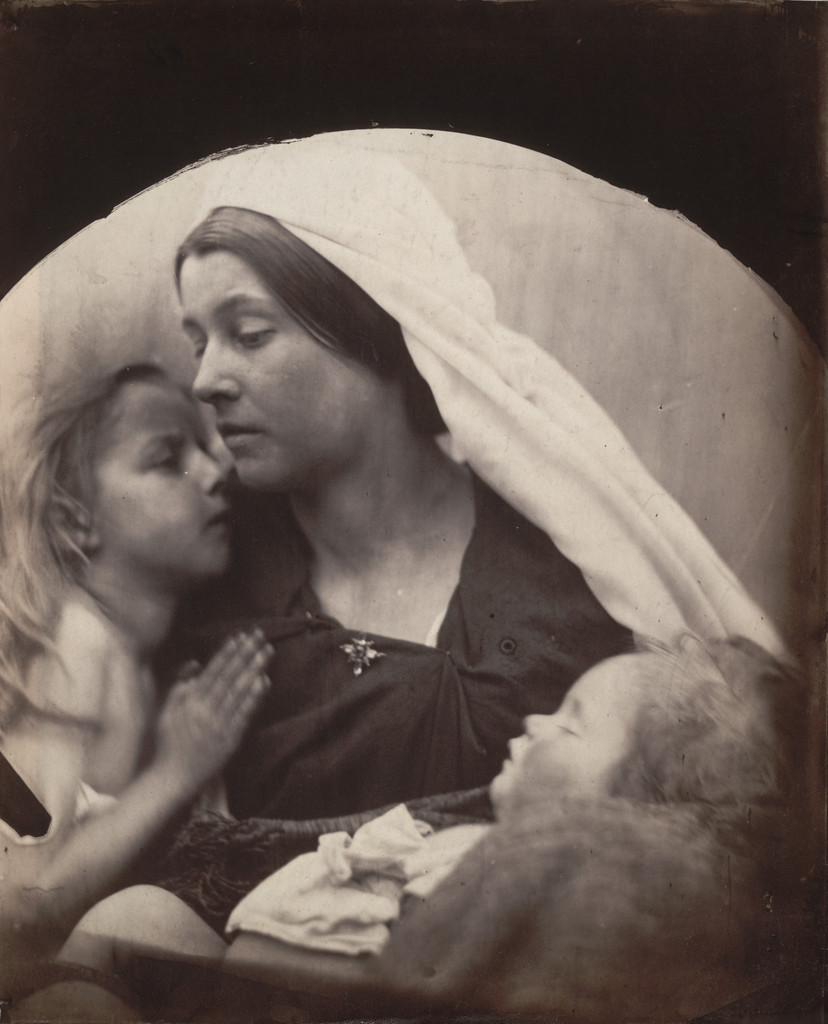
Cameron's career as a photographer lasted from 1864 to 1875: in that time she made more than 900 photographs, portraying great Victorians — Darwin, Tennyson, Browning, Longfellow, Herschel, Watts, Trollope, Carlyle and the actress Ellen Terry. The Virgin Mary in her religious scenes was most often played by her housekeeper, Mary Hillier.
1865
Sales through P. & D. Colnaghi
In 1865 Cameron joined the Photographic Society of Scotland and arranged for her prints to be sold through the London dealers P. & D. Colnaghi; demand for them was strong.
1865
The press derides her “out-of-focus portraits”
In 1865 The Photographic Journal wrote of her “series of out-of-focus portraits of celebrities”, crediting her daring originality at the expense of all other photographic qualities. Critics mocked her soft focus and unretouched prints, though The Illustrated London News saw in them a bold and successful application of the principles of fine art to photography.
August 1865
The South Kensington Museum buys 80 photographs
In August 1865 the South Kensington Museum (now the Victoria and Albert Museum) bought 80 of her photographs.
November 1865
First solo exhibition
In November 1865 Cameron held her first solo exhibition; her work was shown throughout Europe.
1868
First artist-in-residence of the South Kensington Museum
In 1868 the South Kensington Museum gave her two rooms to use as a portrait studio, making her its first artist-in-residence. By then her prints were being sold by two London agents, P. & D. Colnaghi and William Spooner.